
01
Day one: off, and labelled
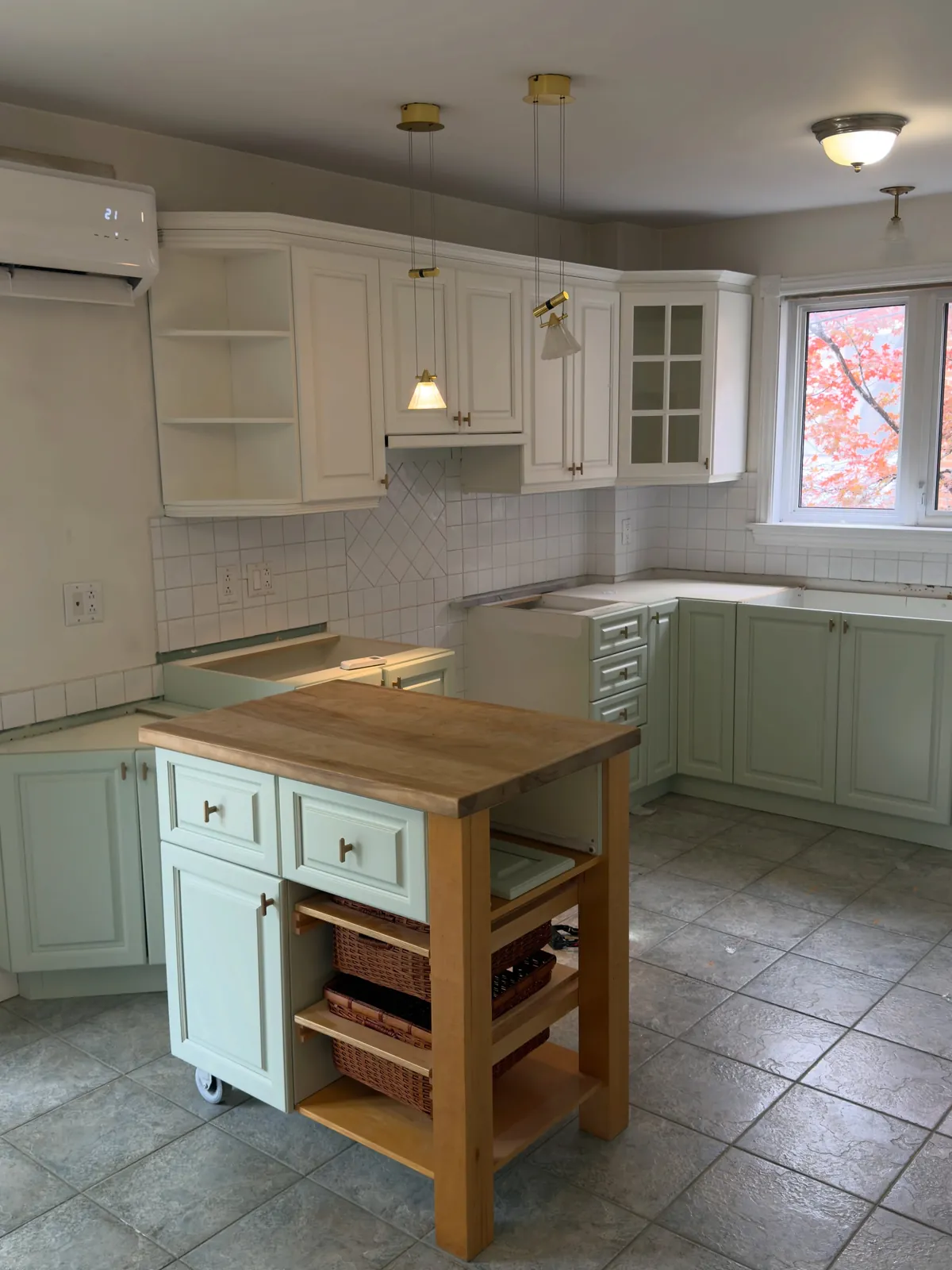
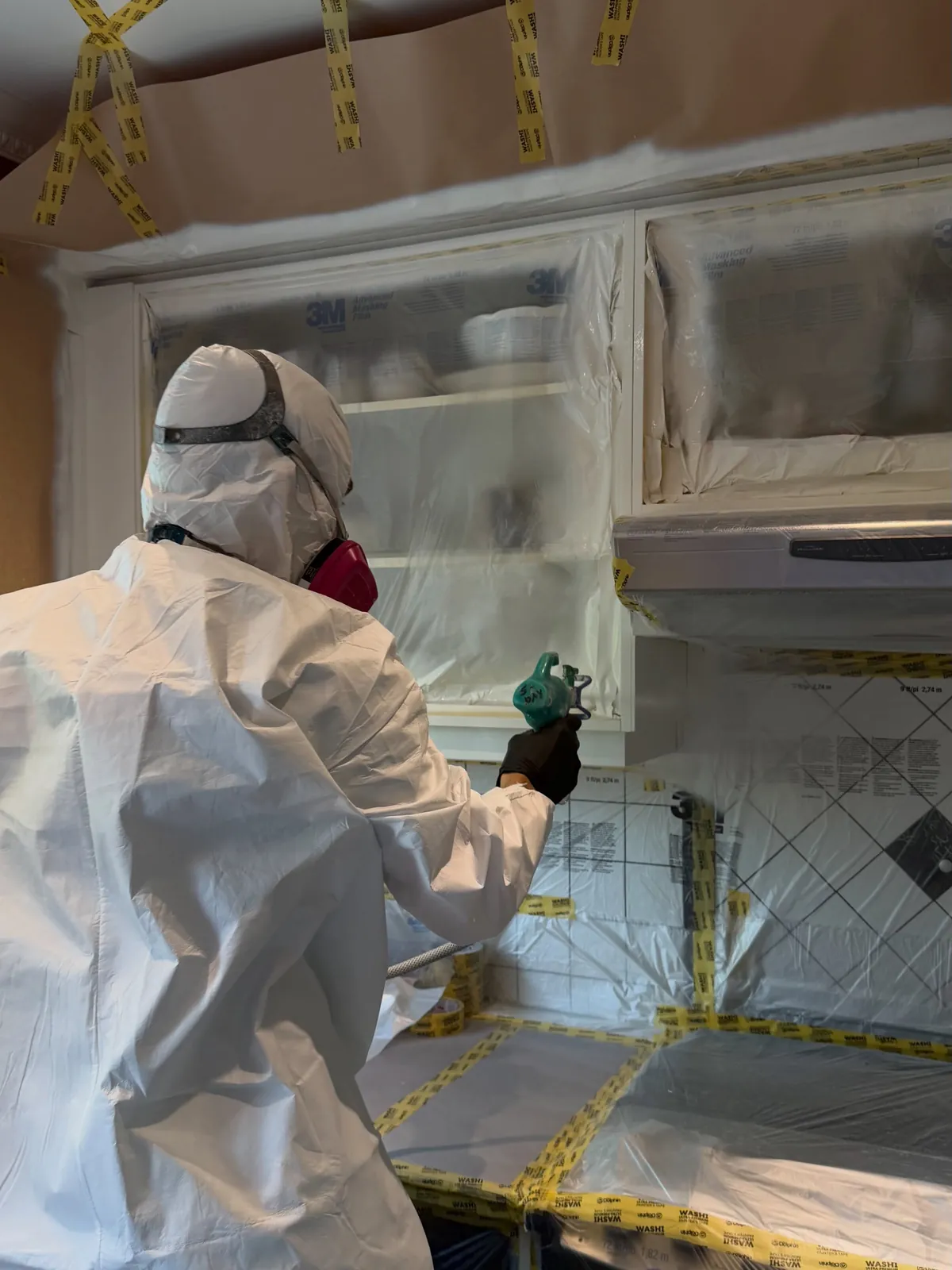
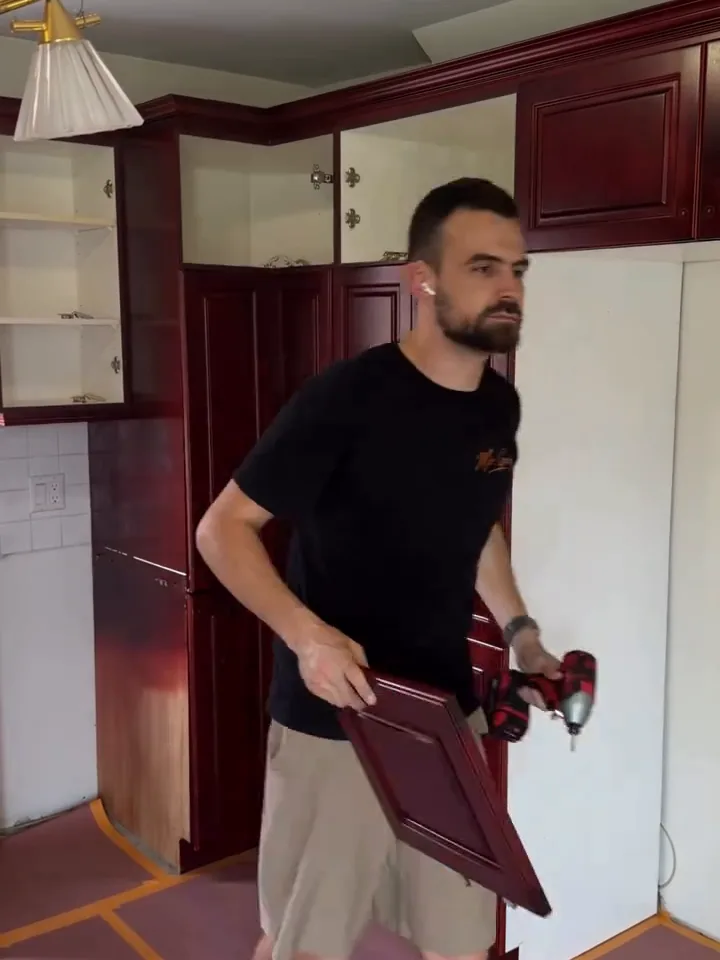
My Day 1 caption from July says it in one line: “I remove and label every door and drawer, organize my workspace, and carefully protect your floors, countertops, and cabinets before any spraying begins.” The labelling happens as each door comes off, while I still know exactly where it hung.
Then the hardware comes off: hinges, knobs and pulls. On glass-front doors the glass comes out as well. After that, a door is a bare panel, and many of them look alike.
02
Why position matters
Two doors of the same size are rarely interchangeable. Each one was hung on its own box, with hinge cups drilled into that door and hinges adjusted over the years to that opening. The gap to the next door, the height of the top edge, the way it closes against the frame: all of that belongs to one door in one place.
A door that goes back to its own opening lines up with its neighbours with little adjustment. A door that goes back to the wrong opening can close crooked or leave an uneven gap, and on a freshly sprayed finish every uneven line shows.
Drawer fronts are the same. They are fixed to their own drawer boxes, and in a bank of drawers the order matters for the gaps between them.
03
A week of moving doors around
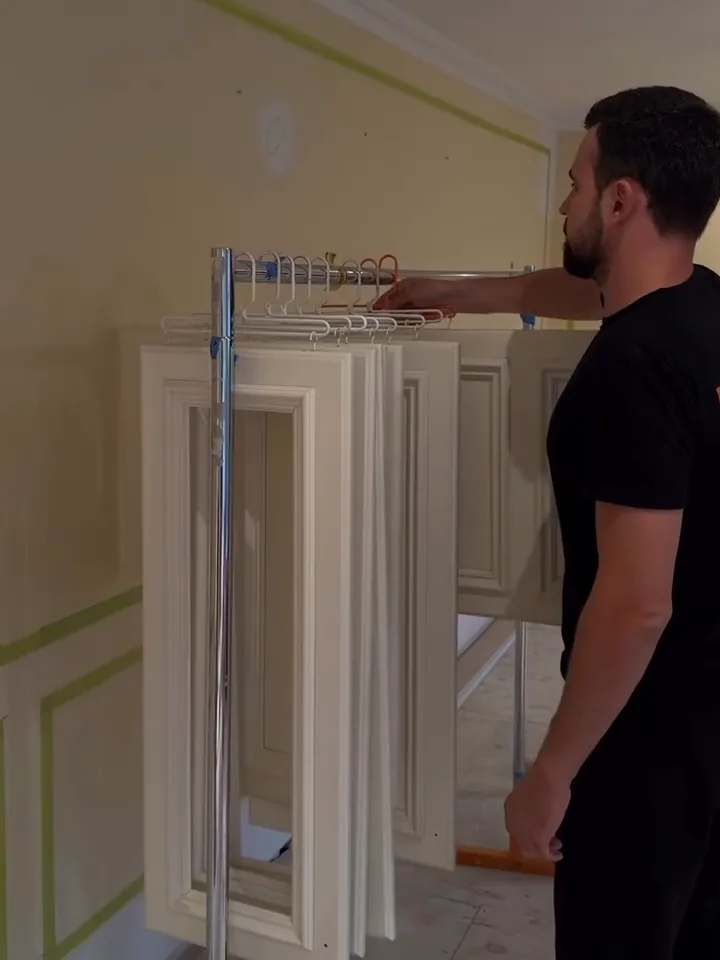
Between the first day and the last, every door is handled many times. It goes to the prep station, “where every door is carefully prepared before spraying,” as I wrote in Dorval. It gets cleaned and degreased, sanded, primed in the spray booth, sanded again, and sprayed with two coats of colour. It hangs on drying racks between steps.
“Every door passes through my own two hands,” and it passes through them many times. Knowing which door is which at every step is what keeps the last day simple.
04
Glass, shelves and hardware
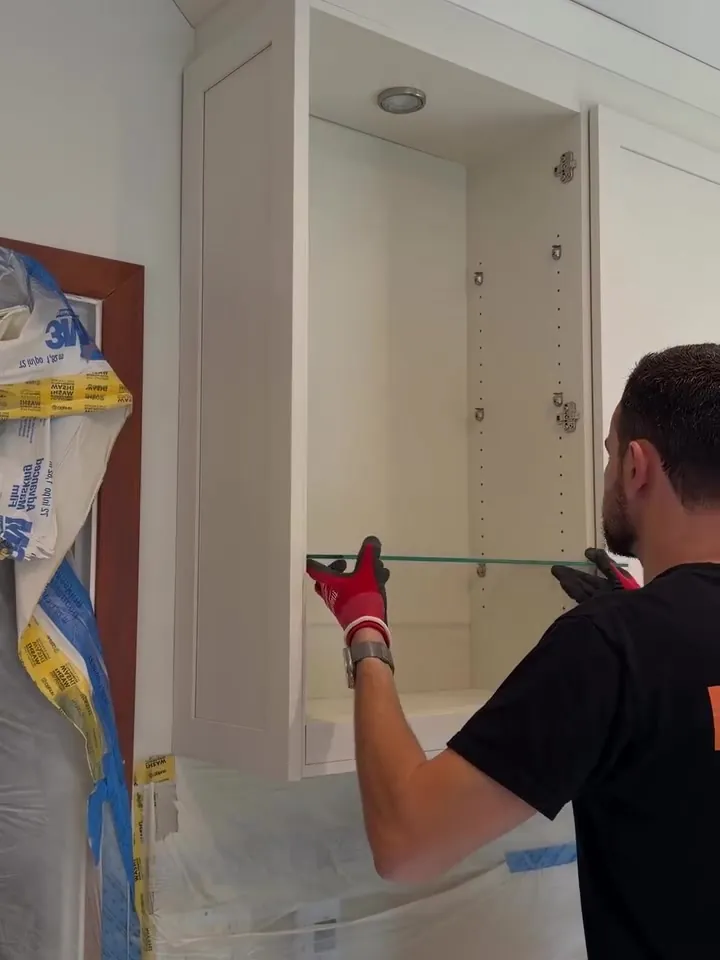
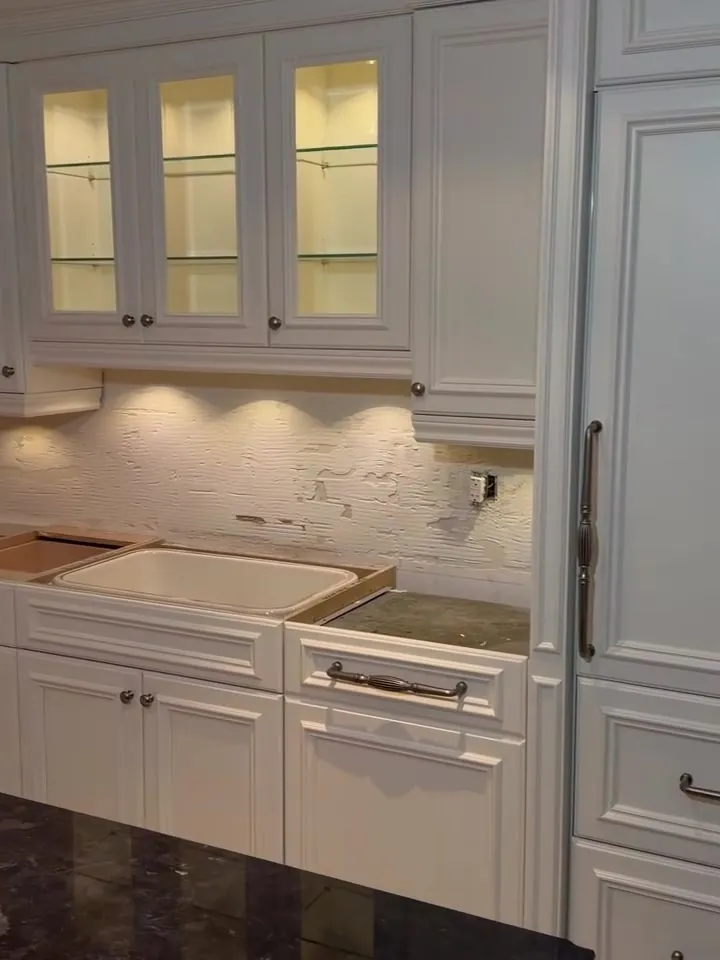
Doors are only part of what comes apart. On glass-front doors the glass is taken out before anything else; in Town of Mount Royal my caption for that step was two words, “Safety first.” Loose glass shelves come out of the boxes too, and on the last day they go back where they were: “Complete. The glass shelf goes back in.”
Hinges, knobs and pulls come off each door and are kept for reinstallation, unless the owners have chosen new hardware. Everything that belongs to one door stays with that door, which is the same idea as the label: a week later, every piece has one obvious place to go.
05
The last day: back where they came from
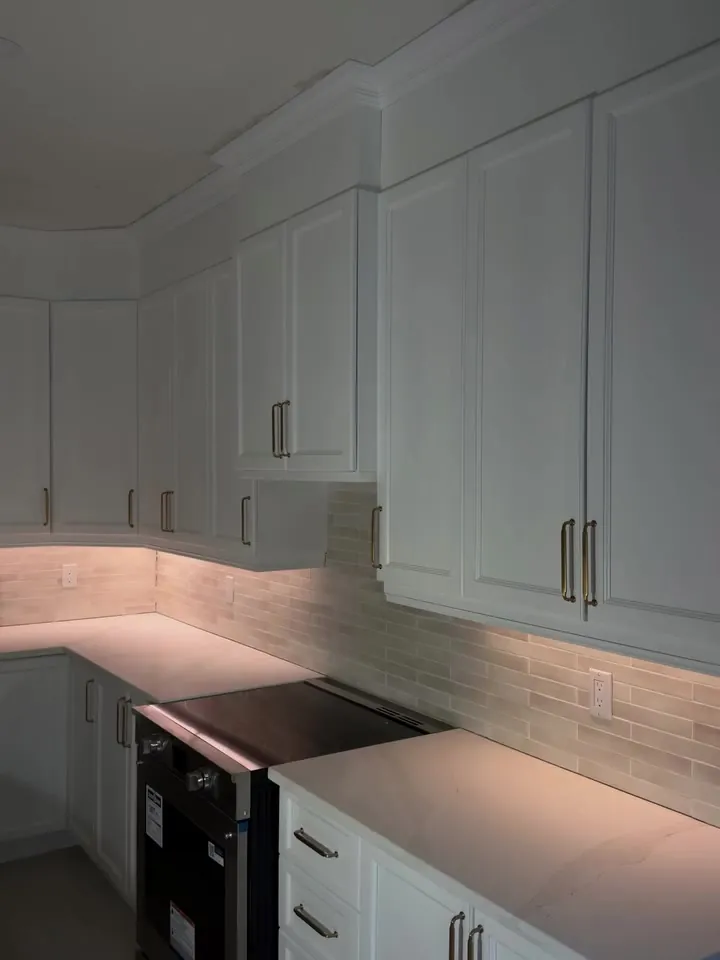
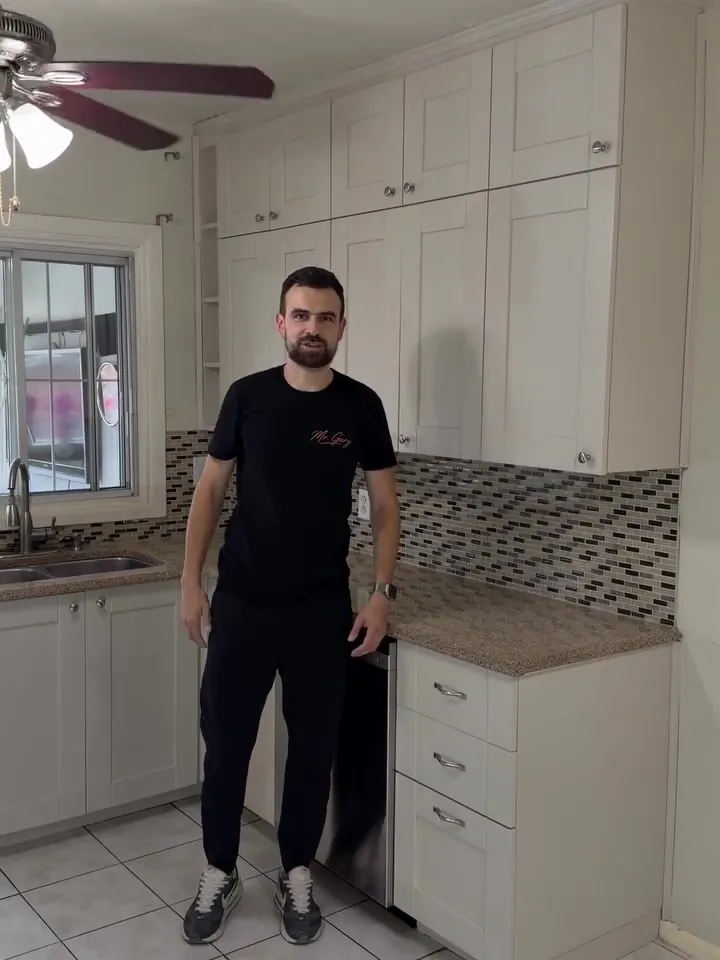
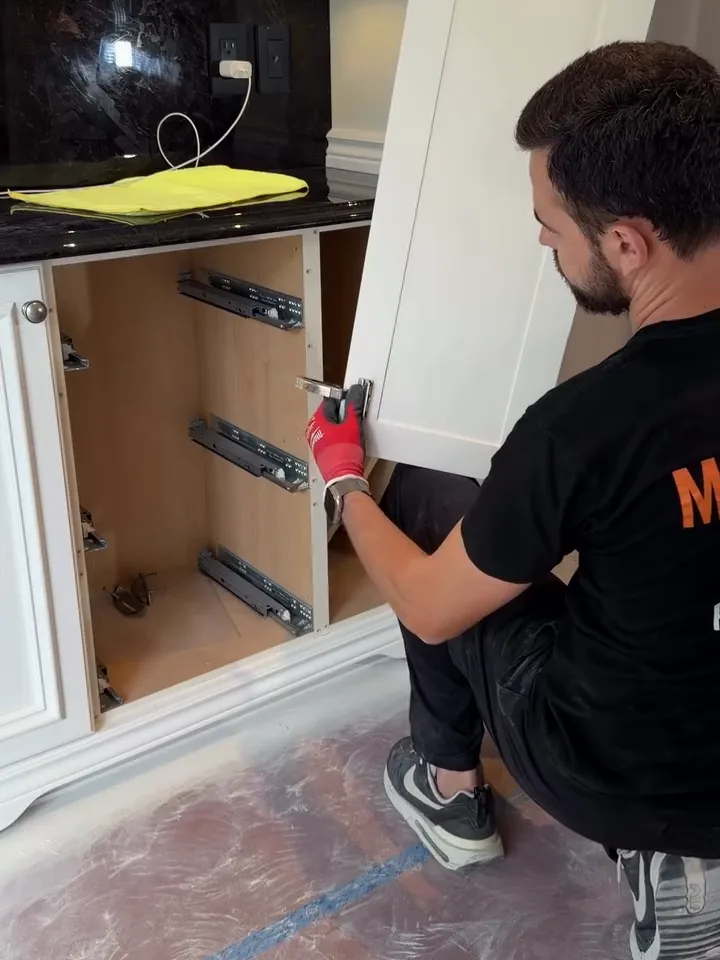
The final day is installation day. “Reinstalling the cabinet doors and drawers — the final step of the transformation,” I wrote in September. Each door goes back on the box it came from, the hinges are adjusted so the lines are straight, and the knobs or pulls go back on, or new ones if the owners chose them. In the cherry kitchen in July, the new knobs were prepared the same day the doors went back on.
Labels are a small detail, and the finished kitchen depends on them: straight lines, even gaps and doors that close the way they did before, only now with a new finish.
06
More on the week
Labelling is one of many day-one steps. The rest of the week is in the 5-day guide, and what happens behind the doors while they are off is in what happens inside your cabinets.