
01
What “2K” means
The K comes from the German Komponente, component. A 1K product comes ready to use: you open the can and apply it, and it dries as its solvent or water evaporates. A 2K product comes in two parts, the coating and its hardener, and neither one is finished on its own.
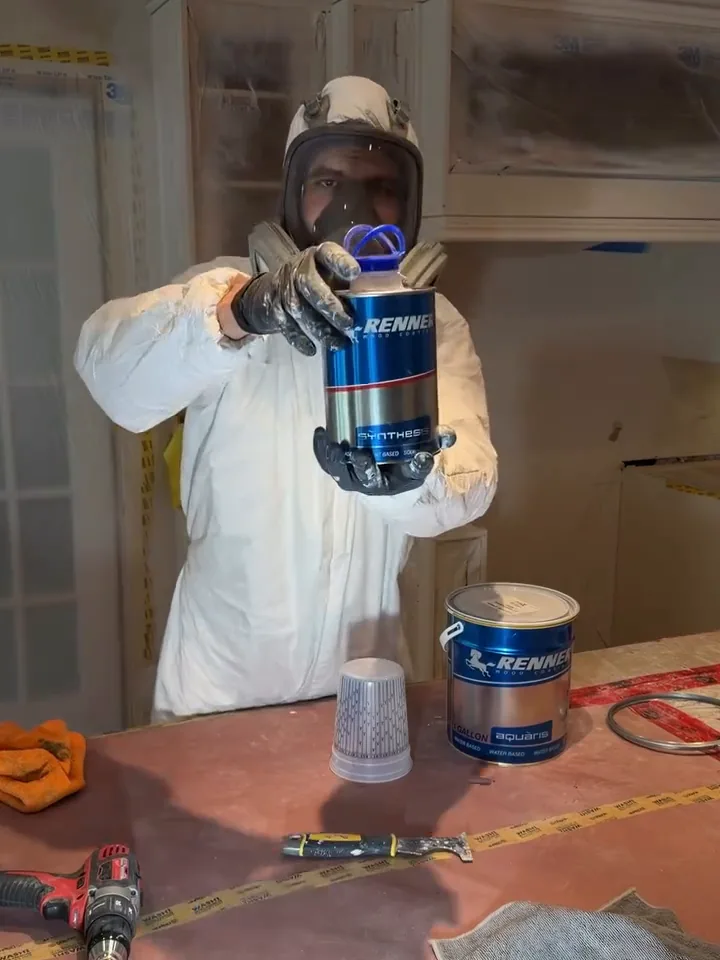
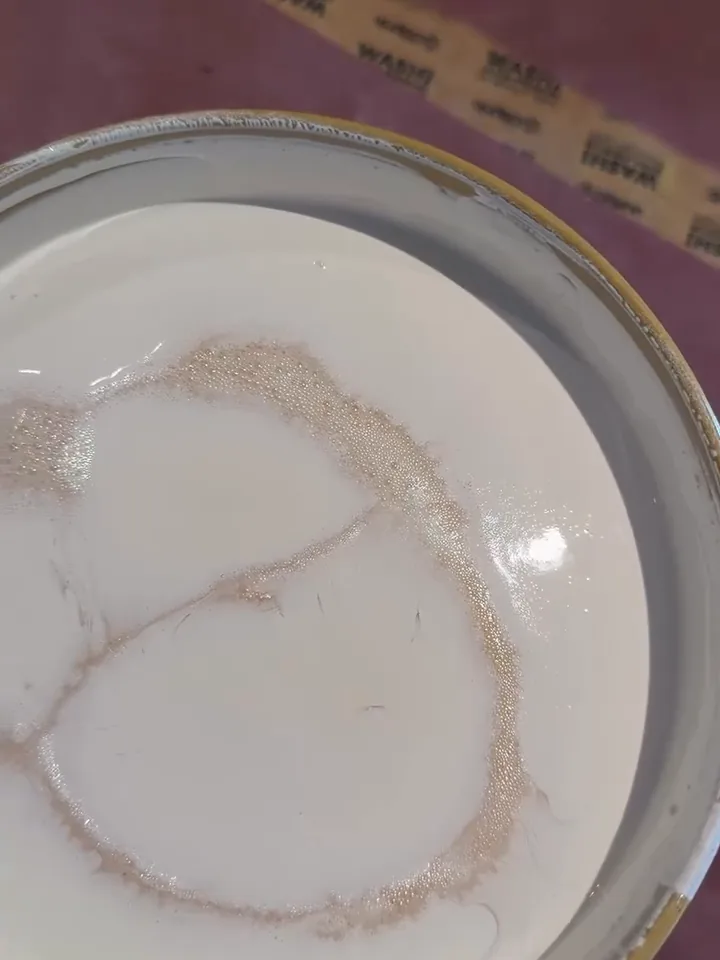
When the two are mixed, they react. The coating cures as the molecules link together into a tighter, harder film. That reaction is what the hardener is for. In my captions I have put it in plain words: “Renner 2K system — adding hardener for extra durability,” and “Adding hardener to Renner 2K — for a stronger, more durable finish.”
02
Mixing on site
In the videos you can see the routine: the Renner can of colour open on the covered counter, the hardener poured in, then a mixing paddle on a drill until the two are one. The proportions are the ones Renner sets for the product.
Once the hardener is in, the reaction has started. A mixed 2K coating has a limited working time, which the maker calls pot life, so it is mixed right there in the kitchen, shortly before it goes into the spray gun.
03
Why it matters on kitchen cabinets
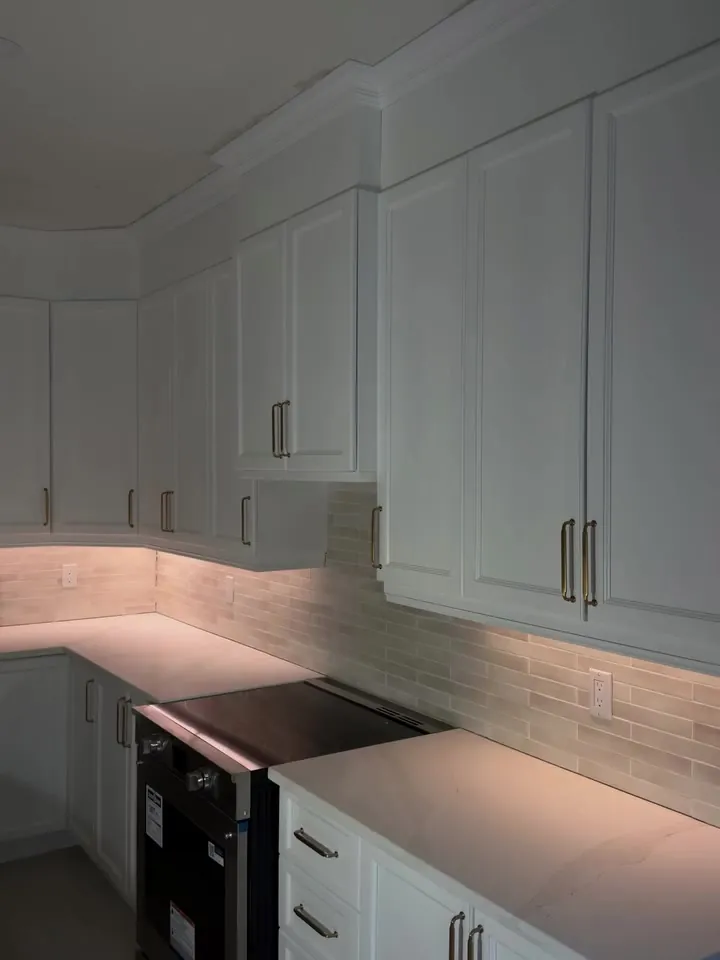
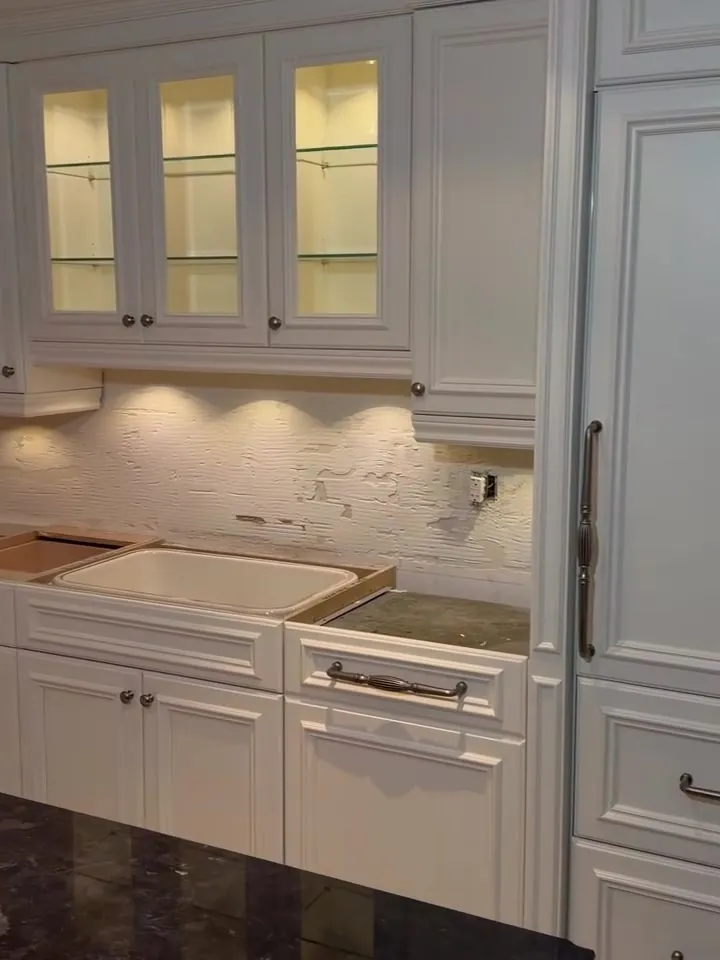
Kitchen cabinets take more handling than almost any painted surface in a house: hands on the edges of doors, grease near the stove, wiping and cleaning, pots and chairs bumping the lower doors. A finish there has to hold up to daily life.
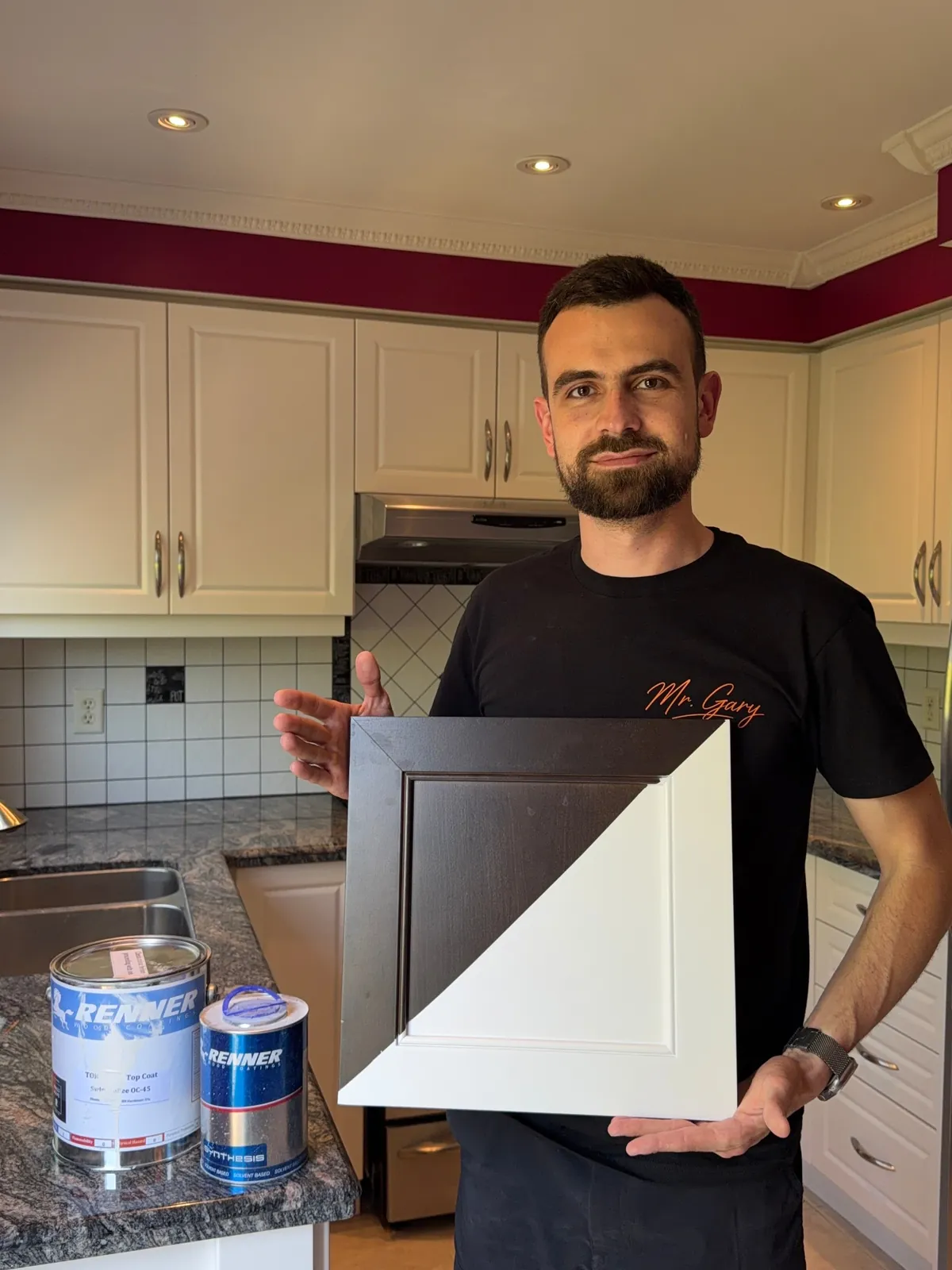
That is the reason I chose these coatings. In Westmount I wrote: “A premium finish starts with premium coatings. That’s why I use Renner Italia 2K.” In Town of Mount Royal: “I use professional cabinet coatings designed for kitchens. Durable, washable, and made for everyday use.” My captions list it as a “durable finish designed to resist chipping.”
04
What goes under it
The 2K colour is the top of a system. Under it, every surface is cleaned, degreased and sanded, then primed with two coats of BIN shellac-based primer. The primer is sanded smooth, and only then do the two colour coats of Renner 2K go on, sprayed on the doors in the booth and on the boxes in place.
The colour can be one you already know by name. In Westmount the colour on screen in my video was Benjamin Moore Chantilly Lace OC-65; in Dorval the owners chose “white chocolate.”
05
A shop finish, sprayed in your kitchen
Renner is an Italian maker of industrial wood coatings, the kind of product used where furniture and cabinets are finished. My captions call it an “Italian industrial coating,” and that is the point: the same type of coating a factory would spray, applied in your home.
What makes that possible on-site is the setup around it. The doors are sprayed in the booth I build in the kitchen, the boxes are sprayed in place behind the barrier, and every door is sprayed by me. As I put it on Instagram: “I don’t need a spray shop to achieve a factory-style finish on your kitchen cabinets.”
06
Hardener and safety
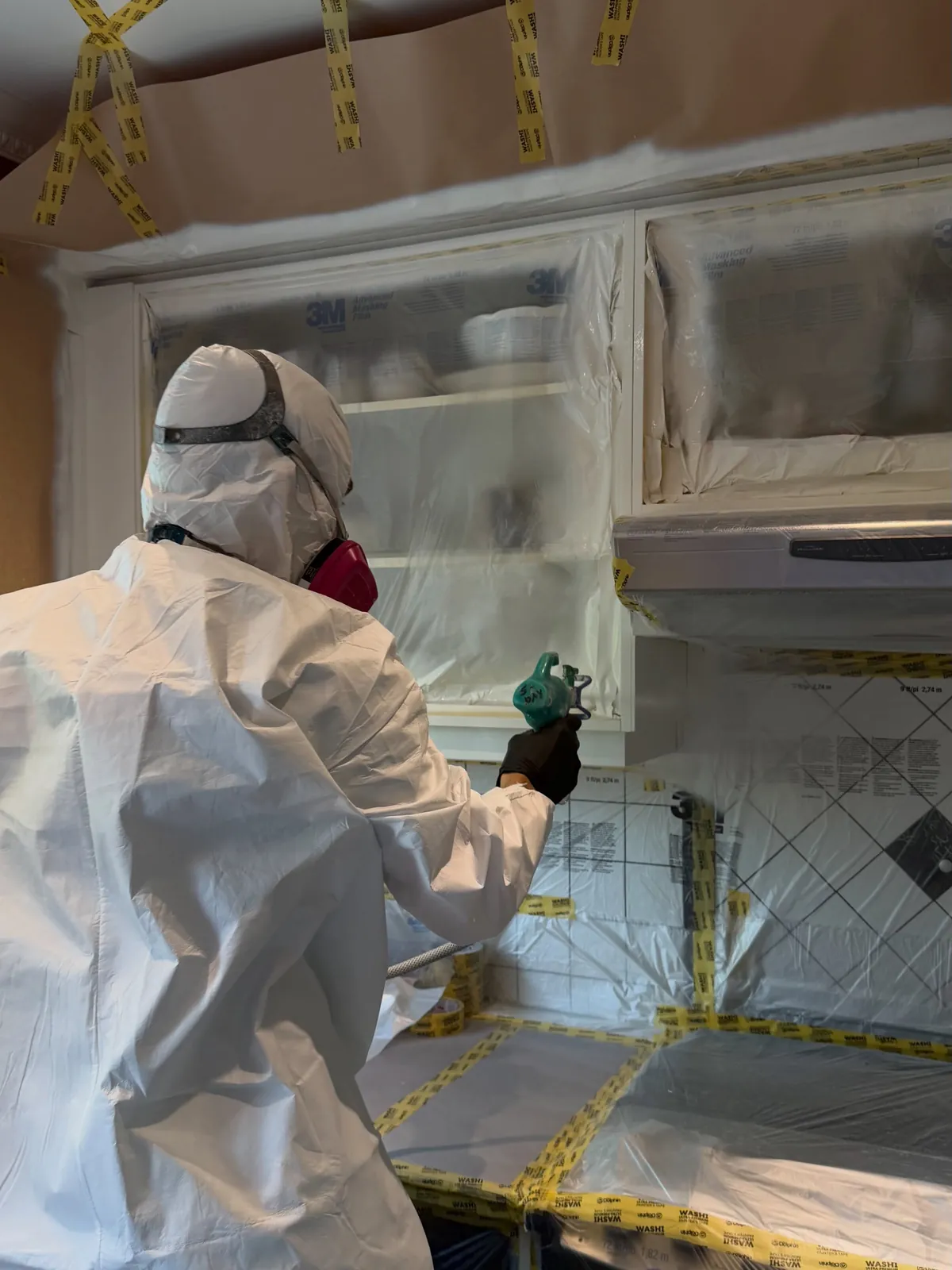
Two-component coatings are sprayed with proper protection, and you can see it in every mixing video: a disposable coverall, gloves and a full-face respirator. The spray booth in the kitchen “helps contain overspray and control paint fumes during spraying,” and the spray barrier keeps the rest of the house separate from the work area.
If you want to see why the finish is sprayed at all, read the spray vs brush guide. The cabinet spray painting page covers the service itself.