01
What MDF and HDF are
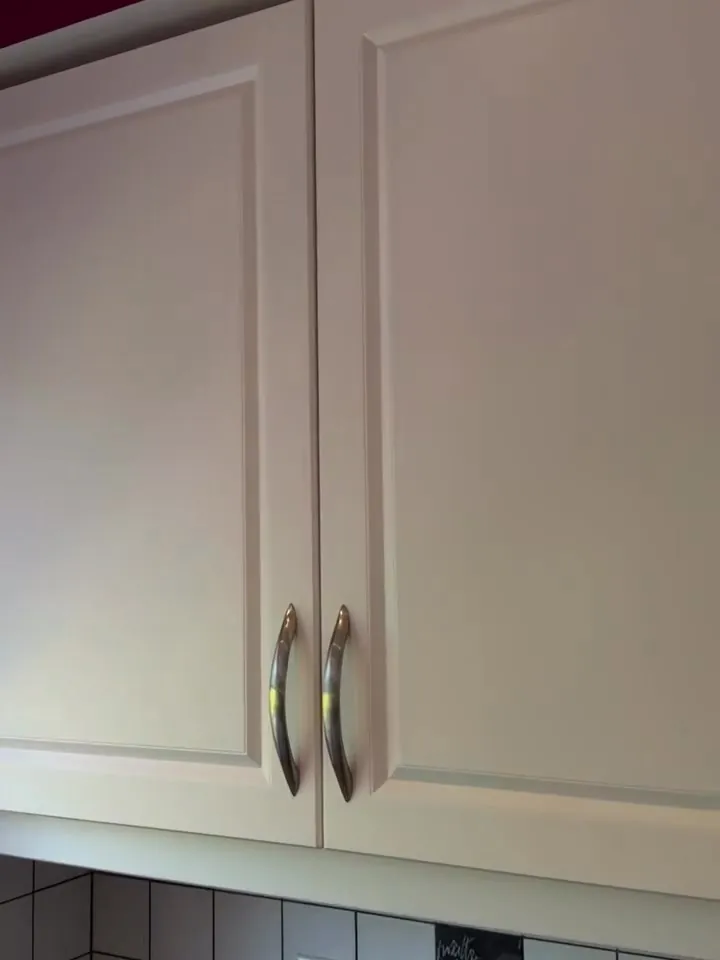
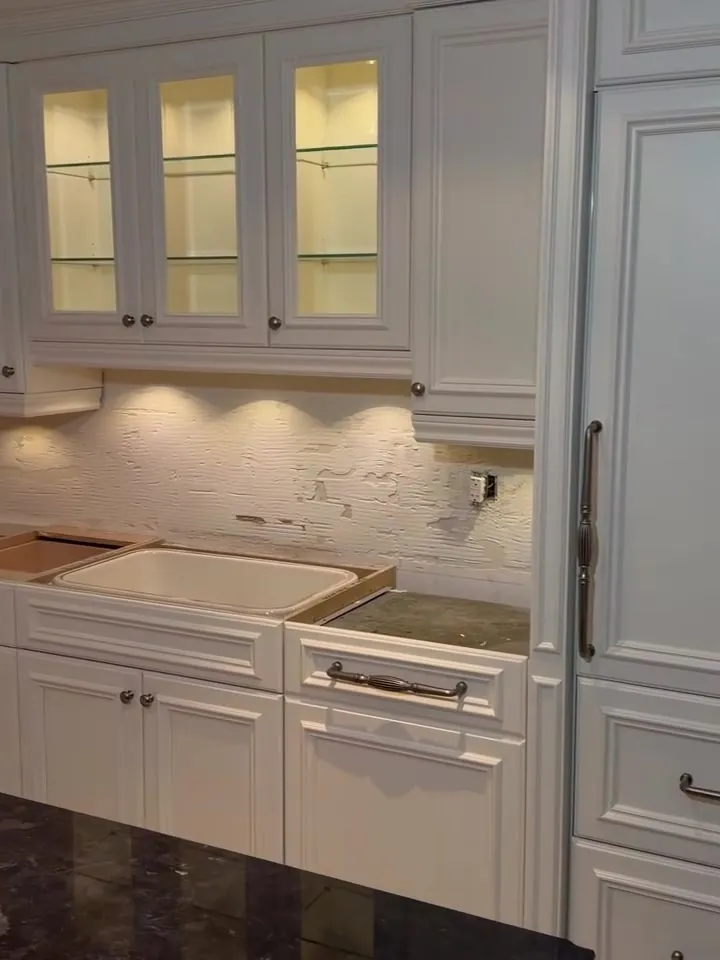
MDF (medium-density fibreboard) and HDF (high-density fibreboard) are wood fibres pressed with resin into dense, flat boards. Many painted shaker and slab doors are MDF, and it is also the core under thermofoil.
The faces are smooth and stable: no grain, no knots, no tannins to bleed. That makes MDF the easiest material to bring to a flat, even, factory-looking finish.
02
Is my MDF kitchen a good candidate?
Usually yes, if the doors are flat and the edges are firm. Press on the edges near the sink and dishwasher: firm is good; soft, crumbly or swollen means water has got into the fibres.
Light damage can be repaired. Swollen, soft MDF cannot hold a finish and should be replaced. Check the doors next to the sink and dishwasher first; that is where water damage shows.
03
The edges are where the work is
MDF faces are dense and sealed; the machined edges and profiles are more porous. They drink primer and raise fibres if they are not prepared.
So the edges get their own attention: chipped or slightly swollen spots are sanded and filled, the edges take the same two coats of BIN shellac-based primer as the faces, and everything is sanded before colour, so edge and face end up with the same smooth finish.
04
Common problems and what I do
- Chipped paint on edges and corners: sanded back, filled and primed.
- Slightly swollen edge near the sink: sanded and filled if firm, replaced if soft.
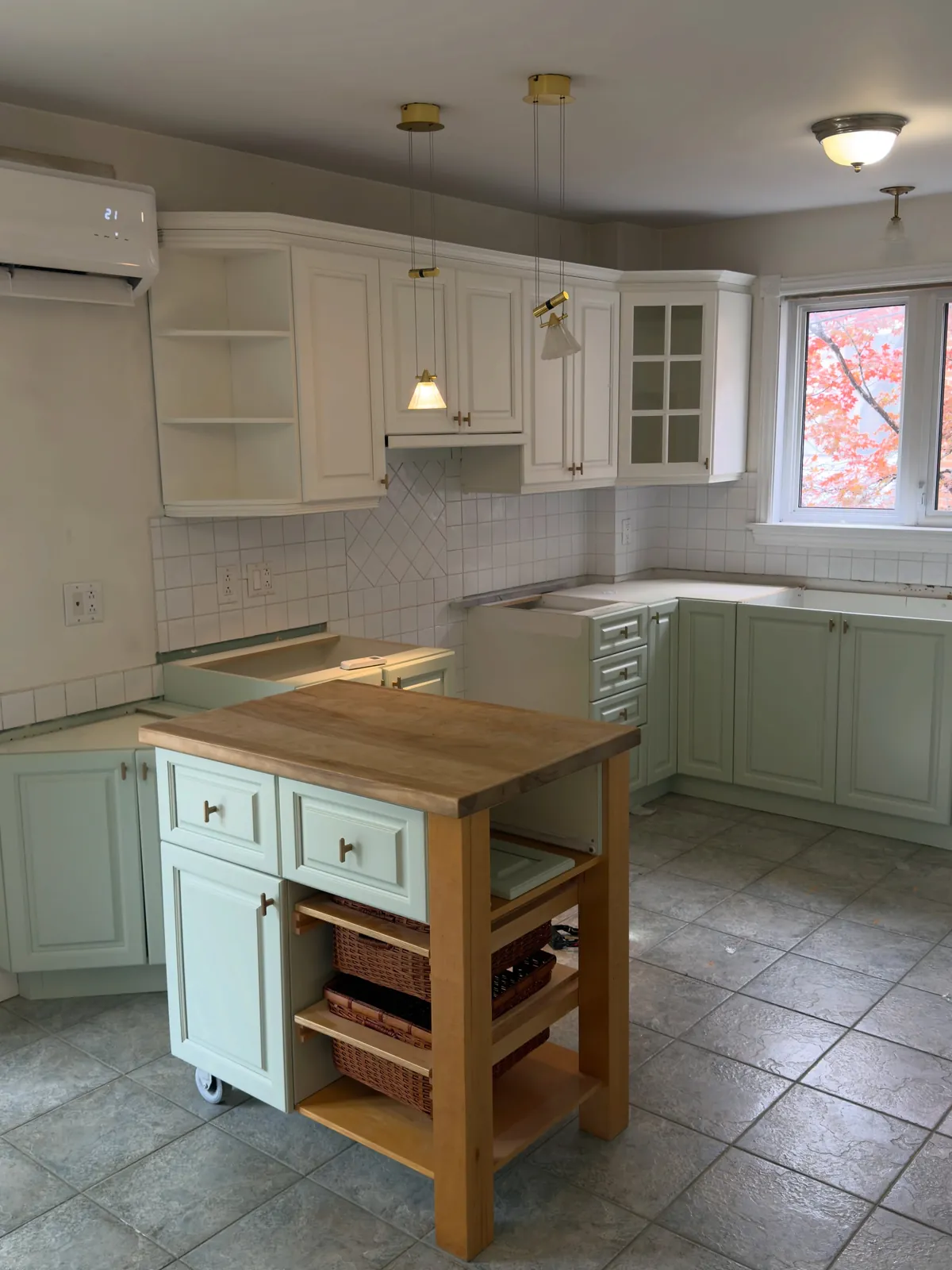
- Old painted MDF that has yellowed or chipped: degreased, sanded and primed like any painted surface.
- MDF under thermofoil: once the film is off, it is prepped like bare MDF. See the thermofoil page.
05
The finish on MDF
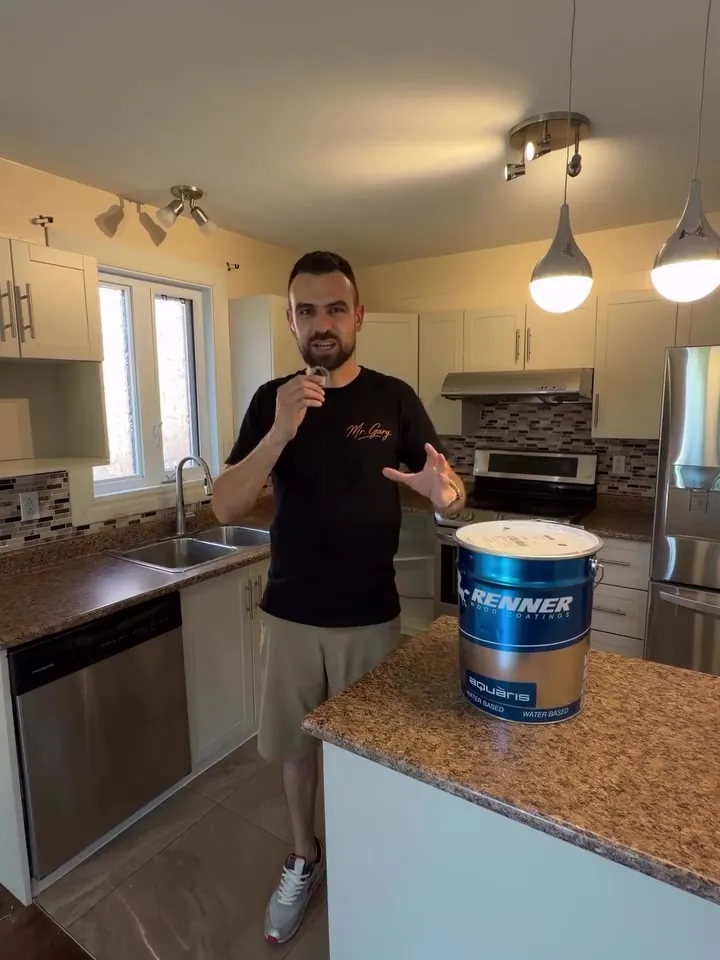
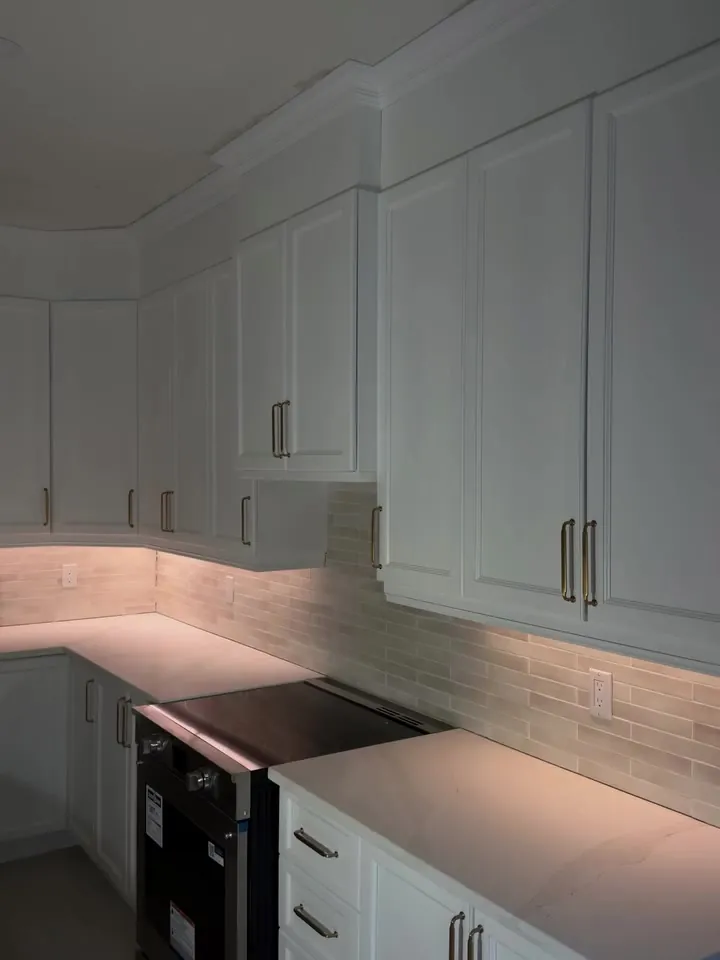
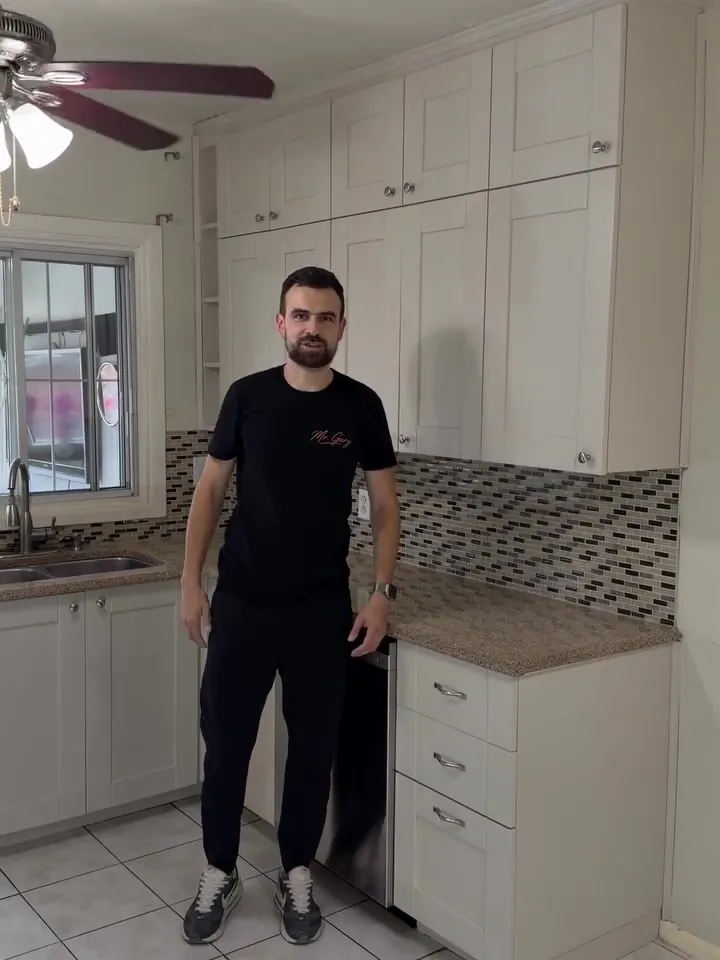
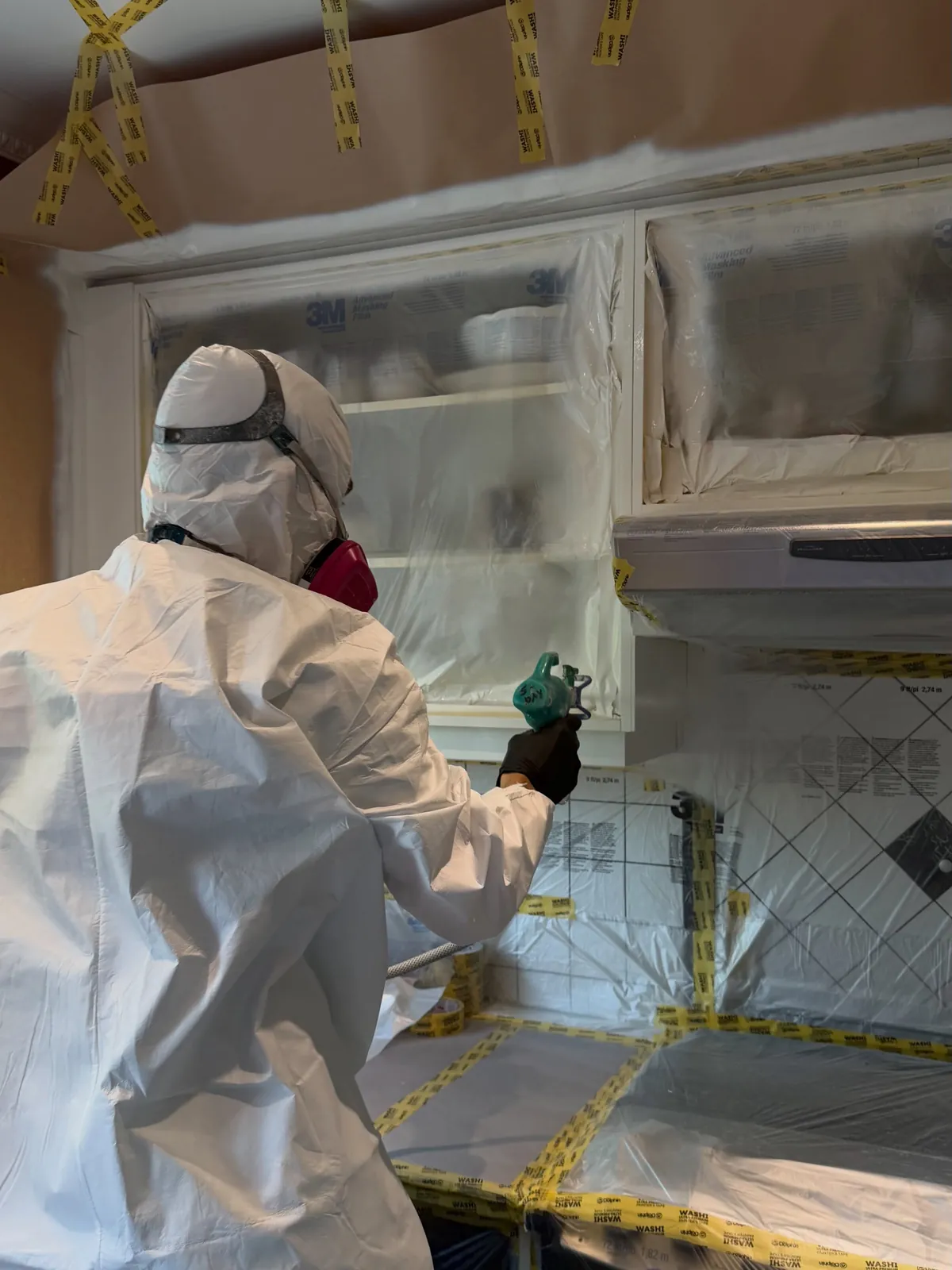
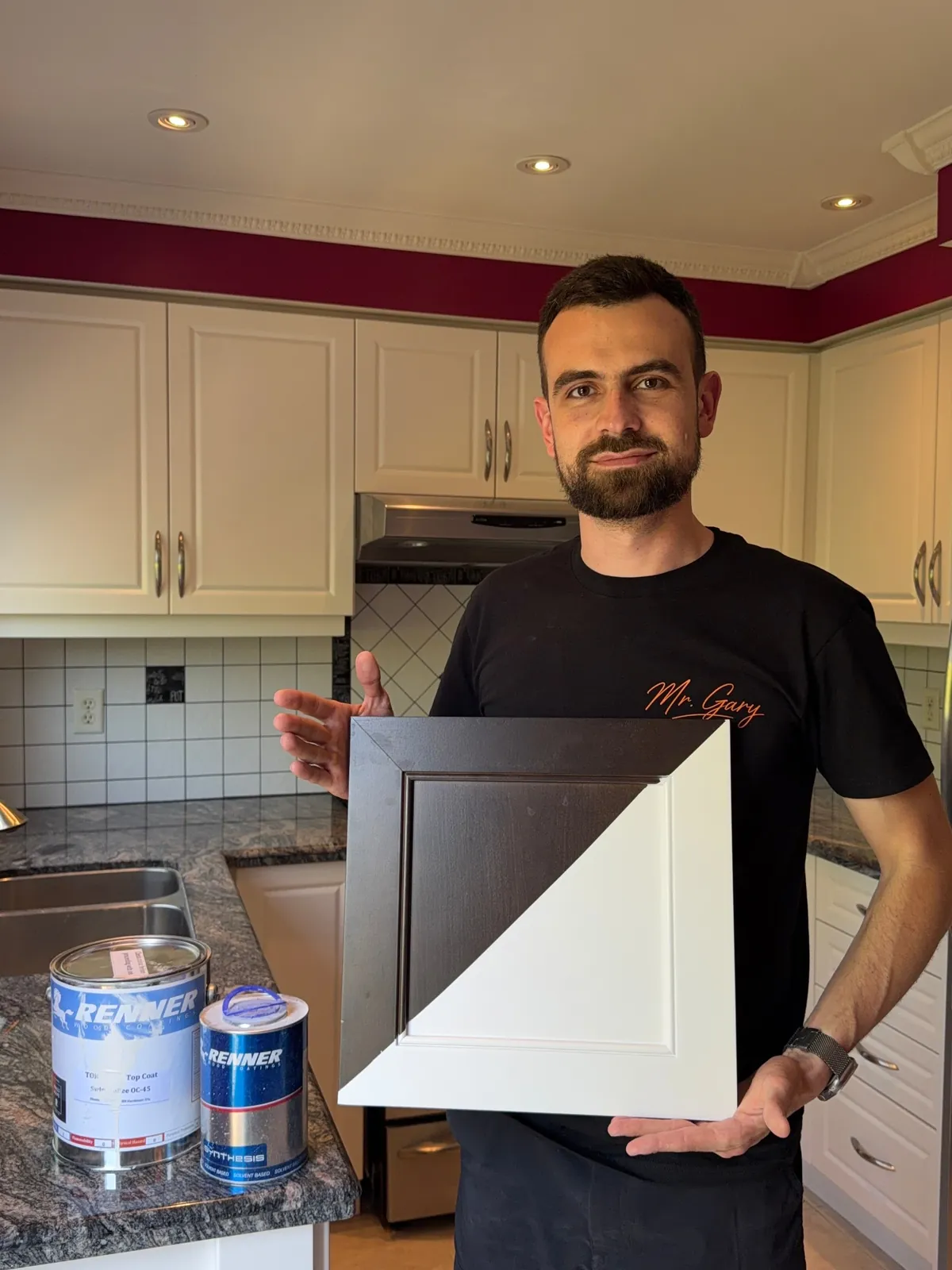
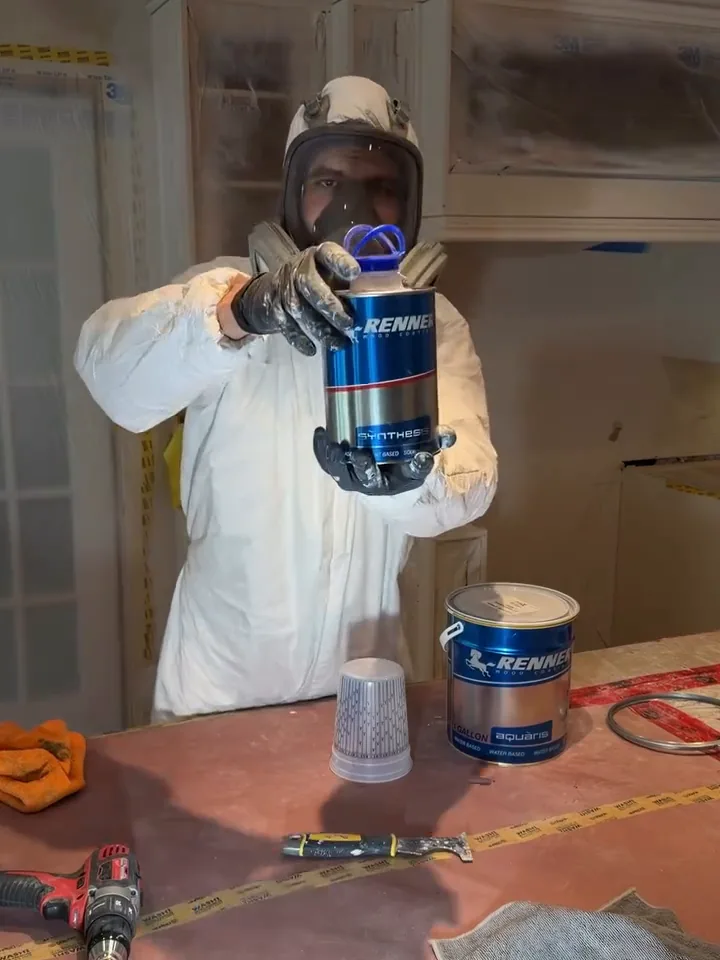
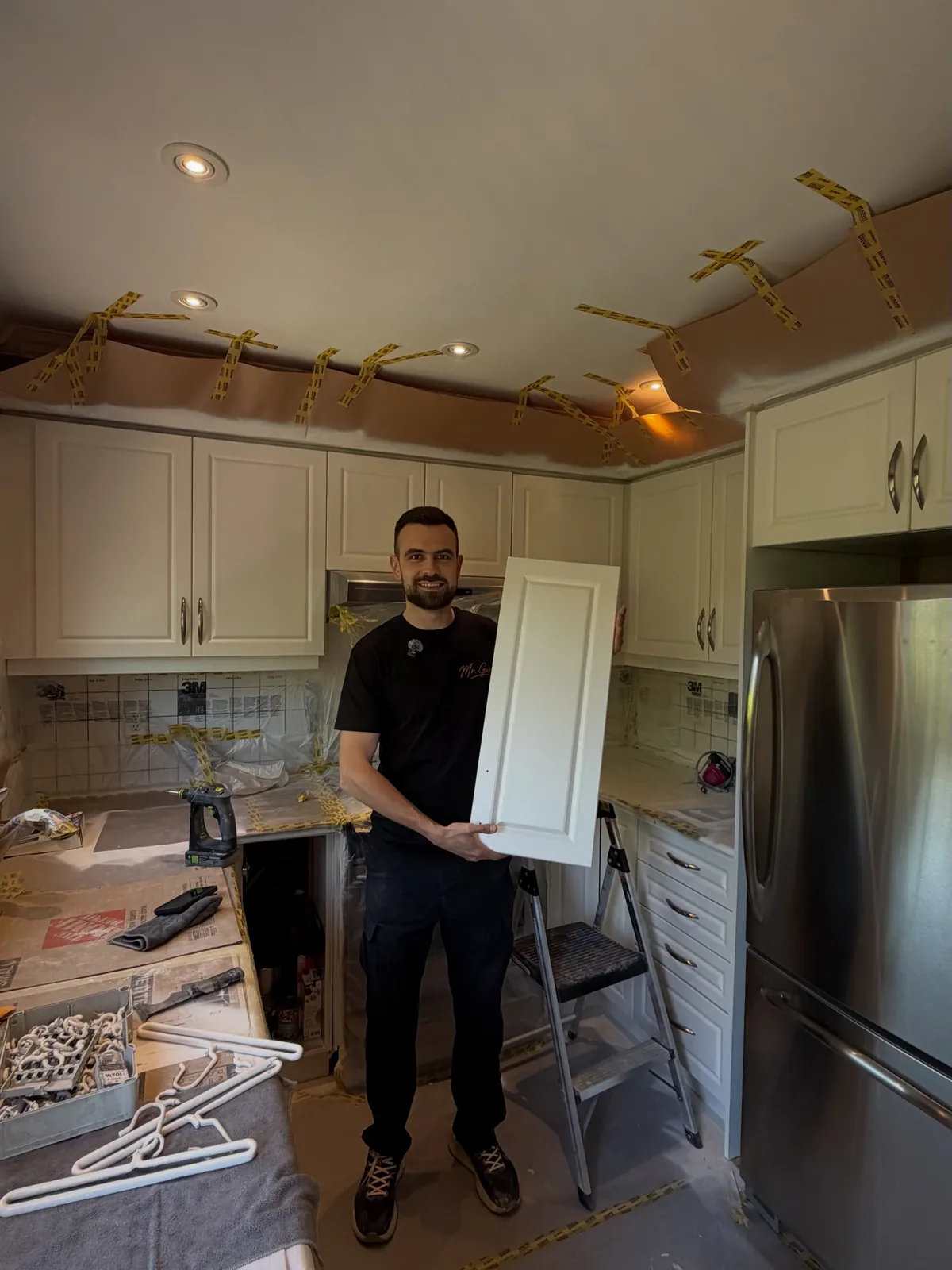
Two sprayed coats of Renner Italia 2K with hardener give MDF a smooth, even surface with no grain and no brush marks. In a cream MDF kitchen finished at the end of May 2026 the colour was Swiss Coffee; in Brossard, espresso thermofoil over MDF went white.
From a client
“The kitchen feels completely transformed and looks like a brand-new space.”