
01
Two different things: colour and texture
People ask one question, “will the oak show?”, but there are two answers. The first is about colour: the orange or honey tone, the dark streaks, the old lacquer. That part has to disappear completely, and with the right primer it does.
The second is about texture. Oak has open pores that run along the grain. Primer and colour are thin coats, and thin coats follow the surface they are sprayed on. So the pores still read as a fine texture when light hits the door from the side.
02
Making the colour disappear
Oak and cherry carry tannins, and old kitchens carry years of lacquer and cooking grease. Paint does not stick to grease, and tannins bleed through a light colour as yellow or brown shadows if they are left unsealed.
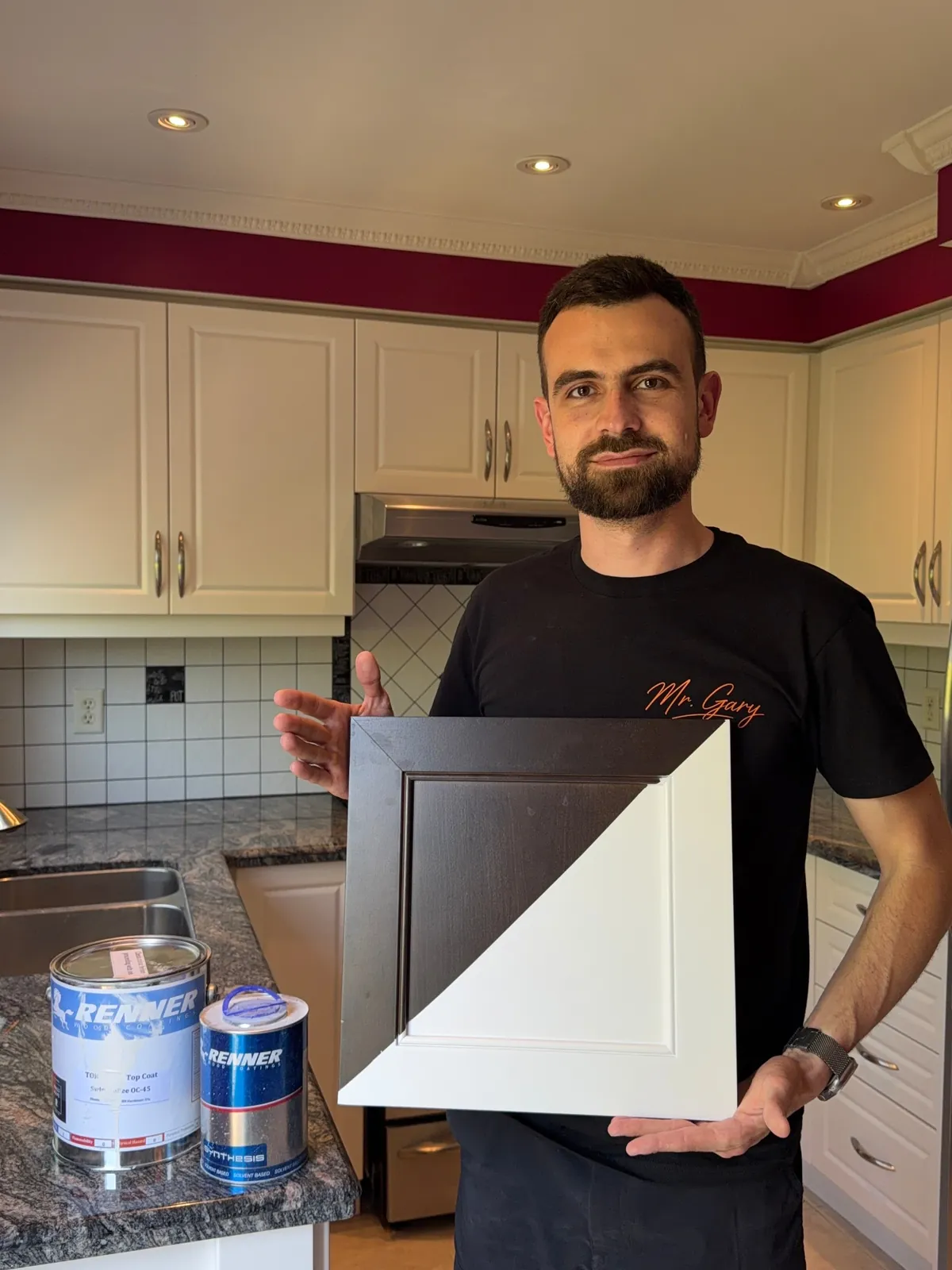
So every surface is degreased first, then machine-sanded with Festool pads and dust extraction, and sanded by hand in the profiles. Then come two coats of BIN shellac-based primer. Shellac locks in the tannins and the old finish, which is why honey oak or dark cherry can go white and stay white.
03
Deciding on the texture
This is a choice, and it is yours. Before I start we look at your doors and agree on one of two directions:
- Keep the grain. The door is sealed, primed and sprayed, and the pores stay as a soft texture. It reads as painted wood, which suits traditional and arched doors.
- Fill the grain. The pores are filled before primer for a smoother surface. Ask me about it with your photos.
04
A honey oak kitchen, July 2026
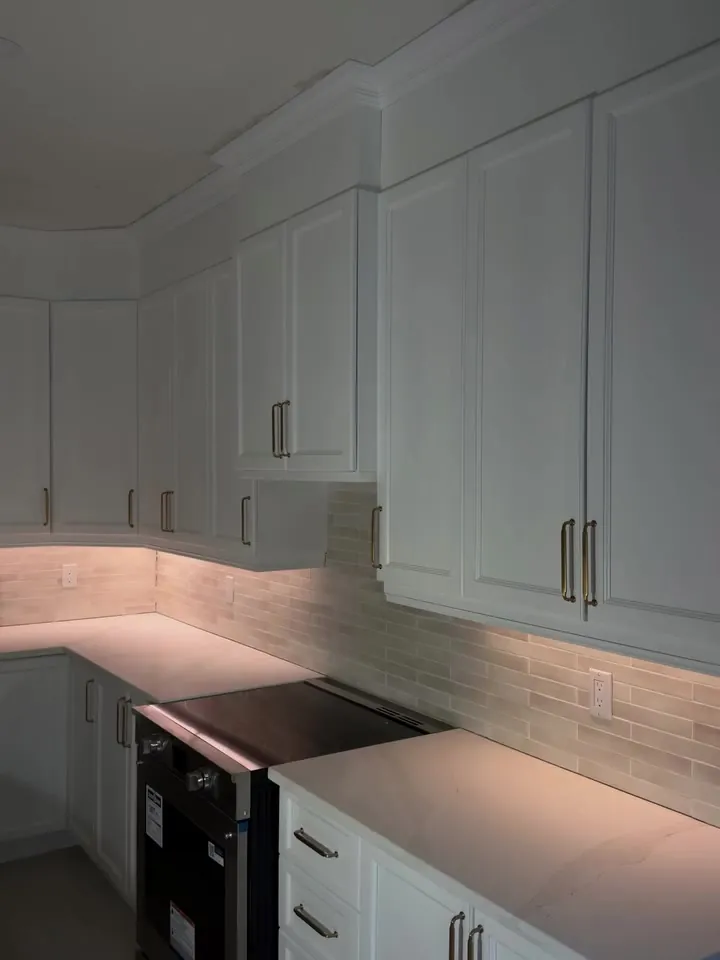
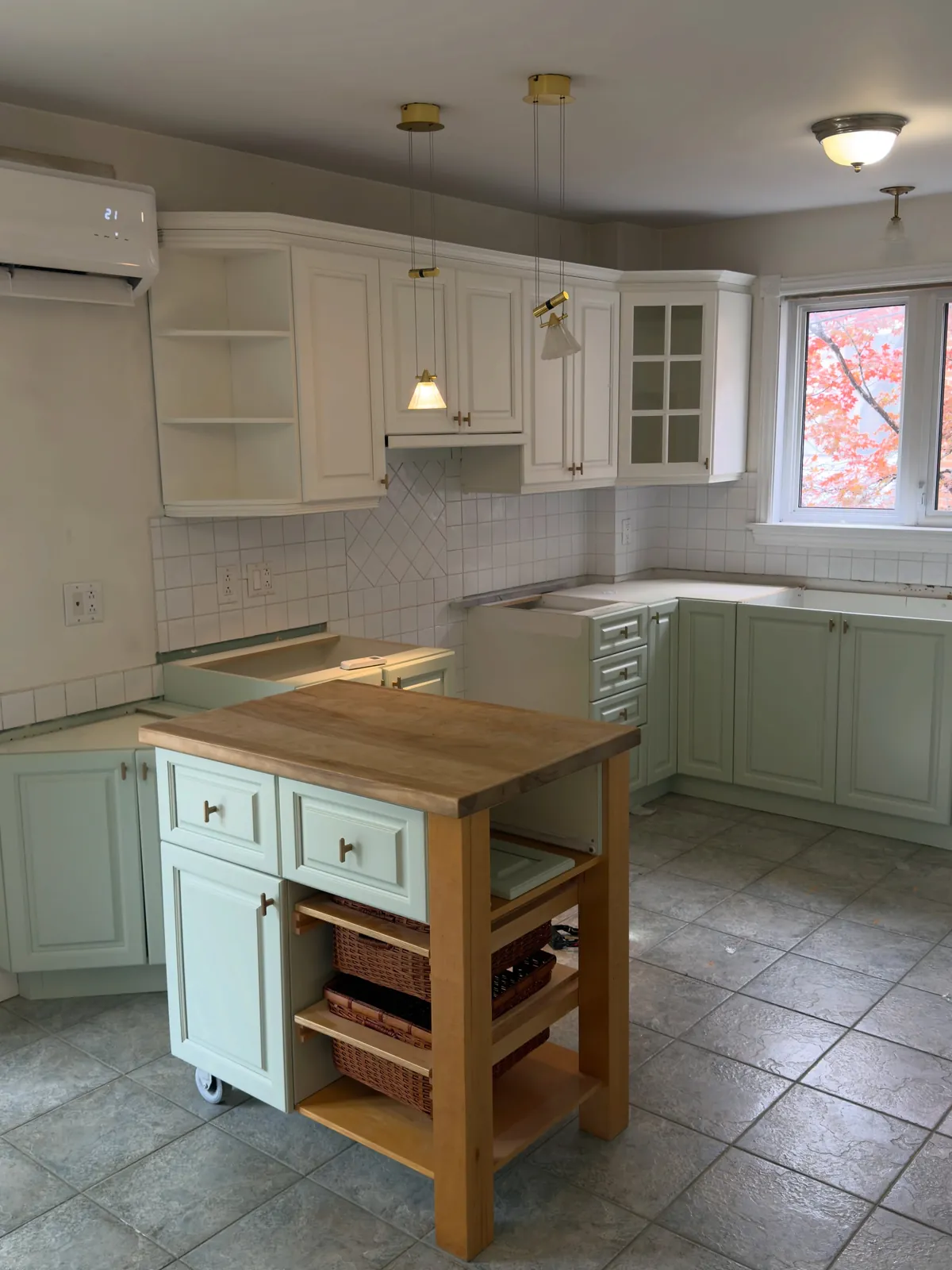
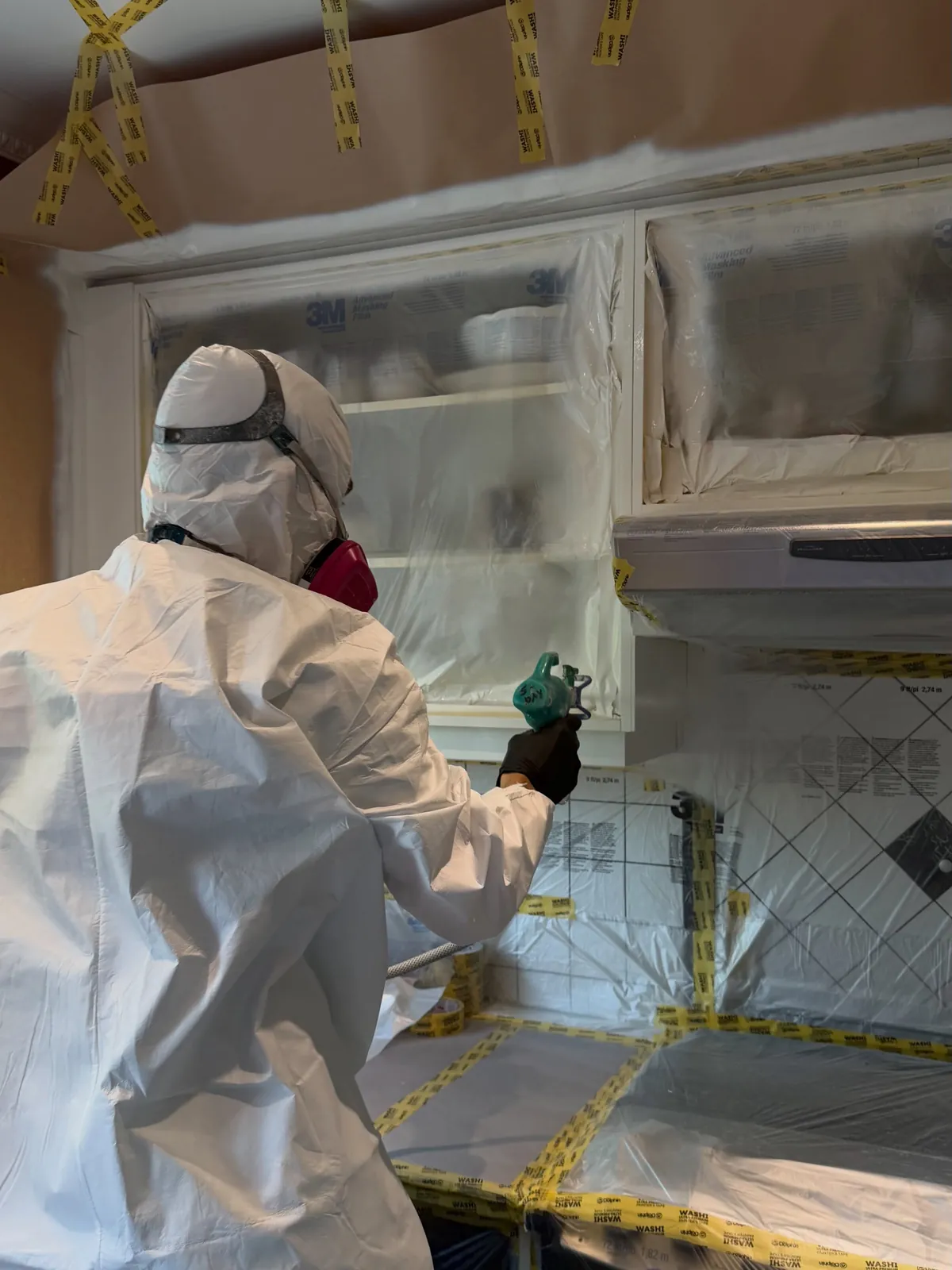
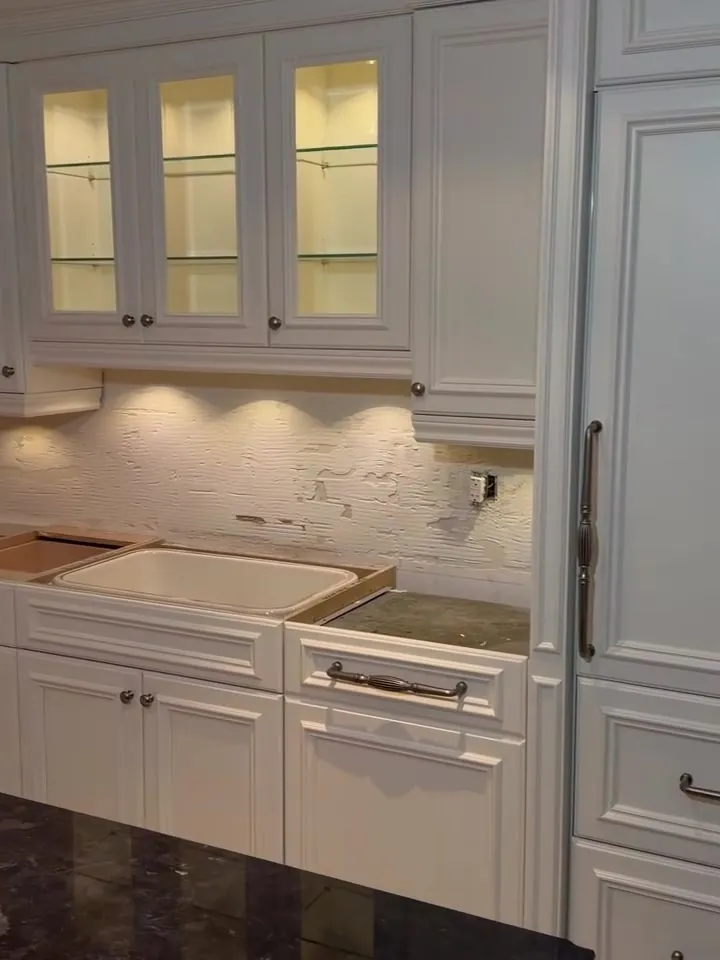
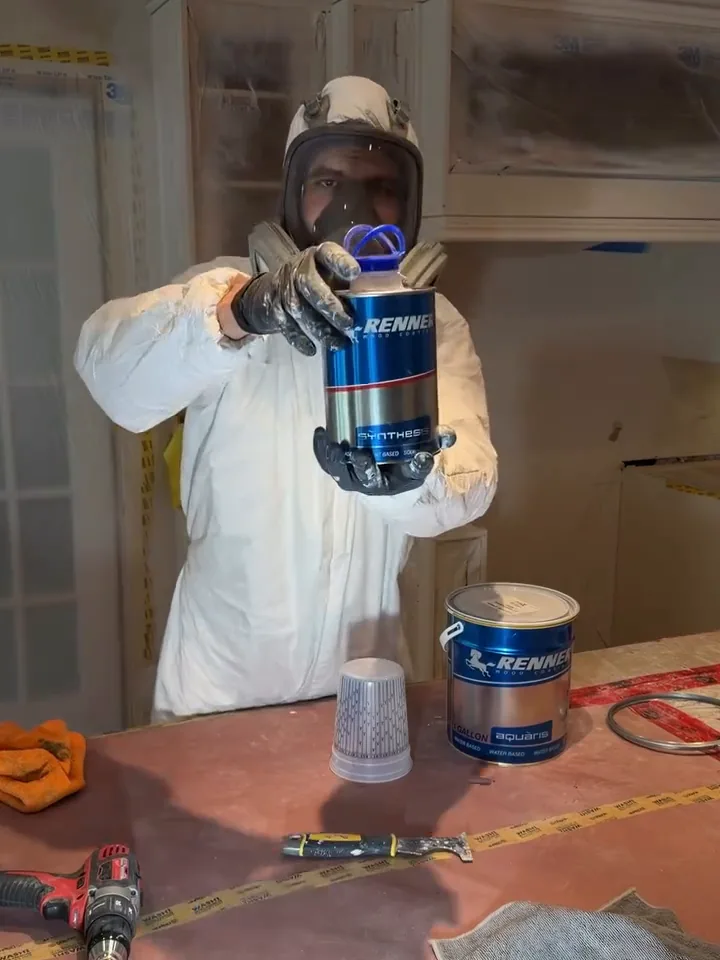
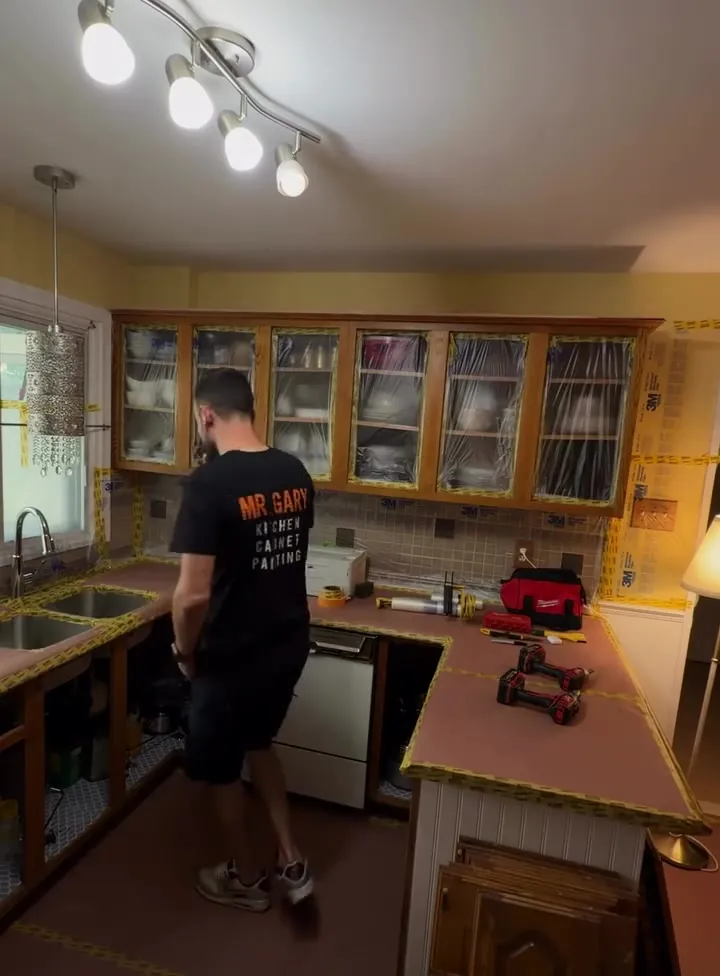
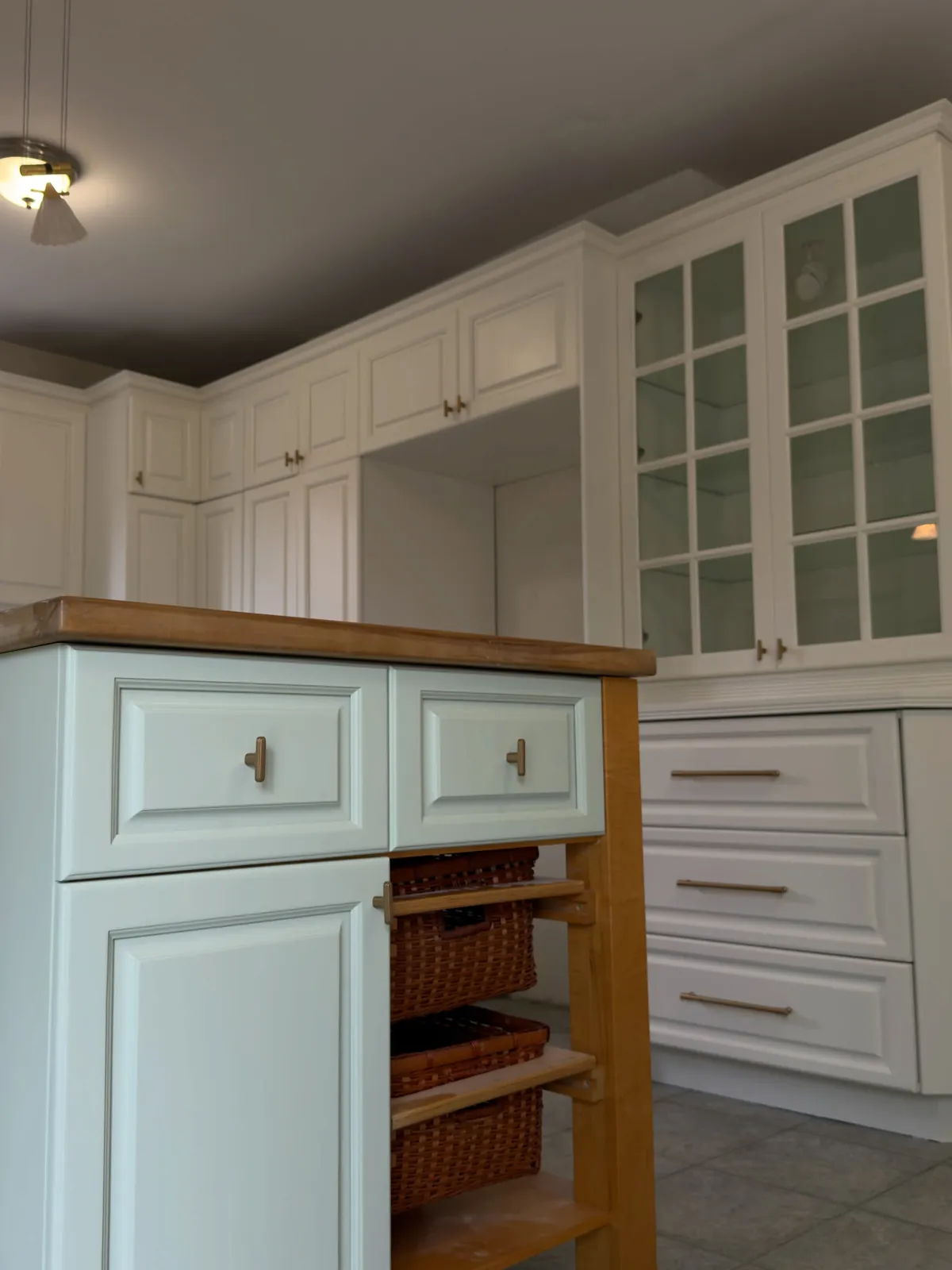
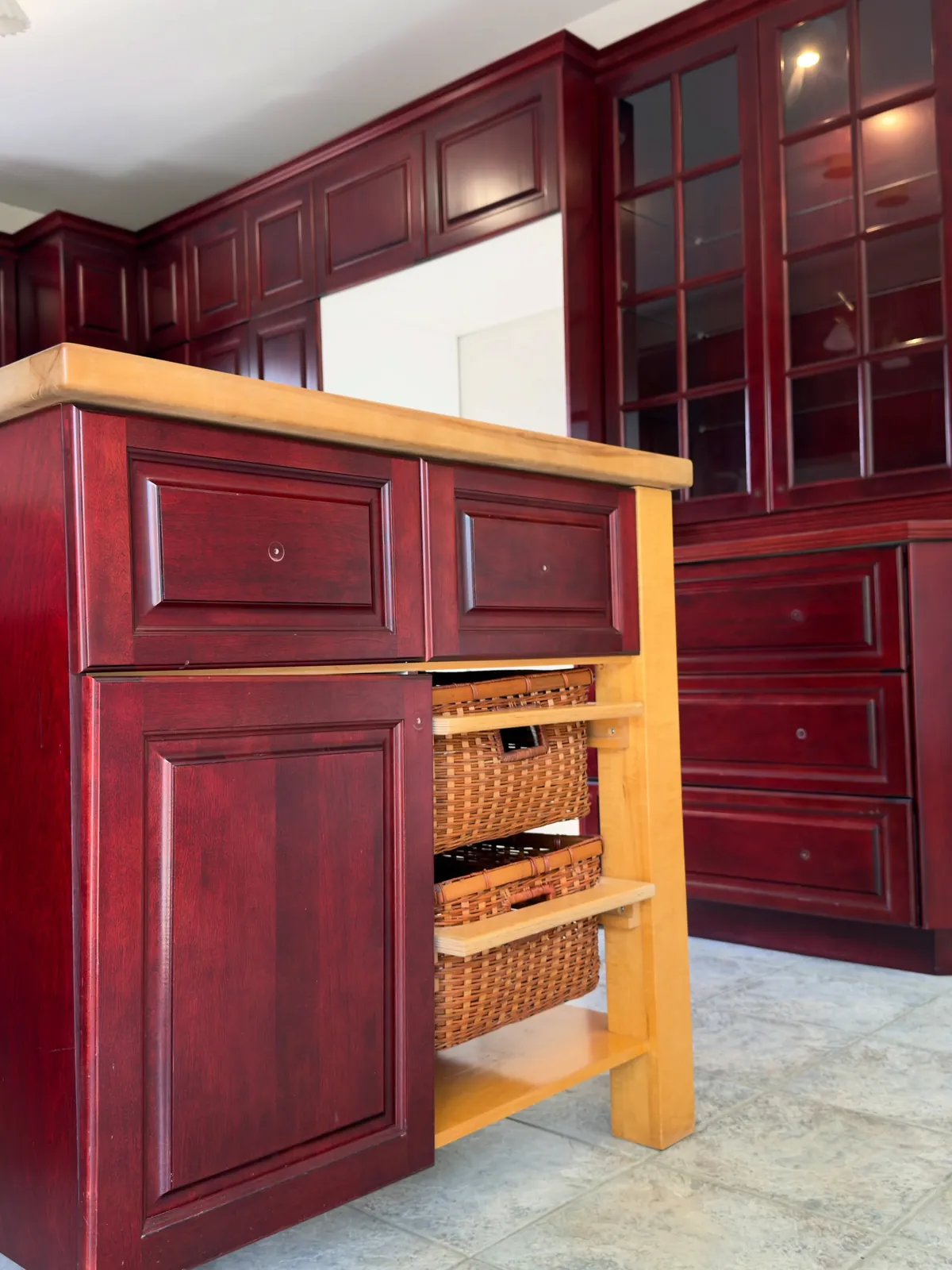
This kitchen had honey oak cathedral doors, glass uppers and brass handles. Day one was masking and taking the doors off. Day two was prep and sanding the arched doors, whose curves are sanded by hand. Day three was primer, with the glass fronts taped. On day four the first coat of Renner went on, and the arched doors went white.
Curved and raised profiles are where brushed paint usually builds up in ridges. Sprayed doors hanging in a booth get an even coat on the flat panel and inside every curve. More on that in spray finish vs brush and roller.
05
Cherry and MDF
Cherry has a much finer grain than oak, so painted cherry comes out smoother. The same shellac primer matters there too, because cherry carries tannins as well. The cherry kitchen with white and sage and the cherry shaker in Town of Mount Royal were both done this way.
MDF and HDF have no grain at all, so a sprayed finish on them looks the most like a factory door.
06
Look at your doors in side light
Hold a flashlight flat against a door so the light rakes across it. The texture you see is roughly what will show under a painted finish if the grain is kept. If you like it, keep it. If you want it smoother, say so at the start.
Send photos of a door front and a close-up of the grain with a free photo quote, and read how the oak and wood cabinet service works.