01
Refinish, reface or replace
Replacing tears everything out: demolition, new boxes, often new counters, and a wait for the new cabinets. Refacing keeps the boxes, orders new doors and covers the frames in veneer. Refinishing keeps all of it and changes the finish, so there is nothing to manufacture and nothing to throw away.
If the doors are solid and you like their shape, refinishing is usually the most direct route to a kitchen that looks new. The painting vs refacing page compares the two in detail.
02
What wears out in a kitchen
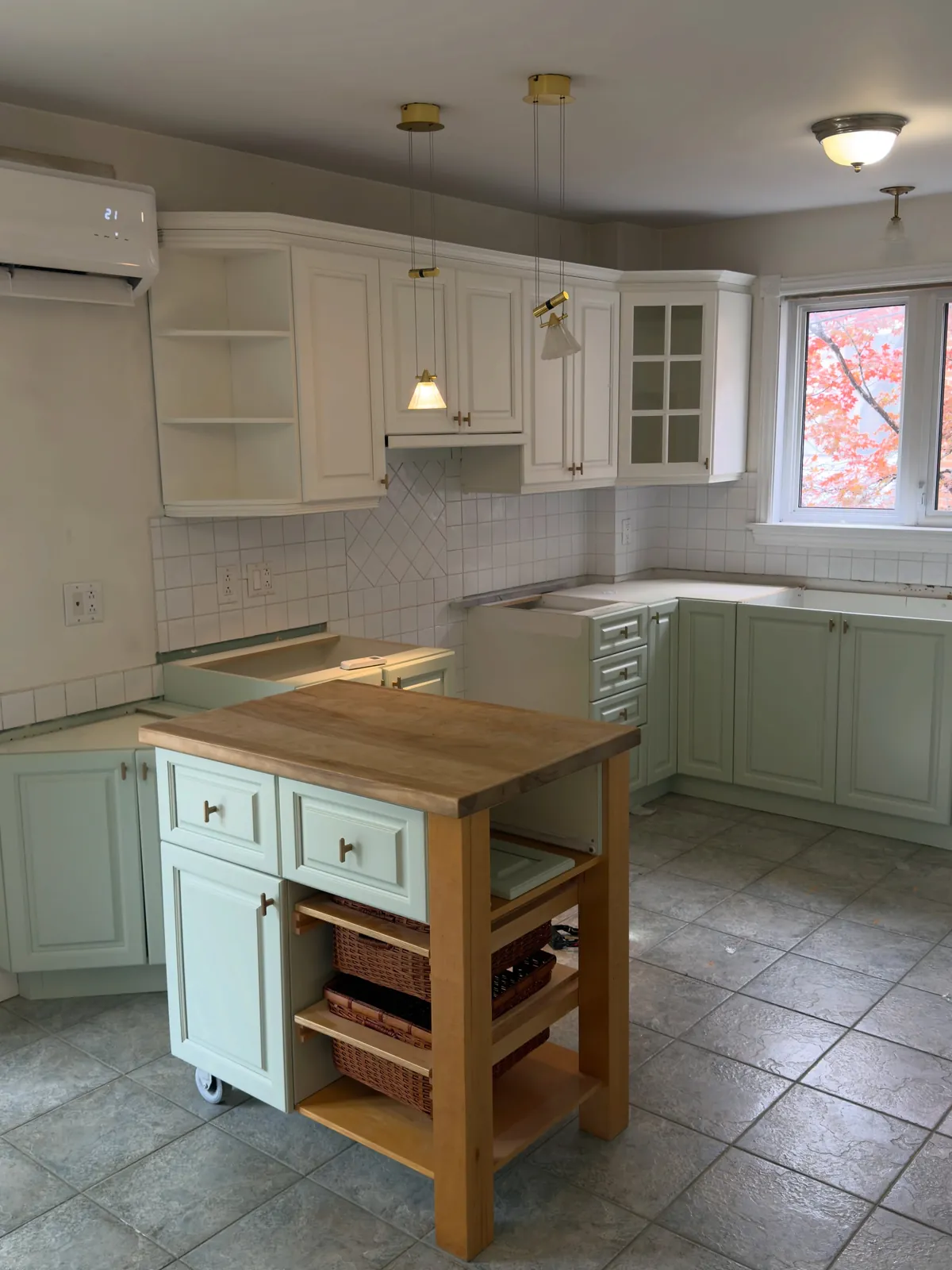
Kitchens wear in the same places: door edges and corners near the handles, the drawer fronts you open every day, the toe kicks that take mops and feet, and the sink base where water sits. Old paint chips at the corners, clear finishes turn yellow, grease builds up in the profiles.
All of that can be fixed as long as the material underneath is still sound.
03
Repairs come first
Before any primer goes on, I fix what the new finish would otherwise show:
- Chips and dents filled and sanded flush.
- Damaged toe kicks rebuilt with 2K Bondo.
- Old silicone cut out along counters and backsplash, so the coating grips properly in the corners.
- Old handle holes filled if the new hardware has different spacing.
- A careful final inspection of every door, fixing small imperfections before the last coat.
04
Prep that makes it last
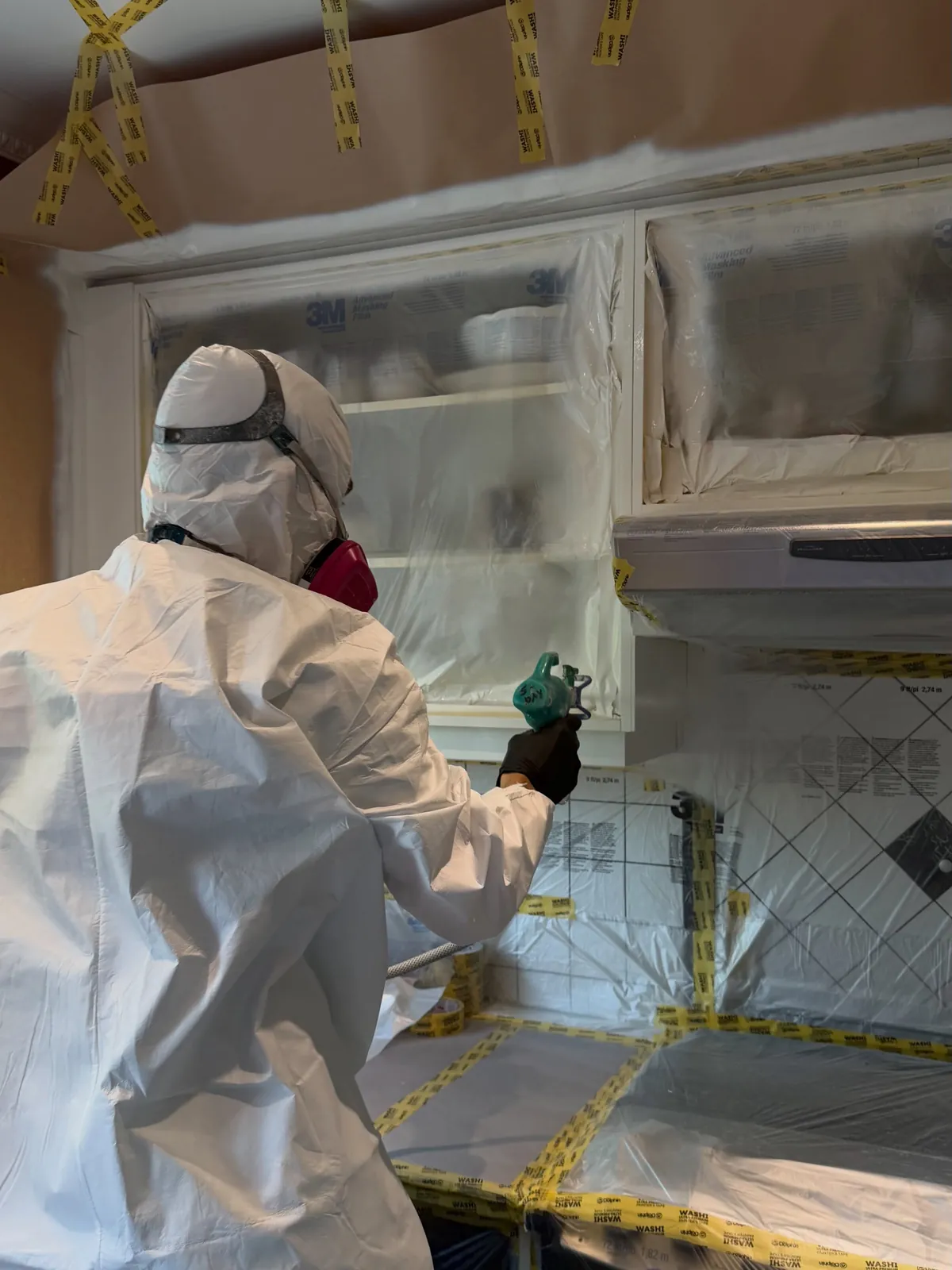
Every surface is degreased and sanded. Then two coats of BIN shellac-based primer: it bonds to old finishes and seals stains, tannins and old lacquer so they stay under the new colour. The primer is sanded smooth before any colour.
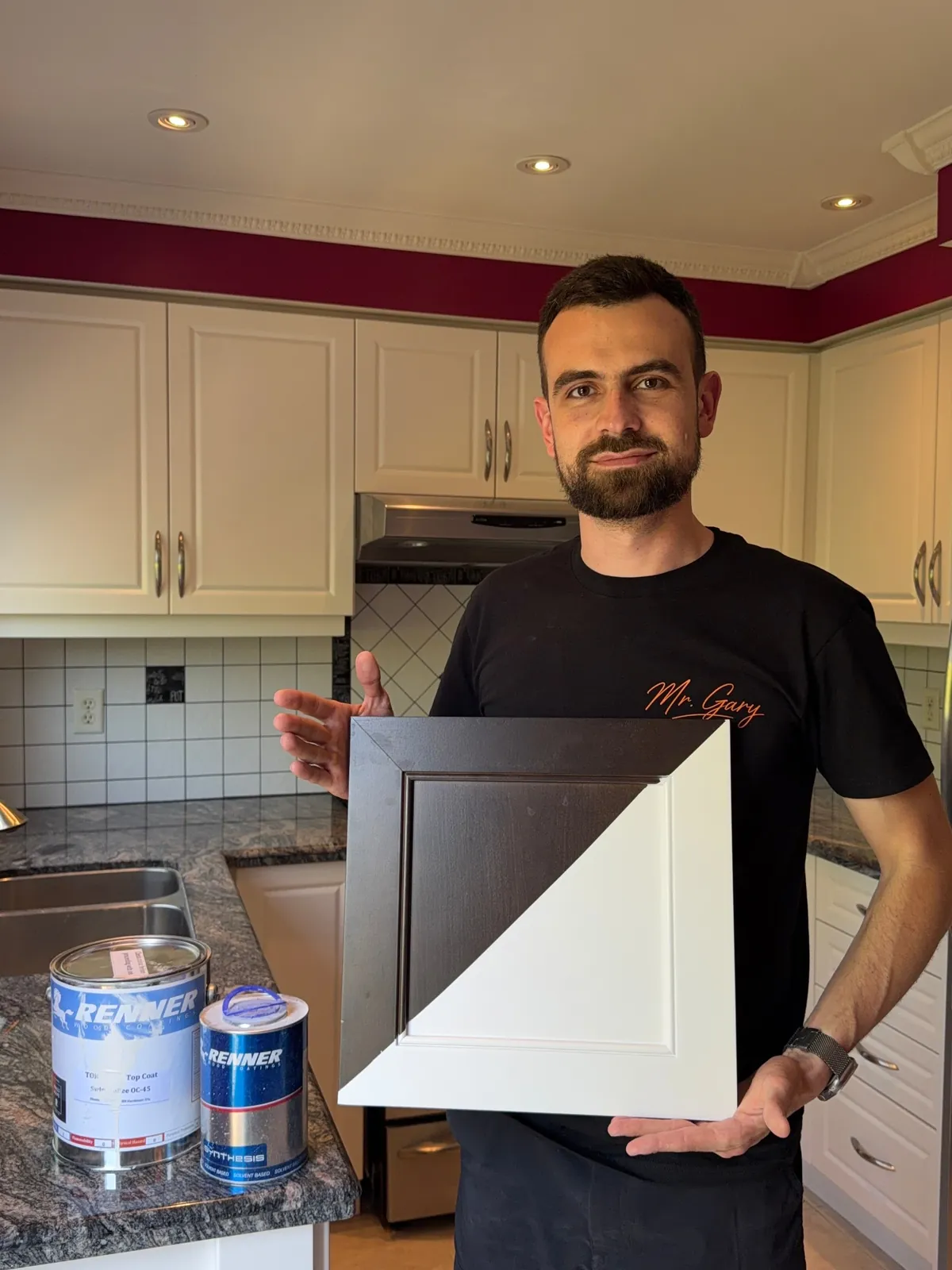
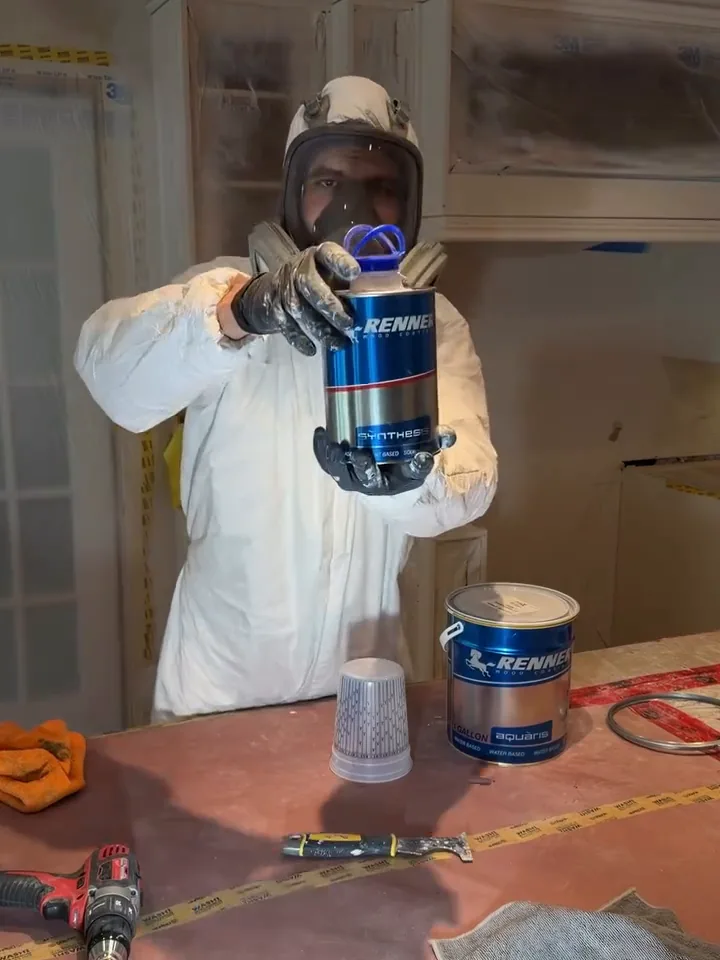
The finish is two sprayed coats of Renner Italia 2K with hardener, washable and made for everyday kitchen use.
05
When replacing makes more sense
Structural damage, swollen particleboard, split or warped doors, boxes coming apart: a new coating cannot fix those, and I will say so from your photos. Photos of the sink base and of the door edges usually settle it.
06
The result
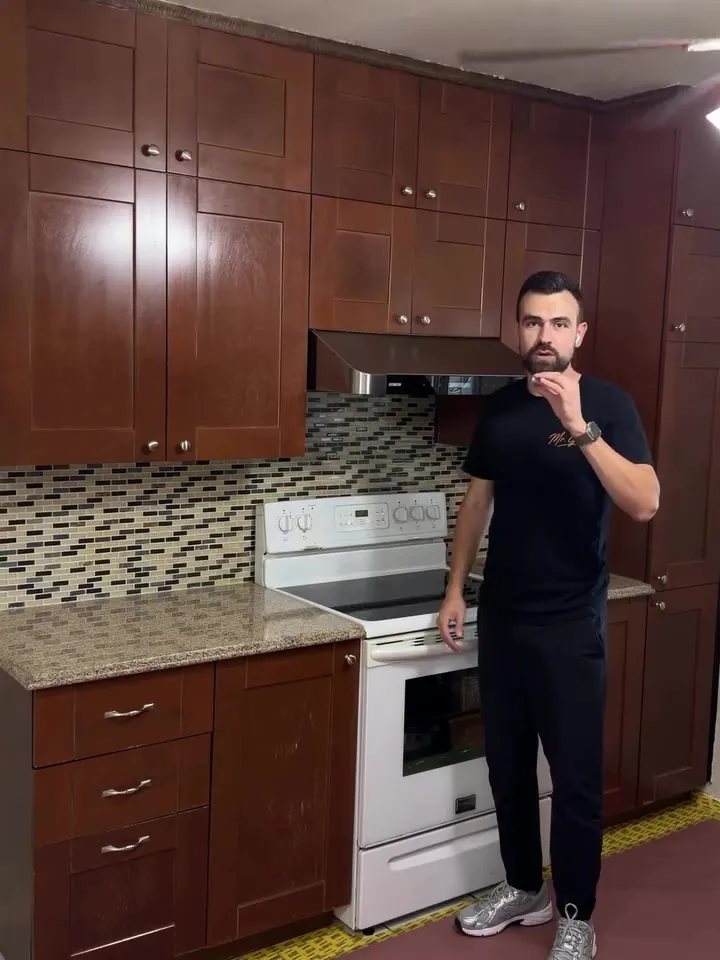
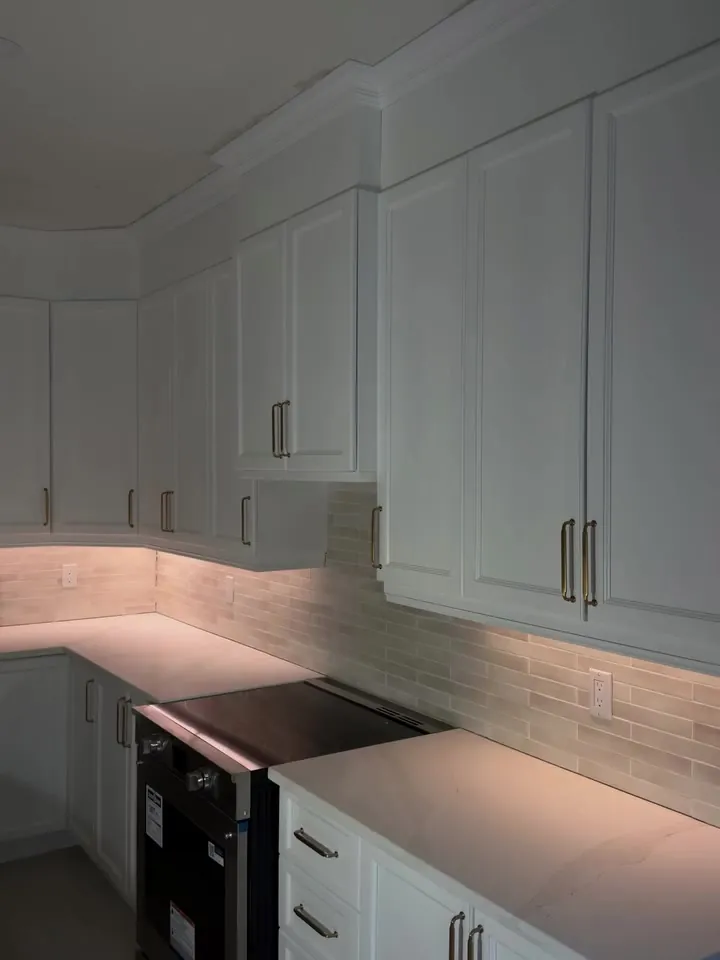
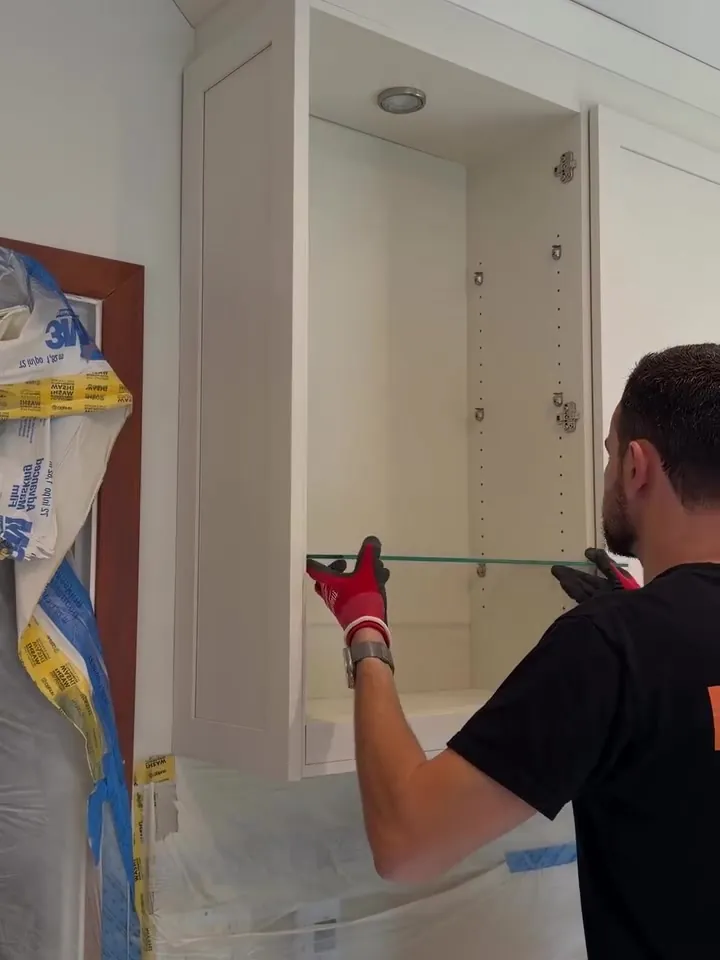
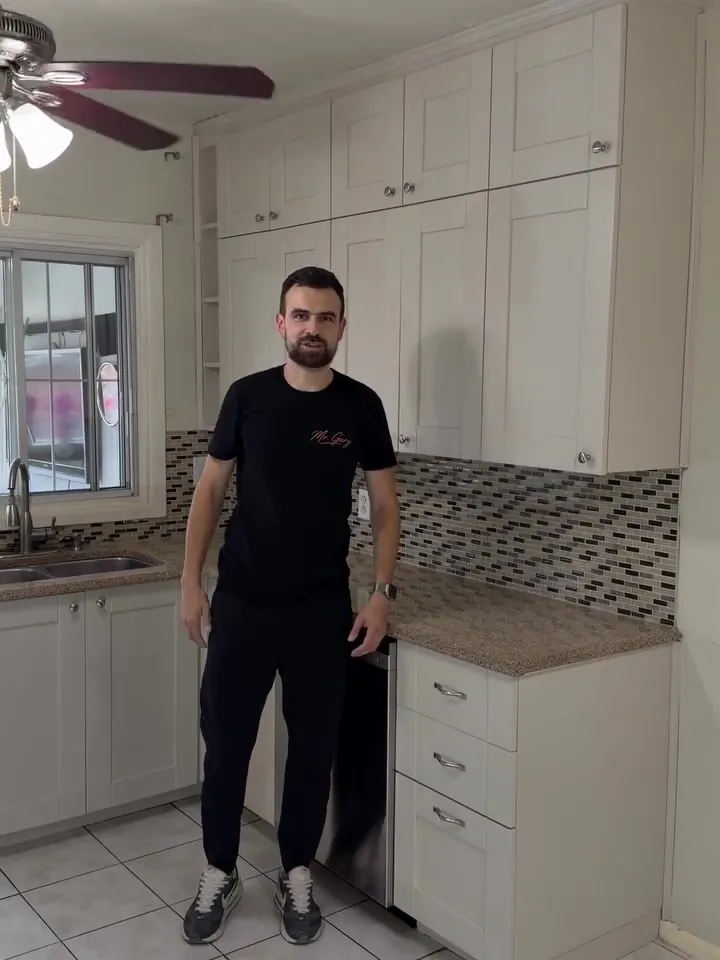
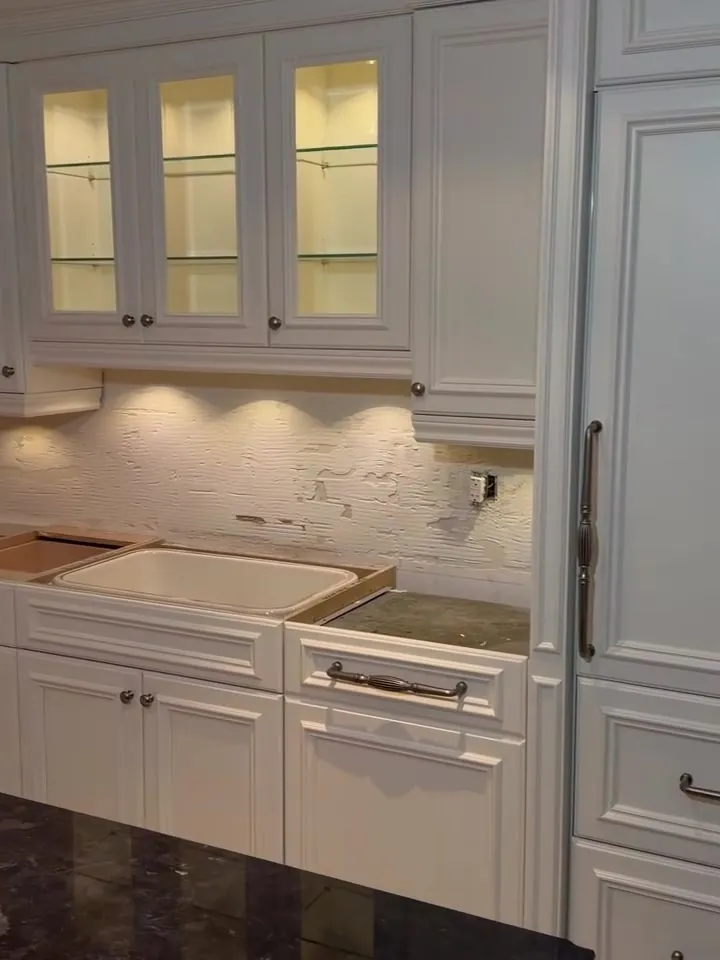
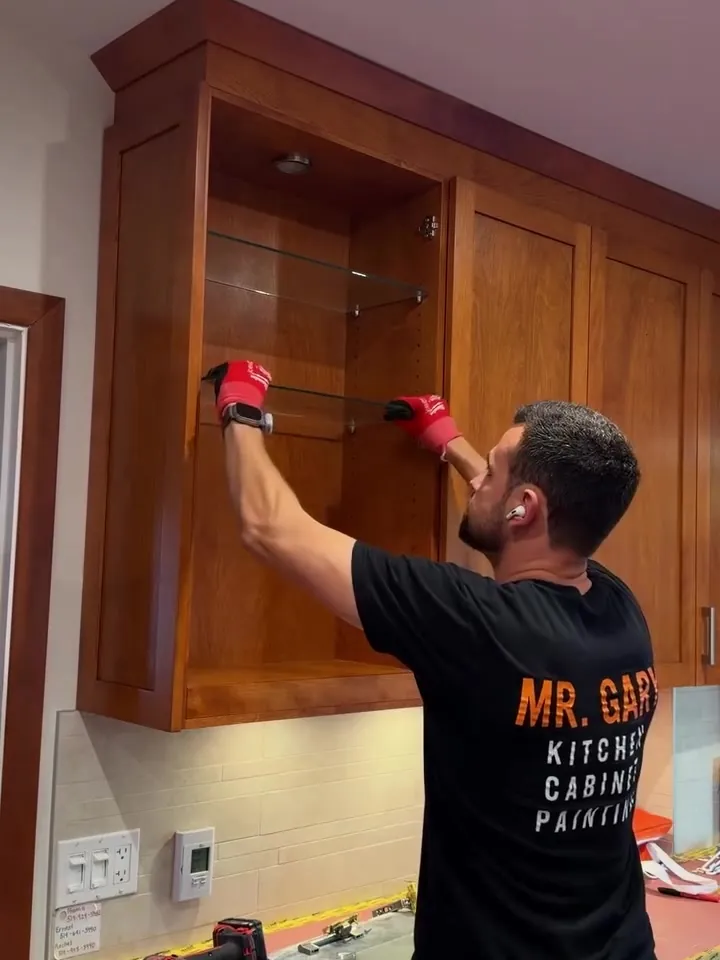
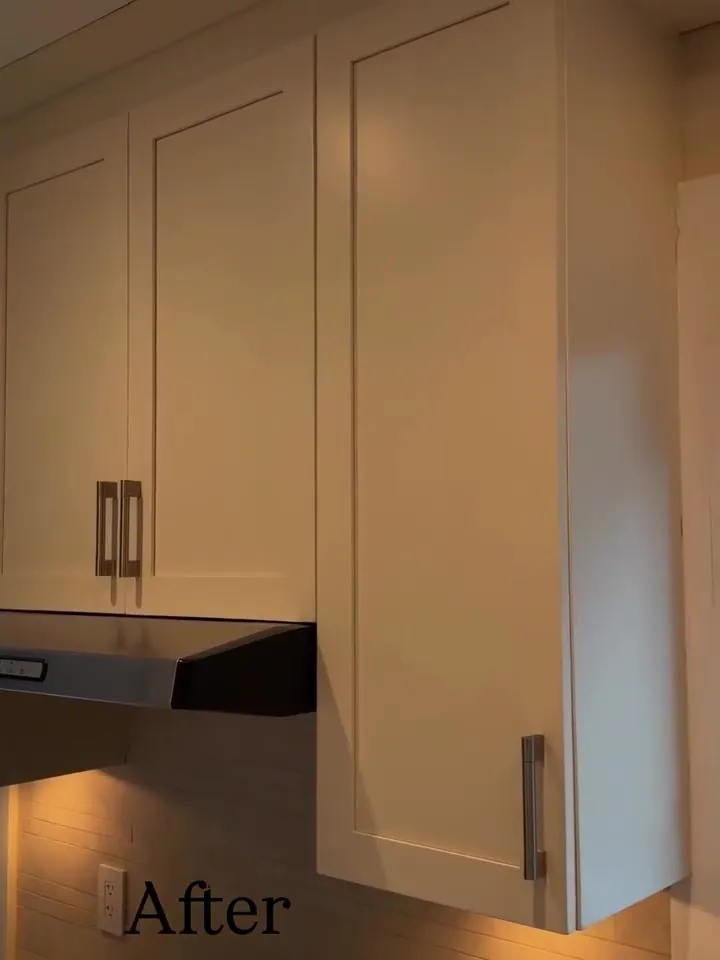
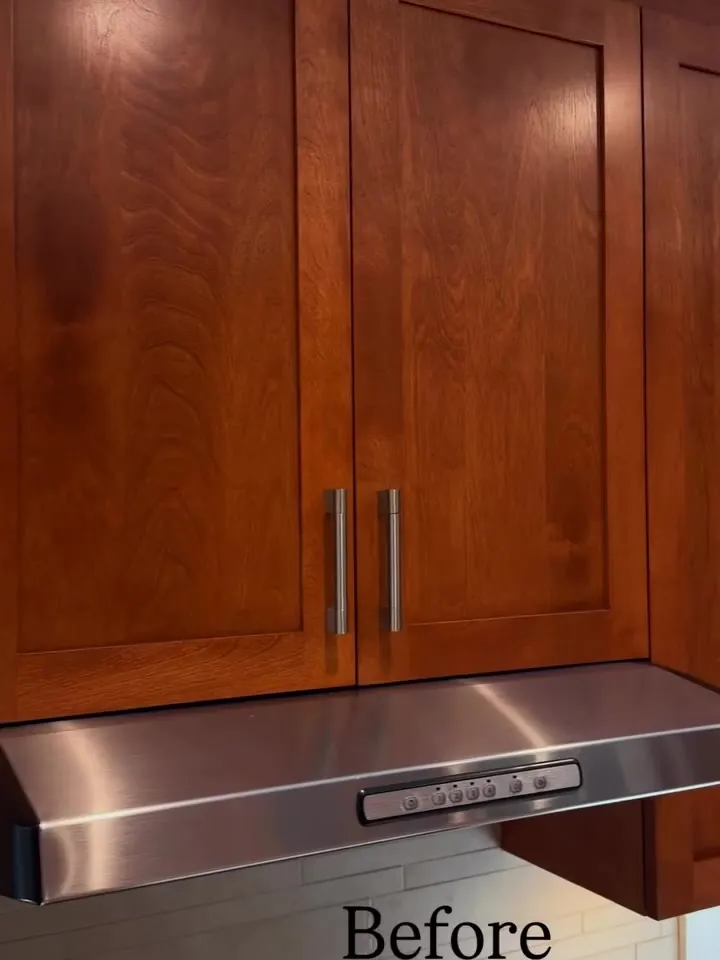
The same cabinets, with a smooth, even sprayed finish on doors, boxes and panels. In Town of Mount Royal a cherry shaker kitchen with glass uppers went light soft white: the glass came out, the frames were primed and sprayed, and the glass shelves went back in.
From a client
“Instead of replacing our cabinets, we decided to refinish them, and it was one of the best decisions we made.”