01
Why spraying looks different
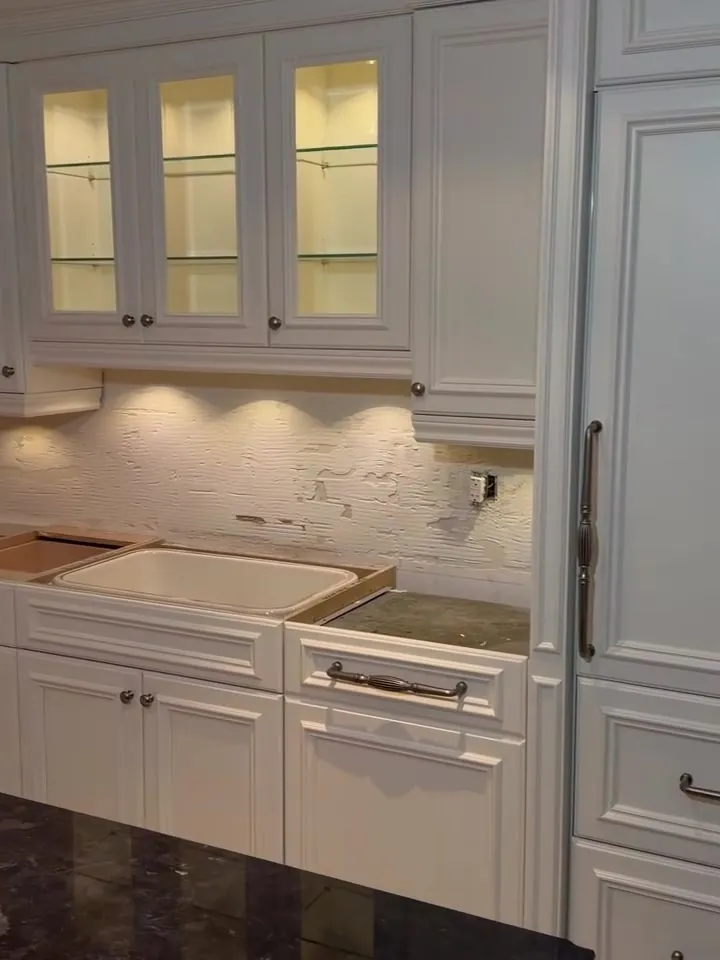
A brush drags the paint and leaves lines; a roller leaves an orange-peel stipple. A spray gun lays the coating down as a fine mist, in thin, even coats, and a good 2K coating then levels itself flat. On a shaker door the difference shows most in the inside corners and on the flat panel, where brush marks catch the light.
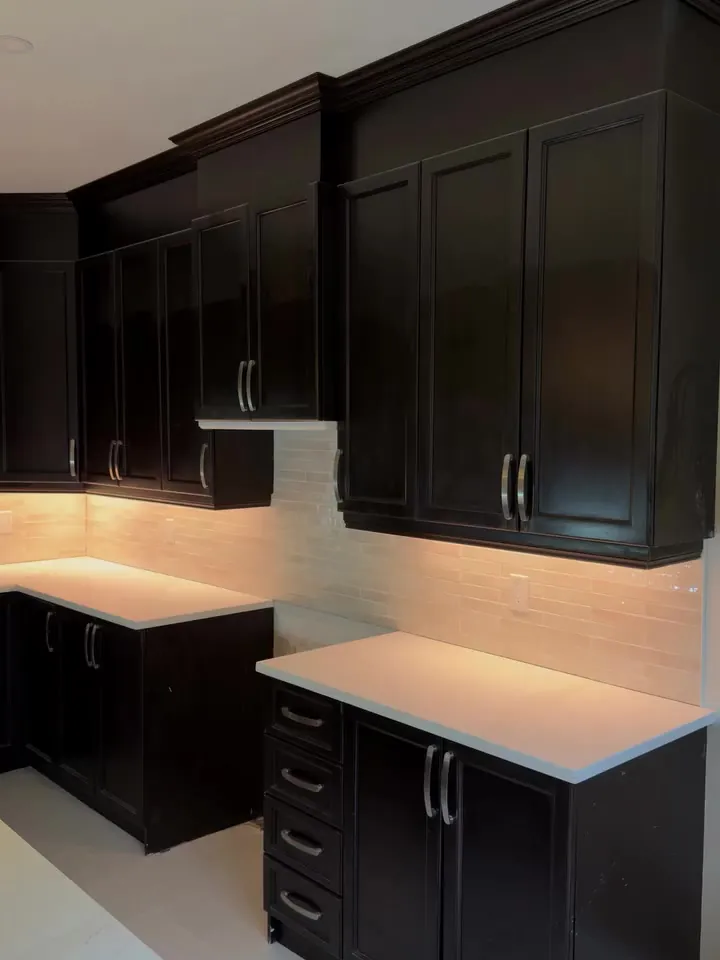
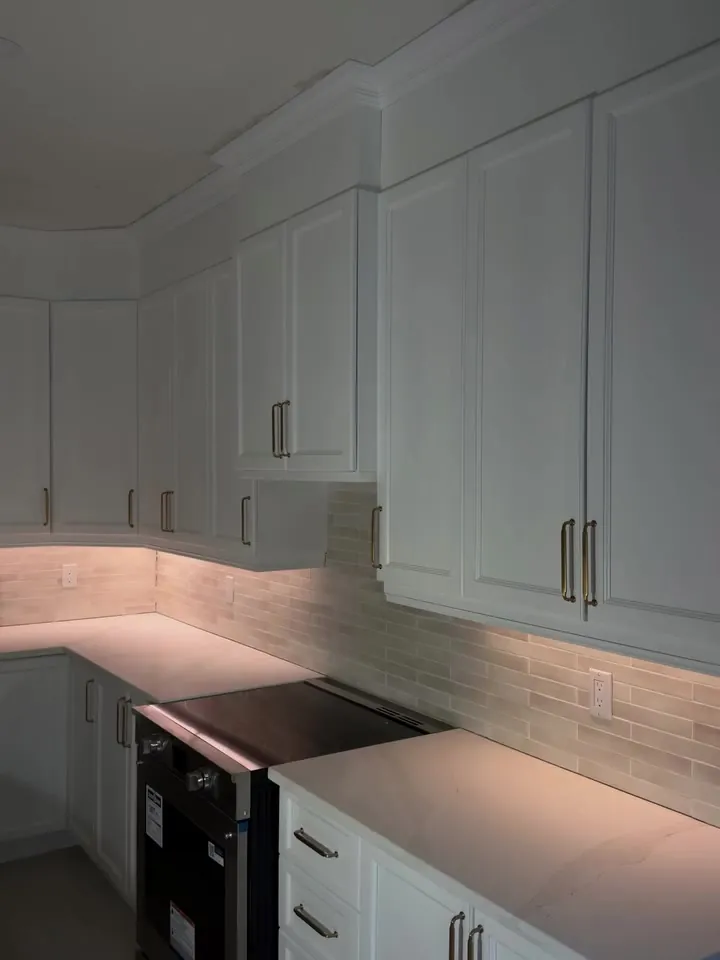
That is the finish clients describe as factory-made: smooth, even, and hard to tell from a new door.
02
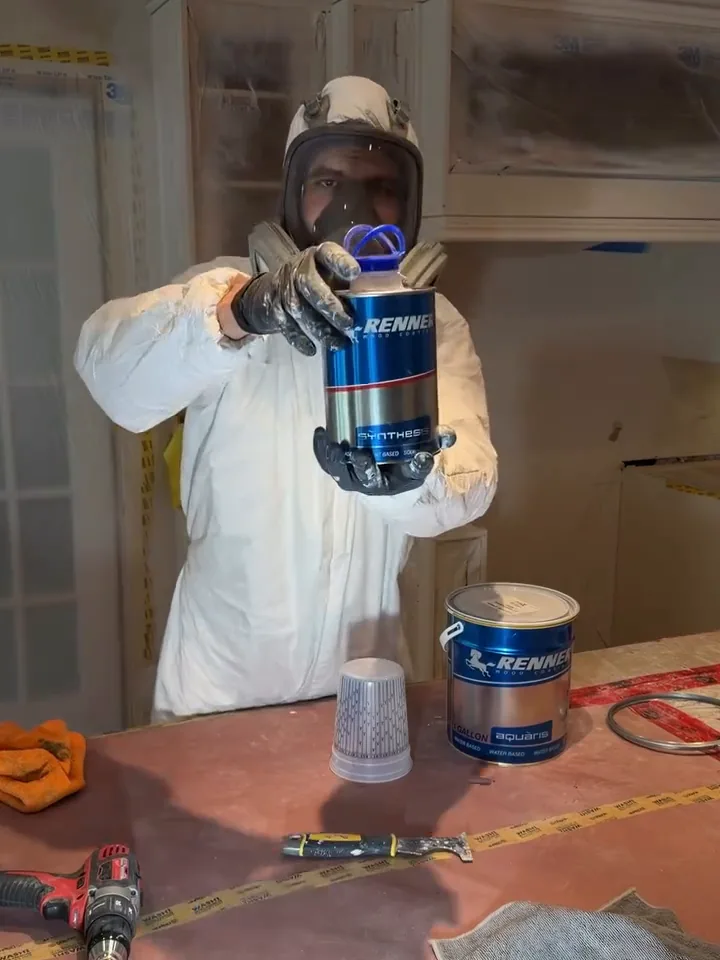
The coating: Renner Italia 2K
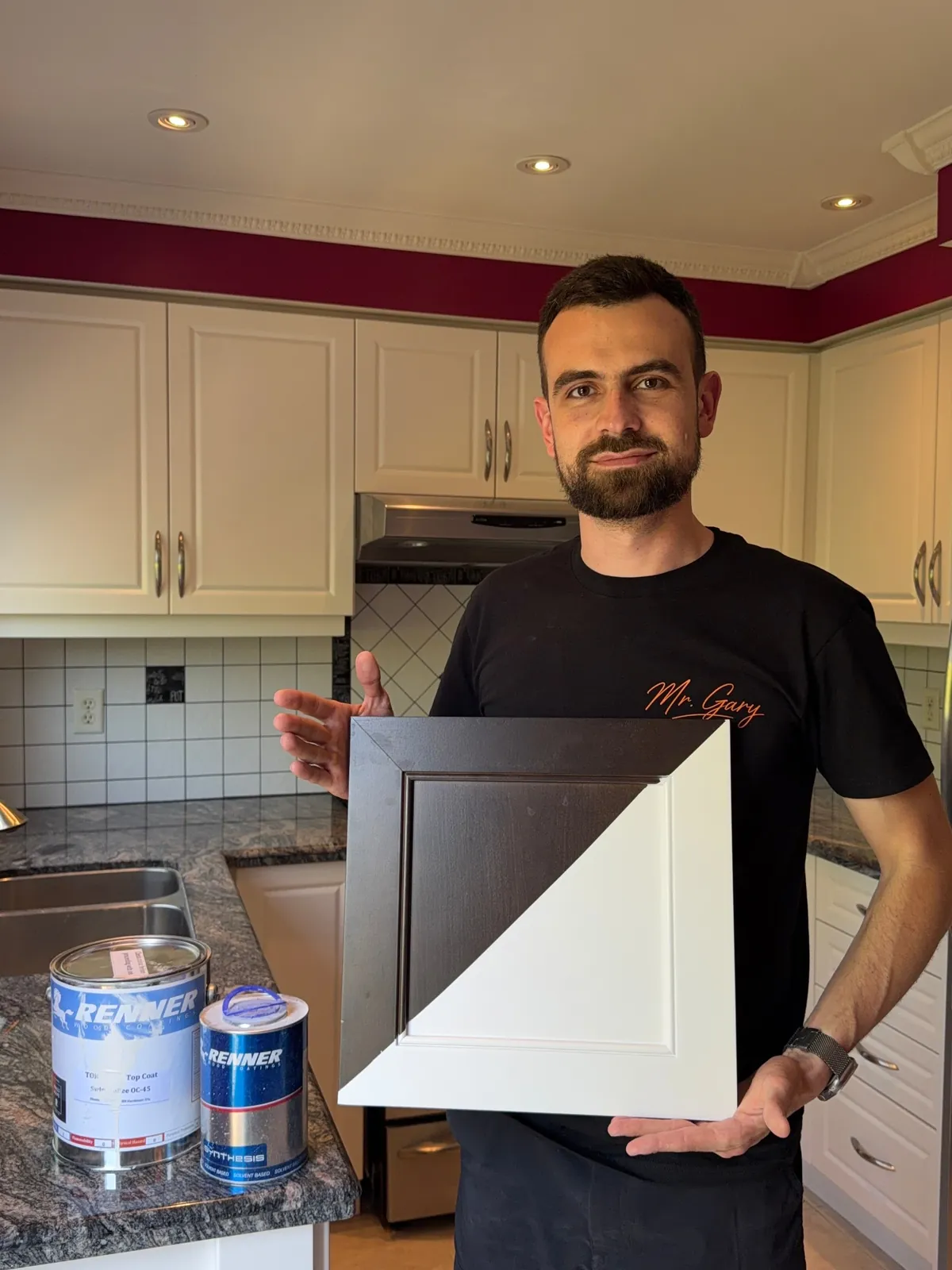
Renner Italia is an Italian maker of industrial wood coatings. The 2K system has two components, the coating and its hardener, mixed on site right before spraying. Once cured it is much harder than any wall paint: washable, made for everyday use and designed to resist chipping.
Under it go two coats of BIN shellac-based primer, sanded smooth, so the colour coats sit on a sealed, even base.
03
The booth in your kitchen
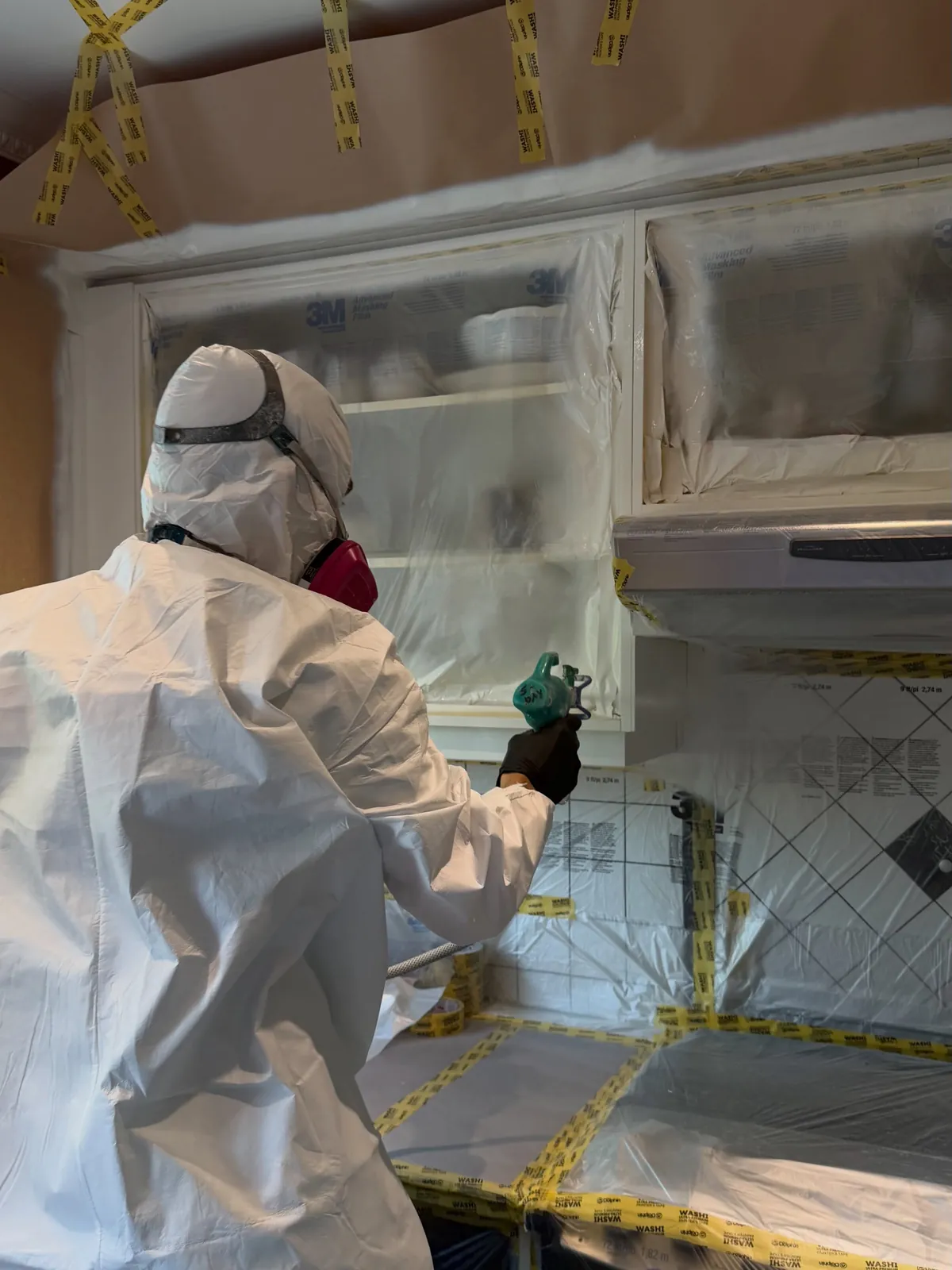
With ZipWall poles and plastic film I build a closed spray booth on-site. It contains the overspray, helps control paint fumes and keeps dust off wet doors. A separate barrier closes the work area off from the rest of the home, and 3M film covers appliances, counters, floors and anything on open shelves.
Even a small kitchen can take the full setup: booth, drying racks and protection. The booth helps contain overspray and control paint fumes during spraying.
04
Doors in the booth, boxes in place
Doors and drawer fronts hang on racks in the booth to be sprayed. The cabinet boxes, face frames, end panels and island stay where they are, so I mask around them and spray them in place. Both get the same primer, the same coating and the same colour, so everything matches.
05
Every door through my own hands
Every door passes through my own two hands, from sanding to the last coat. Before the final finish I carefully inspect every door and fix any small imperfections.
From a client
“The finish looks factory-made, smooth and durable.”