
01
What thermofoil is
Thermofoil is a thin vinyl film, heat-pressed and glued over an MDF door. It is shiny, slick and non-porous, which is why ordinary paint slides off it and why people often assume it can only be replaced.
It has two weak spots: heat and the glue line. Near an oven, a kettle or a dishwasher vent the film softens and lifts, usually starting at an edge or a corner.
02
Can thermofoil be painted?
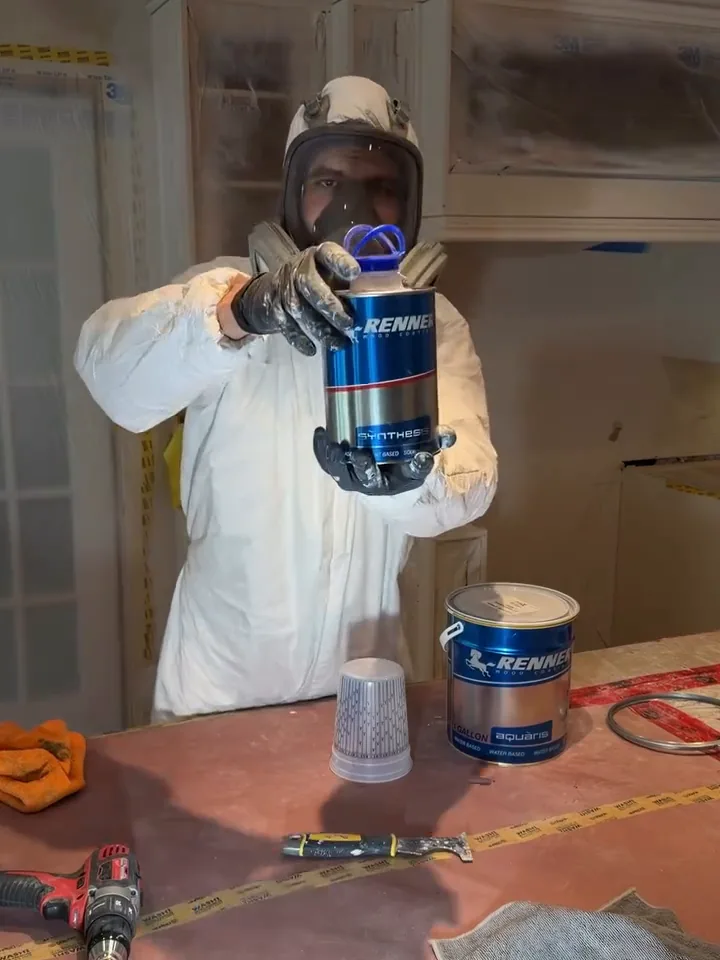
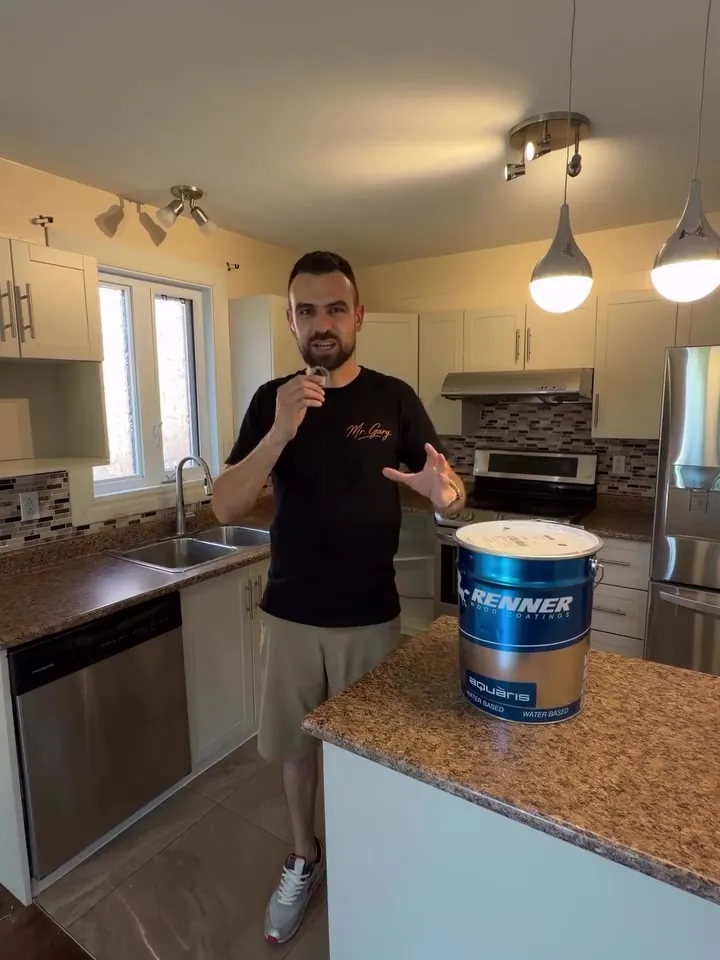
Yes, in many cases. Using industrial Renner coatings with hardener, I can refinish many thermofoil, MDF and HDF doors with a smooth, durable, factory-style finish.
Two situations, two methods: where the film is peeling, it comes off down to the MDF; where it is sound and well bonded, it is sanded and primed for adhesion.
03
Peeling thermofoil: removing the film
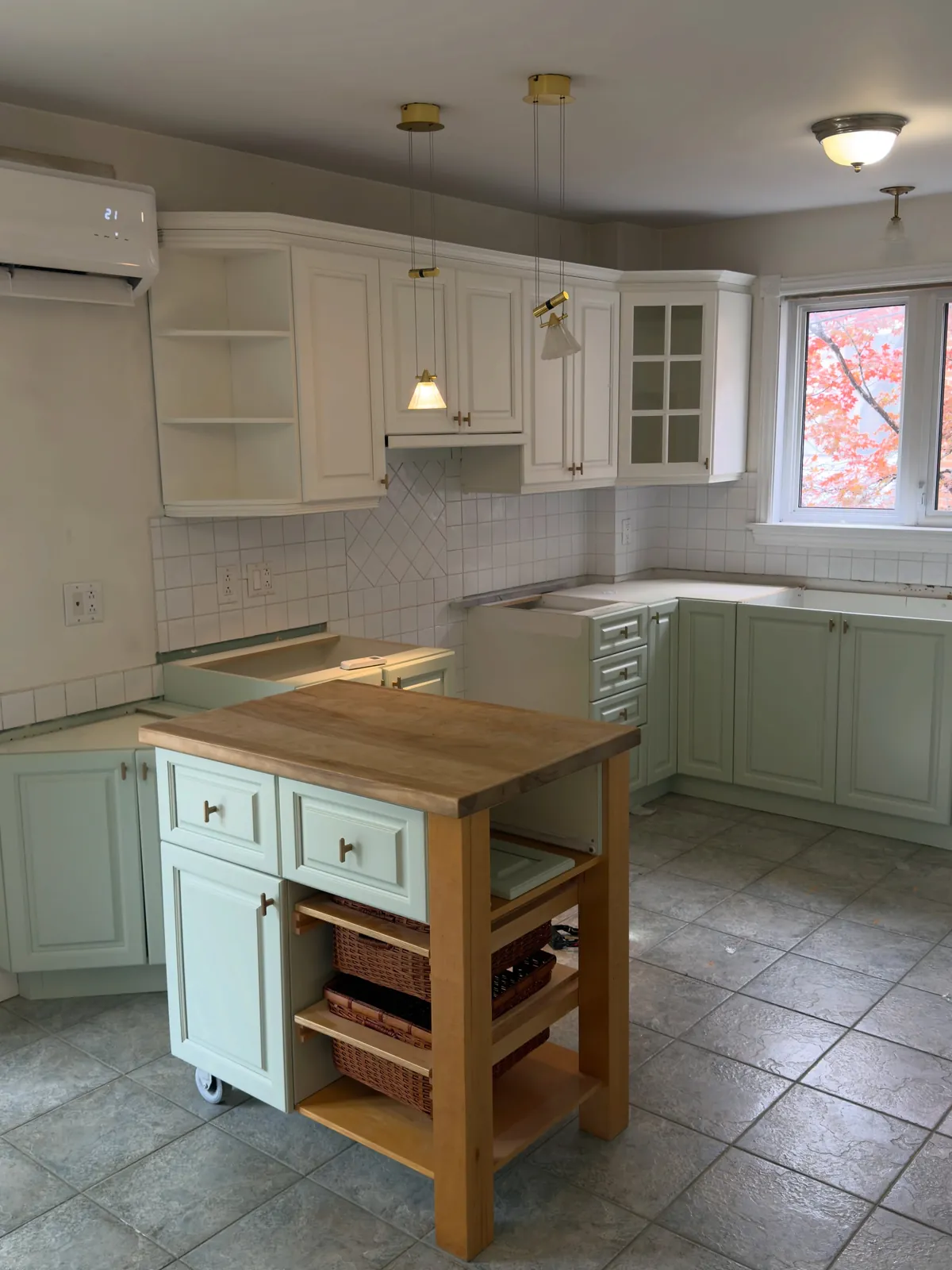
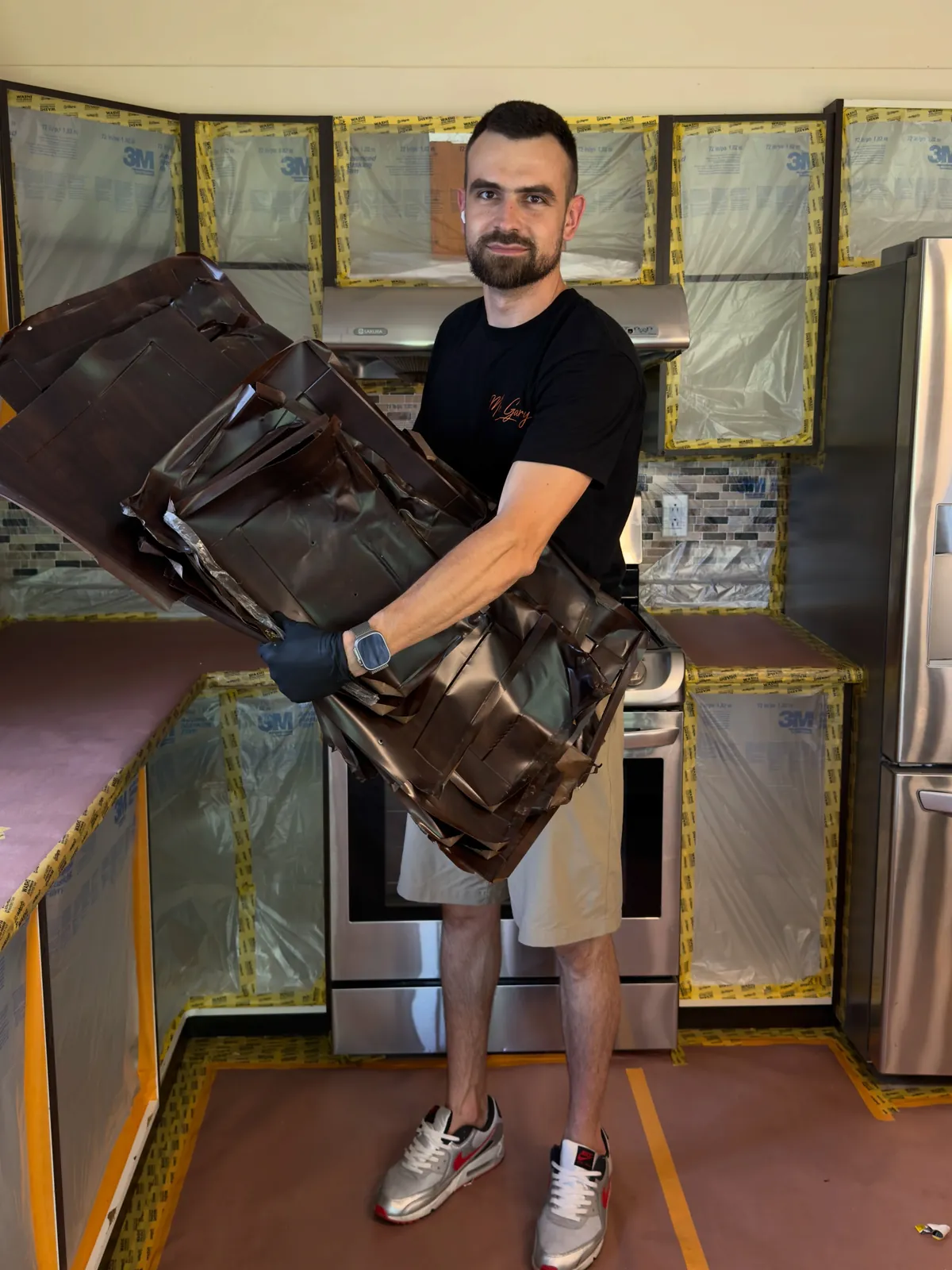
Peeling film is the most common problem, and painting over it fails: the loose film keeps lifting and takes the paint with it. So it comes off. On day two in Brossard I removed the thermofoil on the island; underneath was MDF.
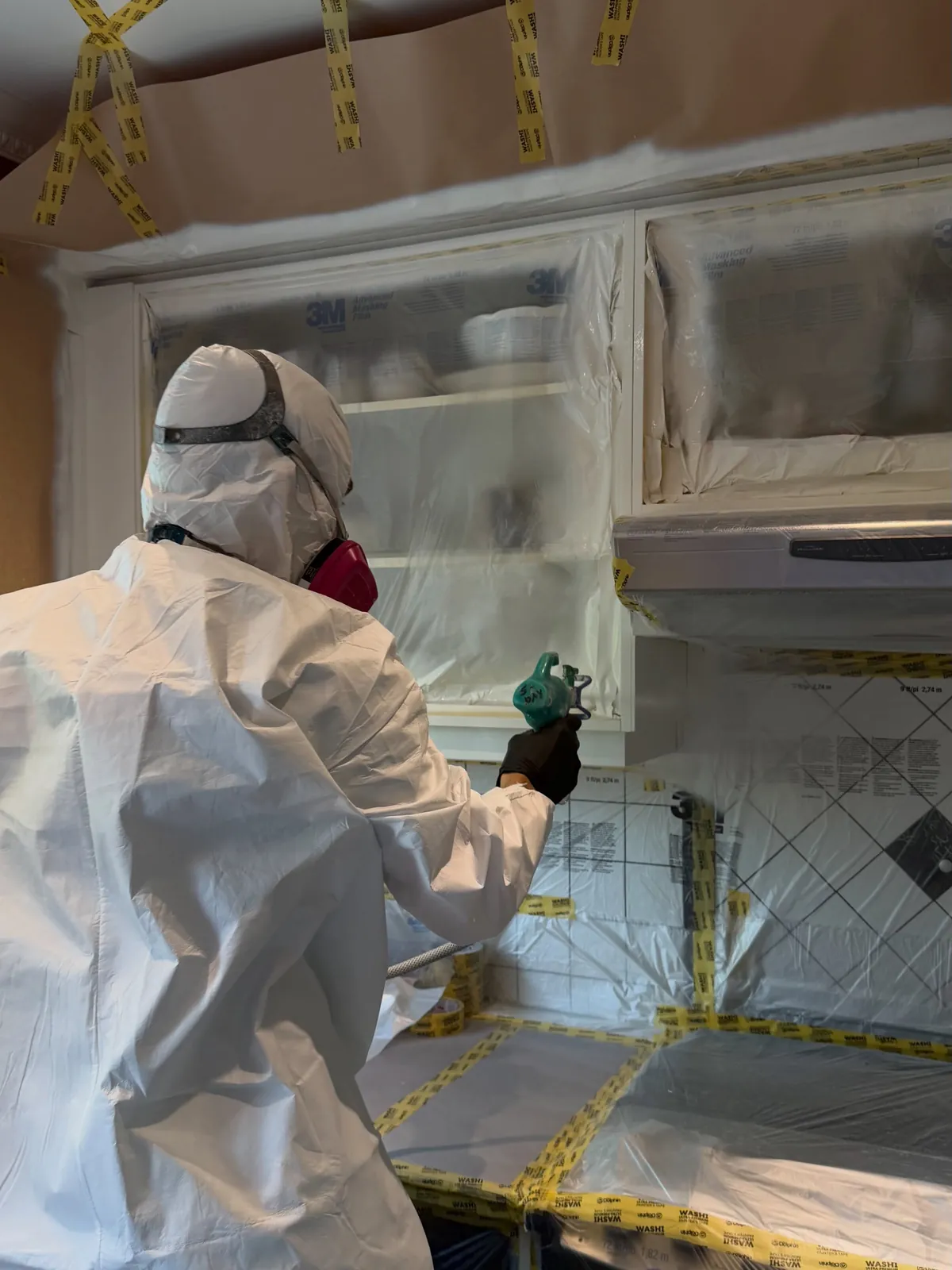
The bare MDF and its edges are then sanded, primed with two coats of BIN shellac-based primer and sprayed like any MDF door.
04
Sound film: sanding for grip
Where the film is still tight, the whole surface is sanded so the primer has something to hold, then primed with the shellac-based primer, which bonds to slick surfaces. Regular paint alone would not hold on thermofoil; sanding, the right primer and a 2K coating with hardener together make it stick.
05
When it is not worth it
Doors warped or bubbled by heat from an oven or kettle are better replaced: a coating will not flatten them. I check this in your photos before quoting.
06
The result in Brossard
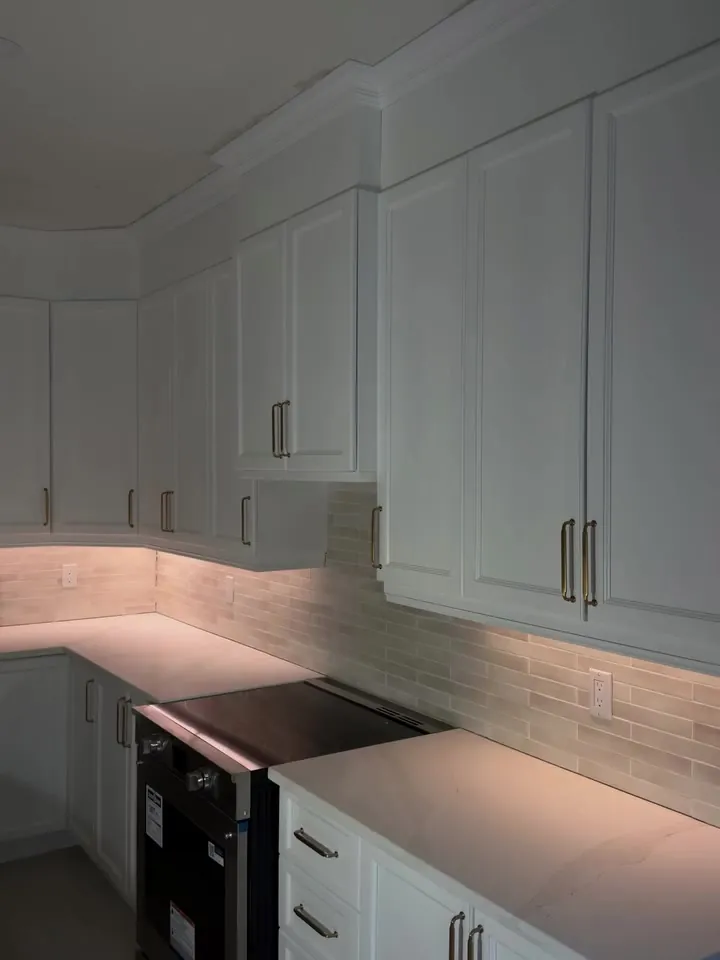
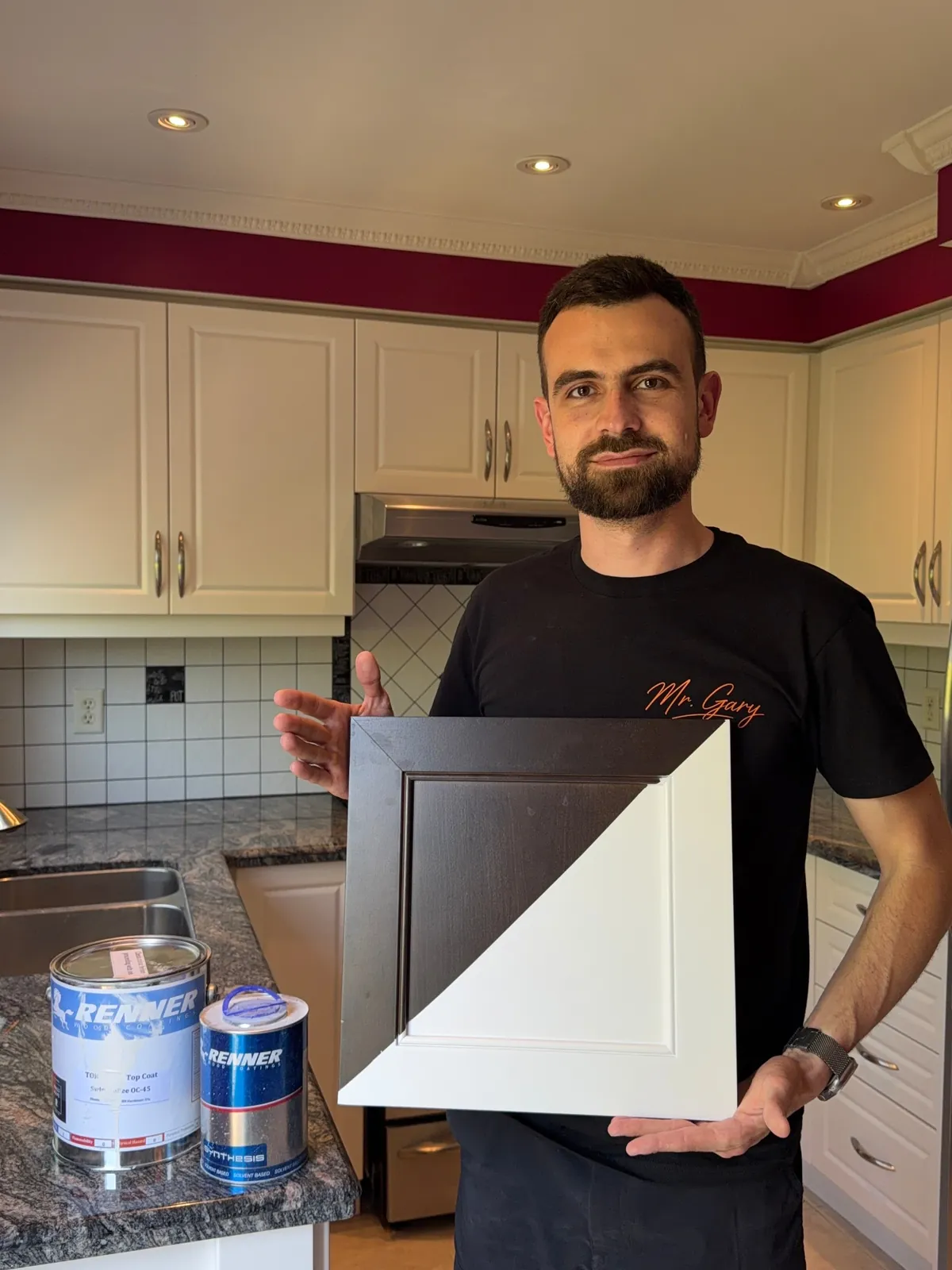
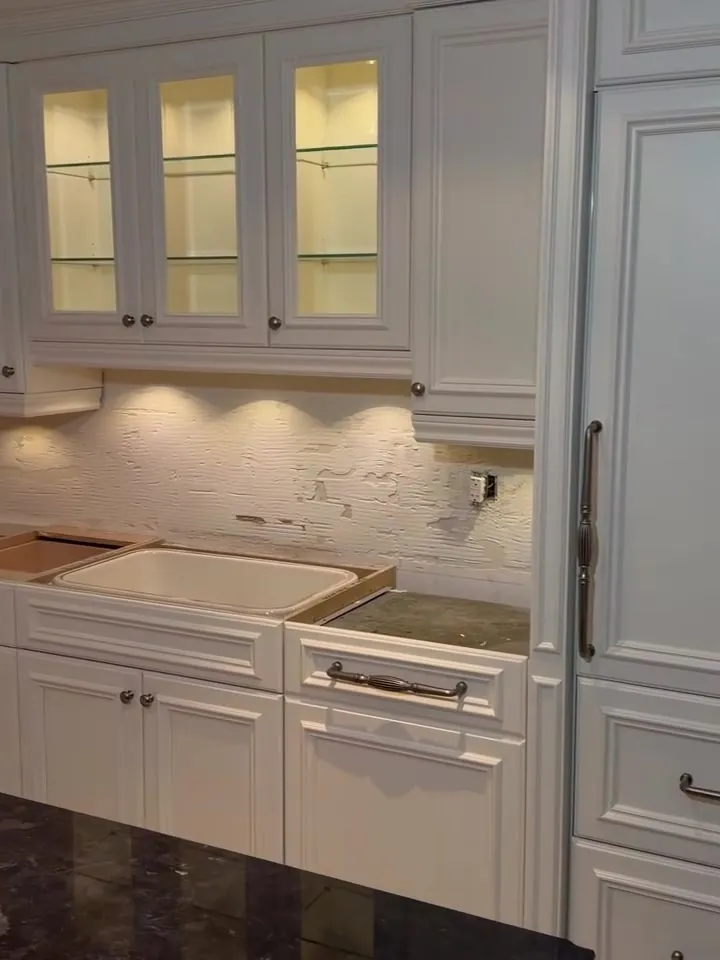
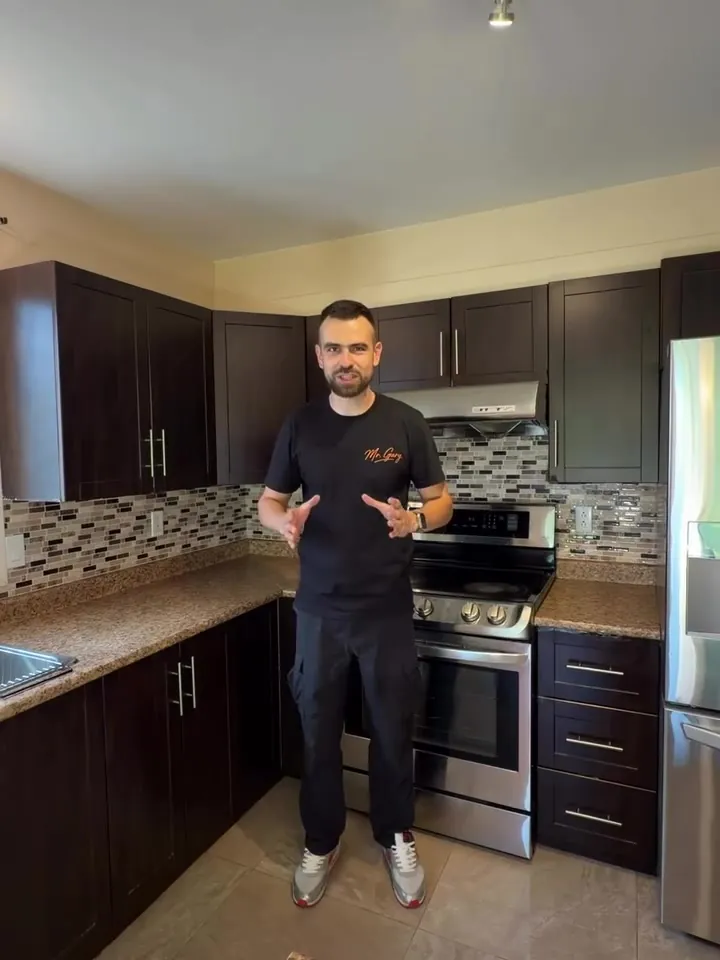
An espresso thermofoil shaker kitchen in Brossard went white in July 2026. The film came off where it had to, the MDF was primed and sprayed, and the doors went back on the same boxes. Same kitchen, no replacement.
From a client
“My kitchen cabinets look brand new!”