
01
What a brush and a roller leave behind
A brush leaves lines in the direction of the stroke. A roller leaves a stipple, a fine orange-peel texture that catches the light. On a wall you stop seeing them. On a cabinet door you look at from half a metre away every day, you see them, and you feel them when you wipe the door.
Profiles make it harder. Raised panels, shaker corners and arched doors collect paint in the inside corners, and a brush builds ridges there. Edges get drips. That is usually what gives away a painted kitchen.
02
What spraying changes
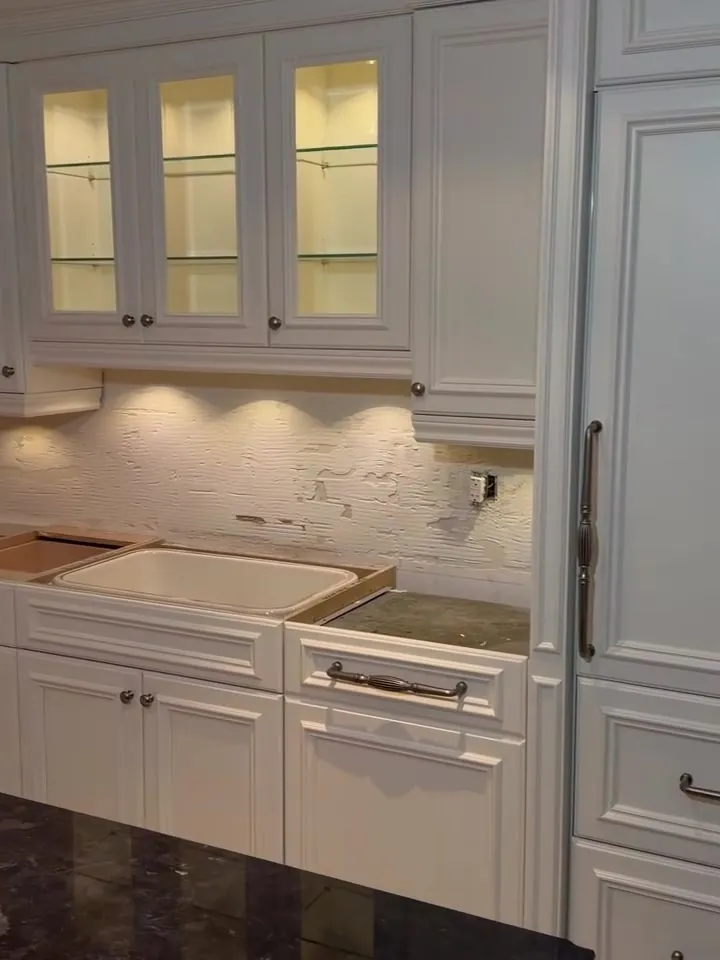
A spray gun lays the coat down as an even film. It flows out flat on the panel, reaches into the profiles without piling up, and wraps the edges. In the booth the doors hang, so each one gets the same coat on the face and on the edges.
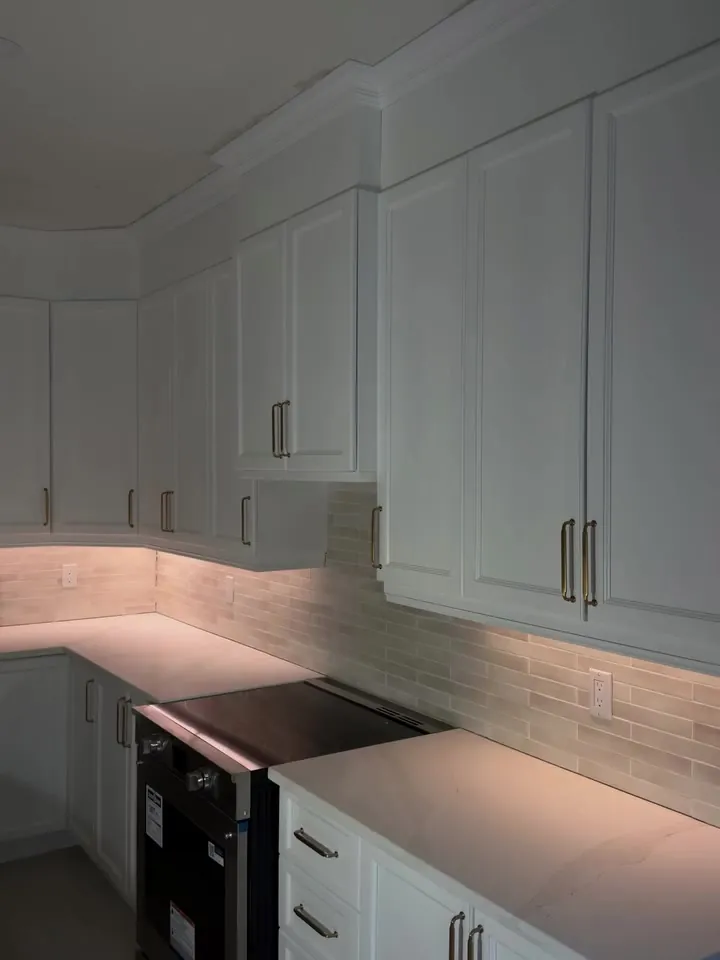
That is where the factory-style look comes from: no brush marks, no roller texture, the same sheen on every door and on the boxes. The cabinet boxes, frames and end panels are sprayed in place so they match the doors.
03
The coating matters as much as the gun
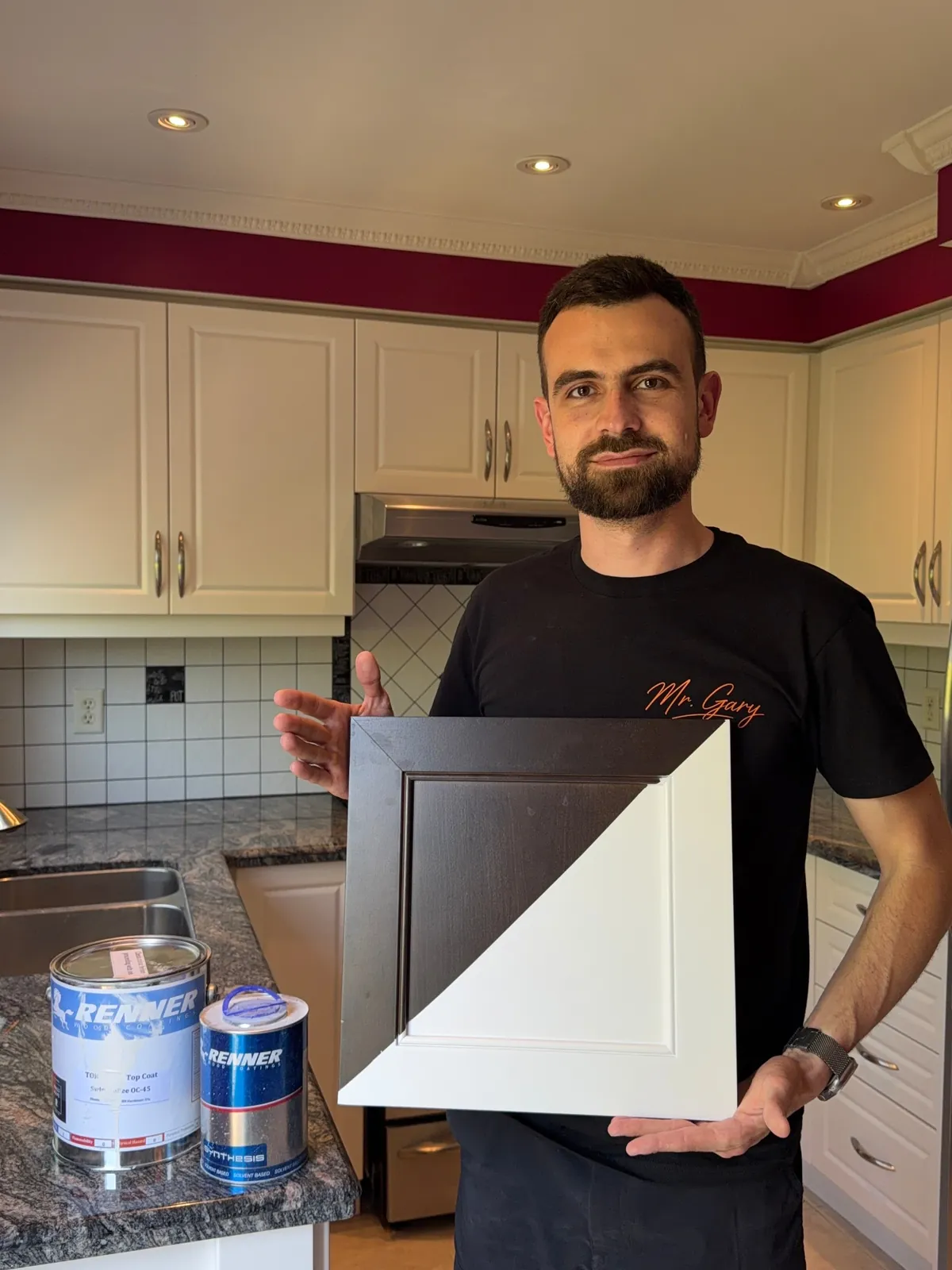
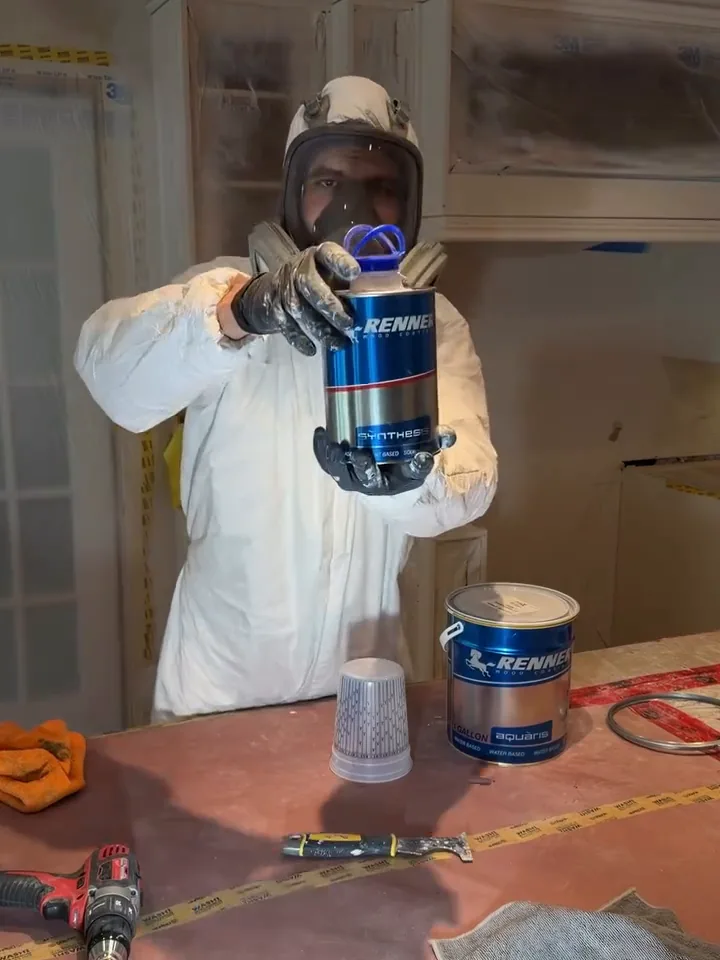
Wall paint stays relatively soft. Sprayed, it looks smoother and still stays soft. I spray Renner Italia 2K, a two-component furniture coating that is mixed with its hardener on site and cures much harder than any wall paint.
It is made for cabinets: durable, washable and designed to resist chipping. Under it go two coats of BIN shellac-based primer, sanded smooth before the colour. Two coats of primer, two coats of colour, both sprayed.
04
Spraying inside your home
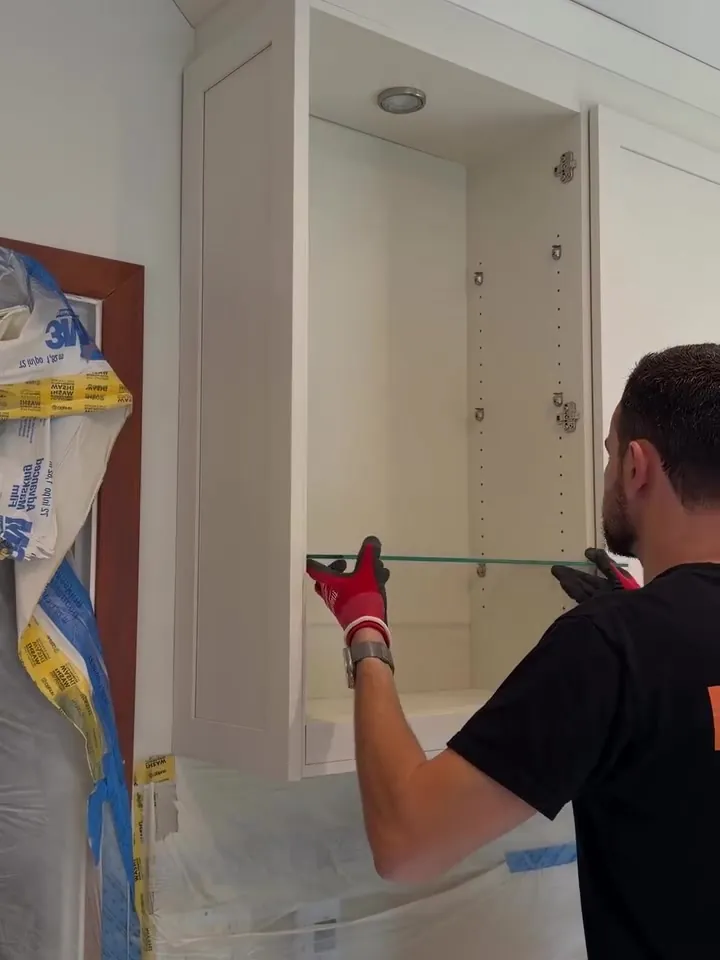
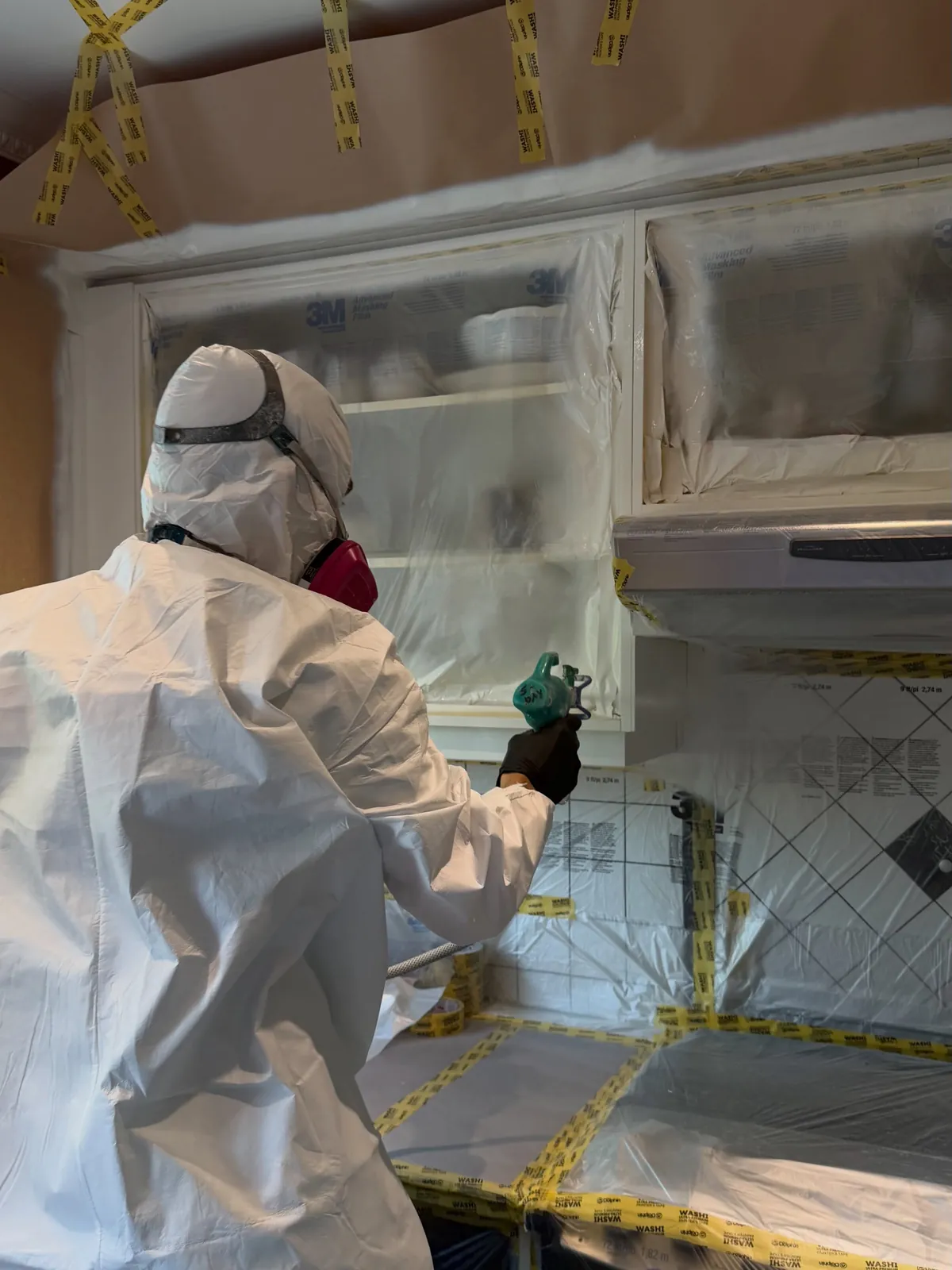
I do not need a spray shop to get a factory-style finish. On the first day I build a closed spray booth in your kitchen with ZipWall poles and film, cover appliances and counters with 3M film, and put a dust barrier between the kitchen and the rest of the house.
Spraying happens only inside that booth. Because I work on-site, there is no spray shop overhead, which gives homeowners better value. The doors never leave your home, and every one of them passes through my own two hands.
05
Doors and boxes in one finish
Painting only the doors leaves the frames in the old colour, and a brushed frame next to a sprayed door shows the difference right away. So the boxes, frames and end panels are sprayed in place with the same 2K coating, and the whole kitchen ends up with one sheen.
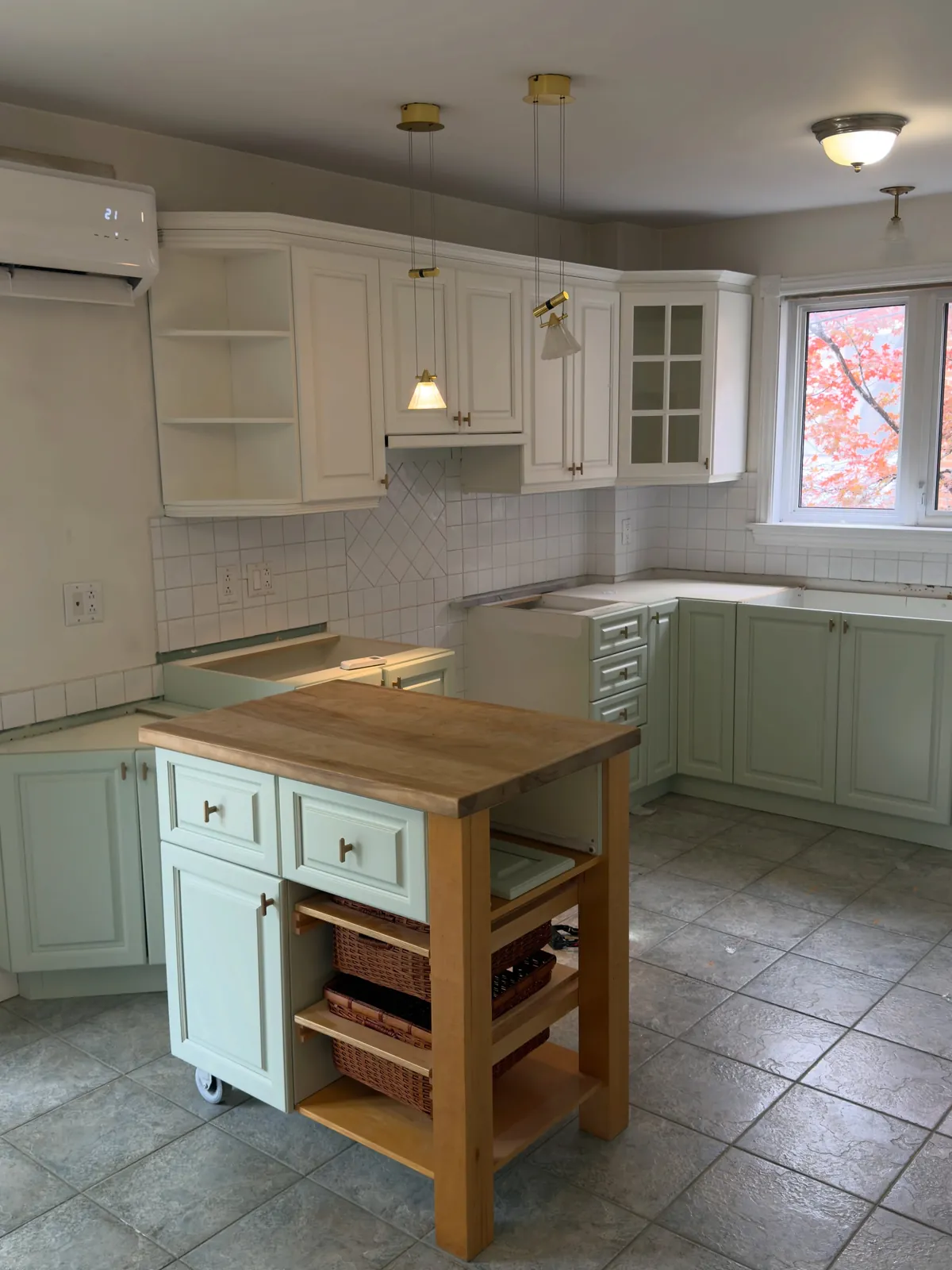
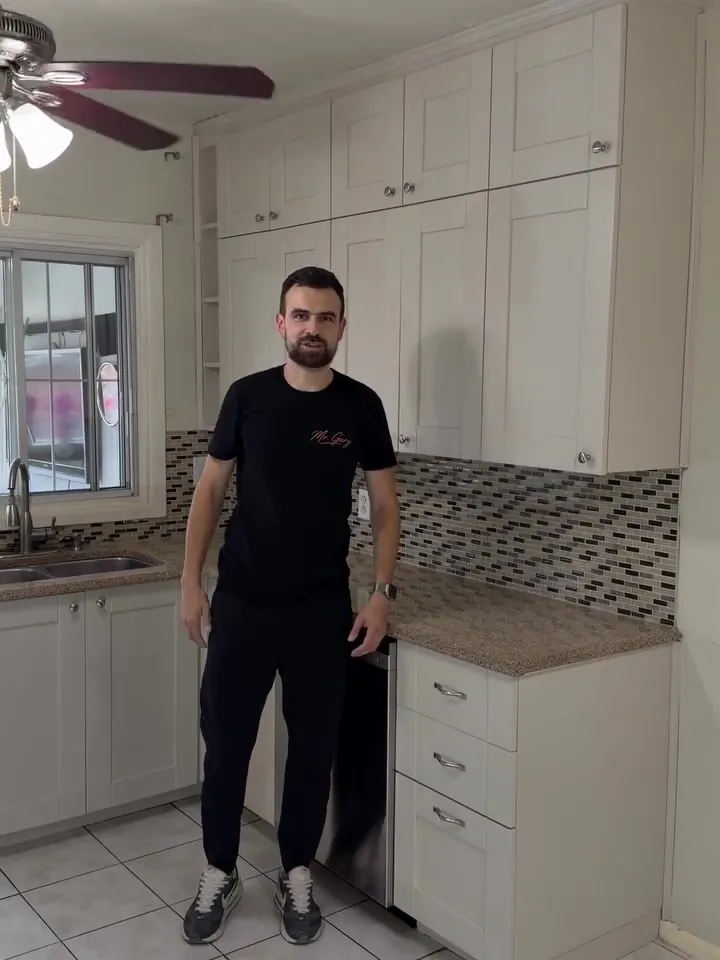
Size is not a reason to skip spraying either. Even in a small kitchen I can organize a complete refinishing setup: the booth, the masking and the dust barrier all fit.
06
Prep decides the result either way
A spray gun will not save a greasy door. Paint does not stick to grease, so every surface is degreased, sanded with dust extraction, repaired where it is chipped or dented, and primed before any colour goes on. The day-by-day version is in what happens during a 5-day job.
If you want to see the difference on a real kitchen, the Westmount espresso kitchen went from near-black to white with this exact system.