01
Glass doors and a bench nook
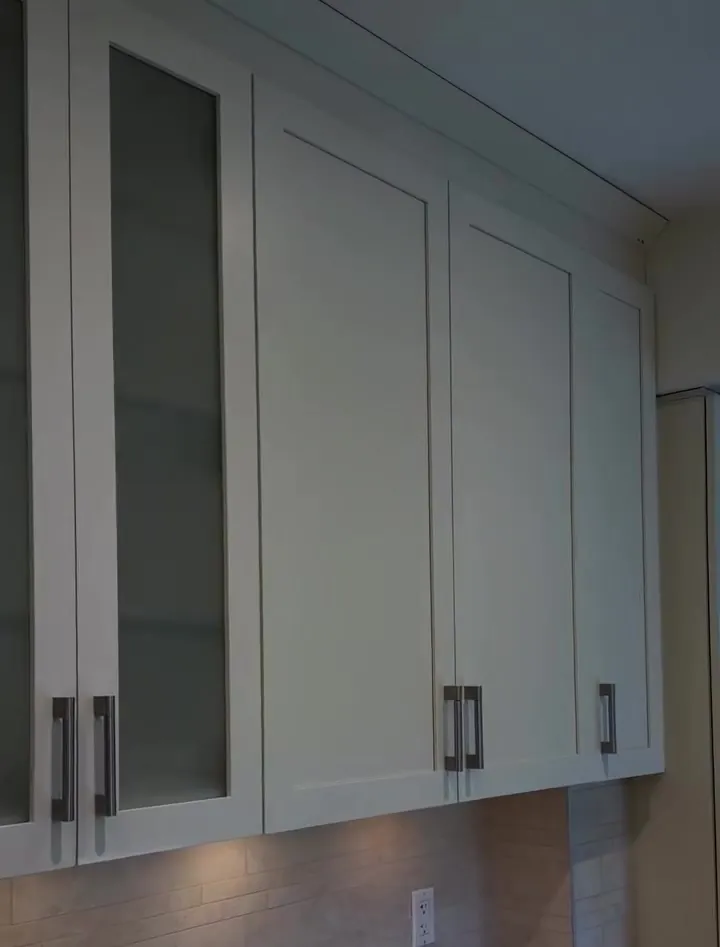
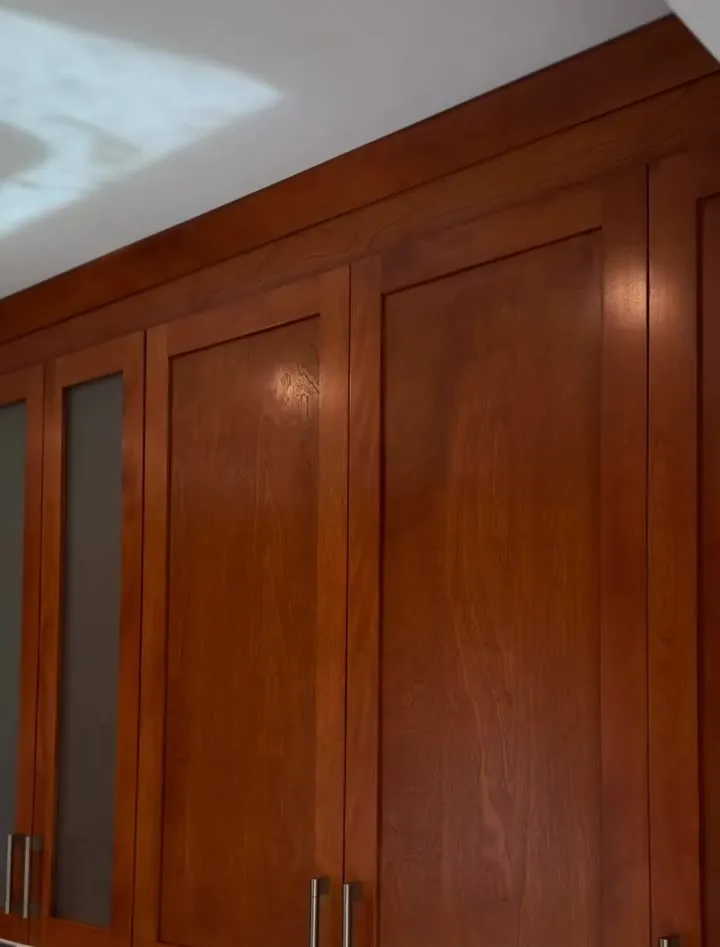
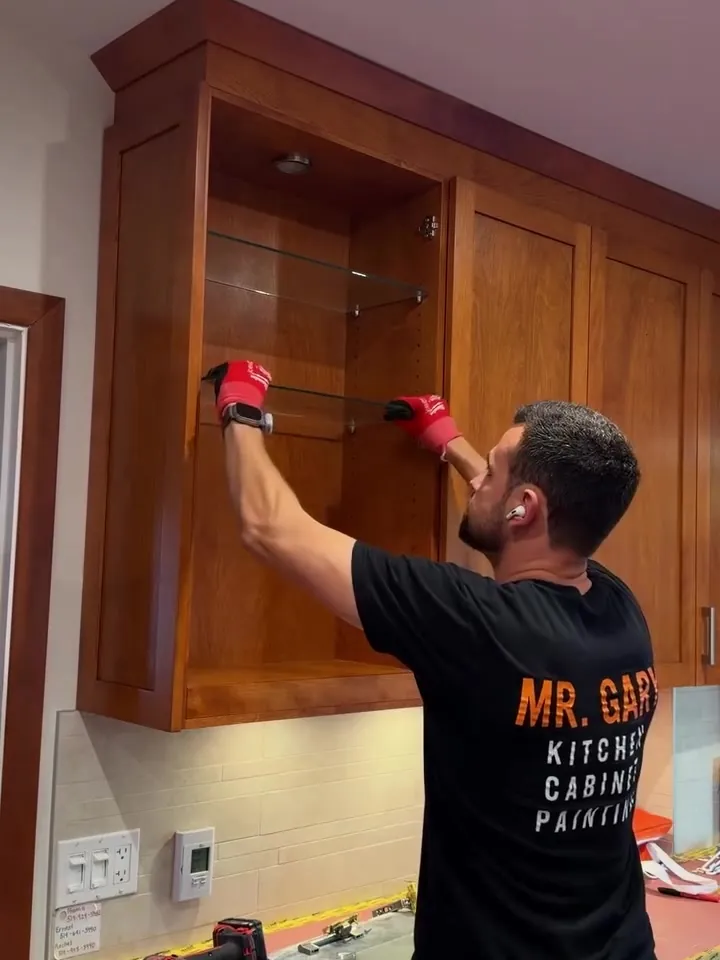
This kitchen had more parts than most: shaker doors in cherry, glass-front uppers, a drawer bank and a bench nook built in the same wood. On the first day the glass came out of the cherry doors, with a two-word caption: “Safety first.”
The next day I removed the old silicone at the counter. My note that day: it “helps the coating adhere properly in the corners and creates a cleaner, more professional finish.”
02
A spray booth in the kitchen
On August 27 I built the spray booth on-site with ZipWall poles. It “helps protect the home, control overspray, and create the right environment for a smooth factory-style cabinet finish.” The doors are sprayed inside it; the boxes are sprayed in place, after sanding.
The same day the first coat of BIN shellac primer went on the doors and boxes. Shellac primer is what I use over cherry so the wood does not bleed through a light colour.
03
The cabinets stayed full
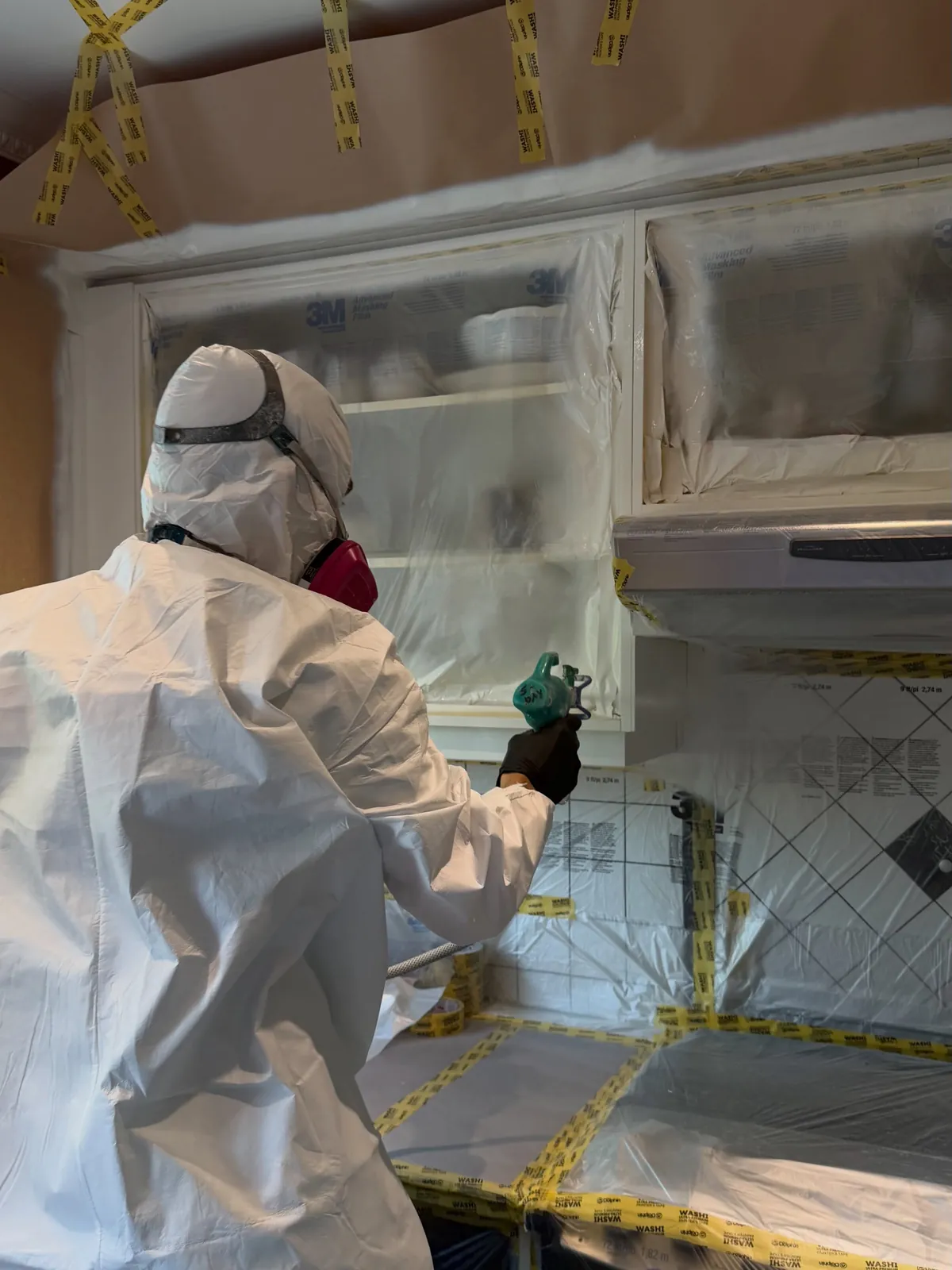
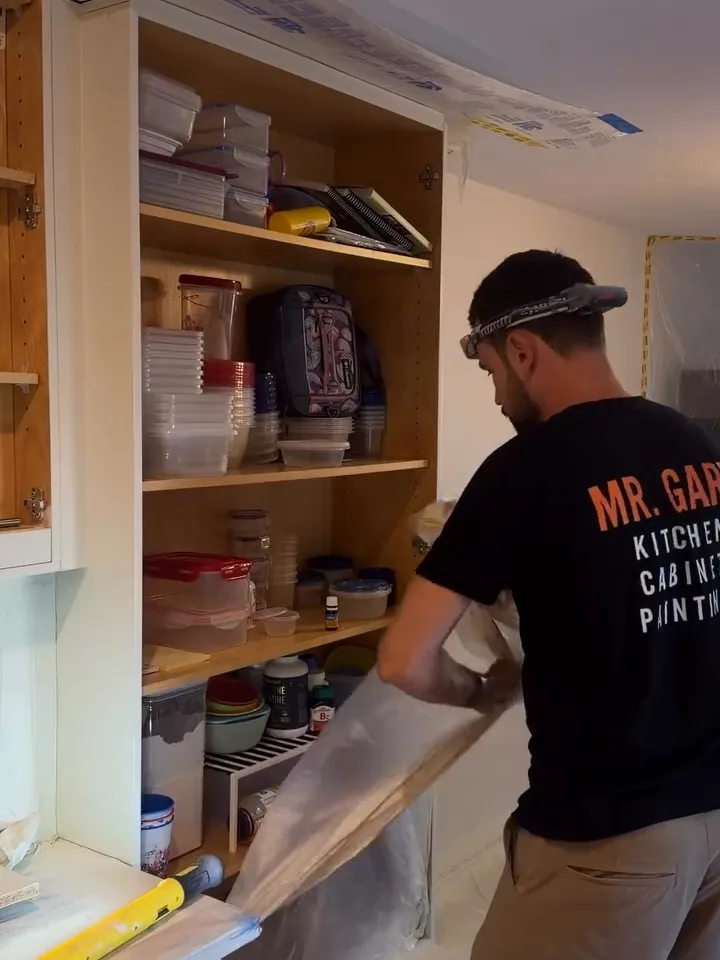
On August 29 I posted a short clip for everyone who asks: “You don’t need to empty your cabinet boxes — I carefully mask and protect everything inside before spraying.” The open shelves were masked with the client’s things still on them.
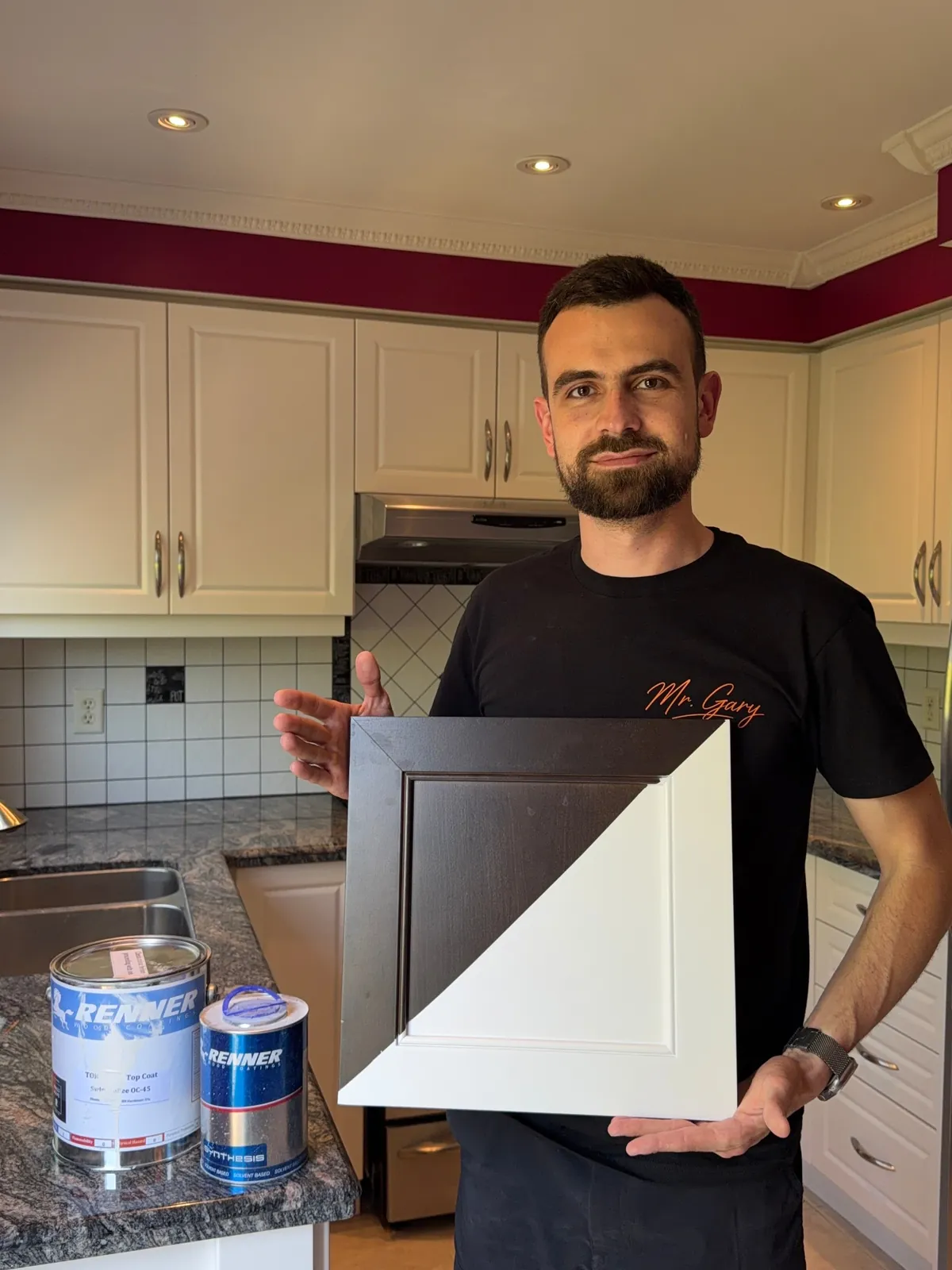
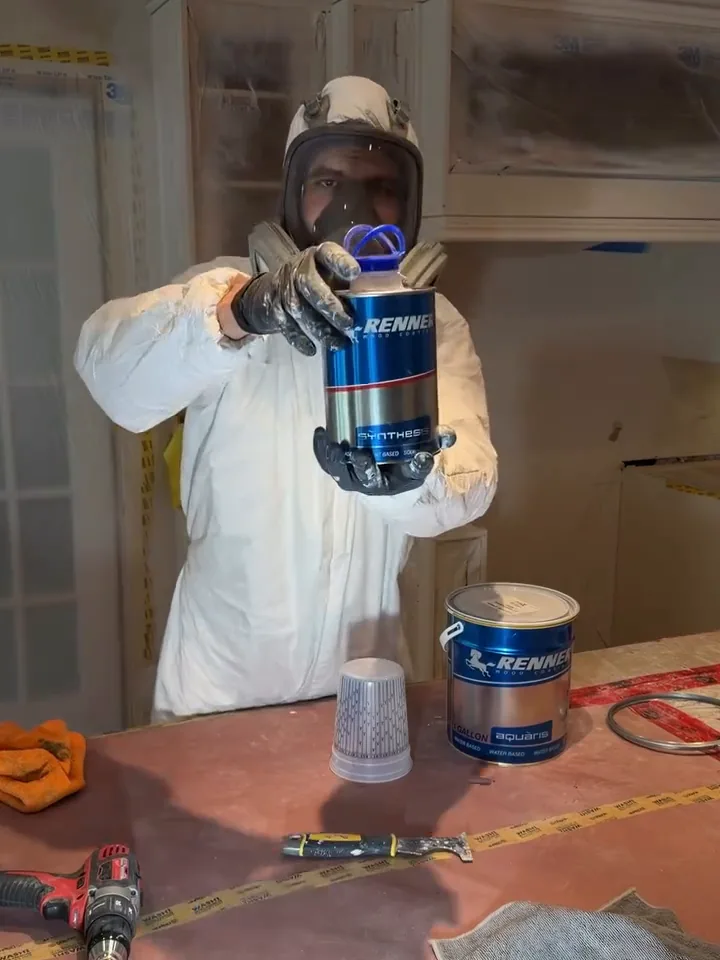
The same day: small imperfections fixed before the final finish, then the final coat of Renner. The caption described the product: “professional cabinet coatings designed for kitchens. Durable, washable, and made for everyday use.”
04
Complete
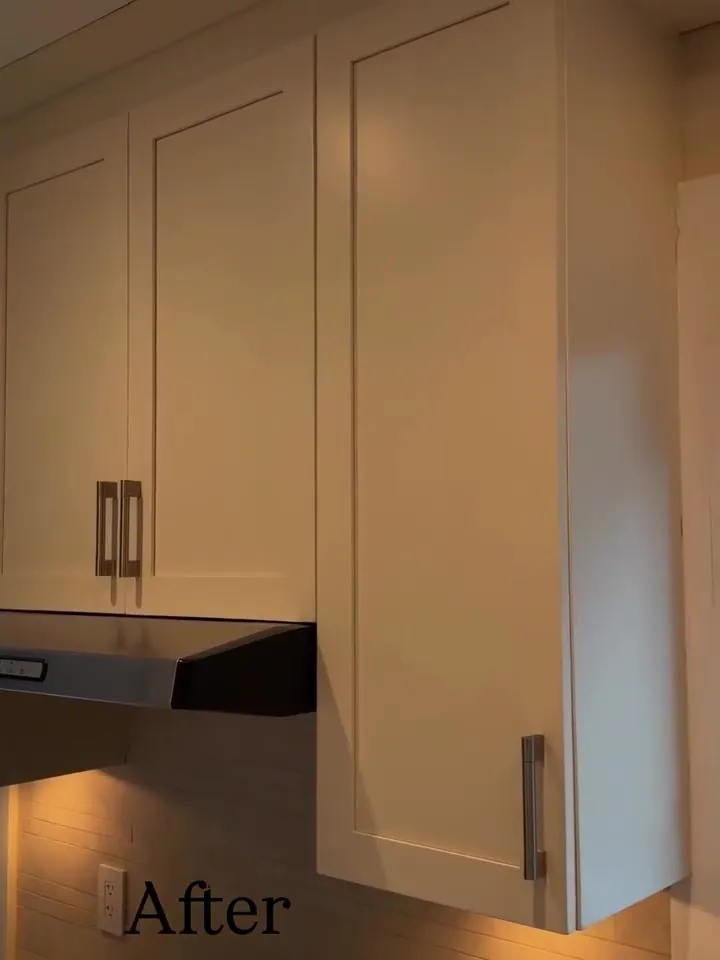
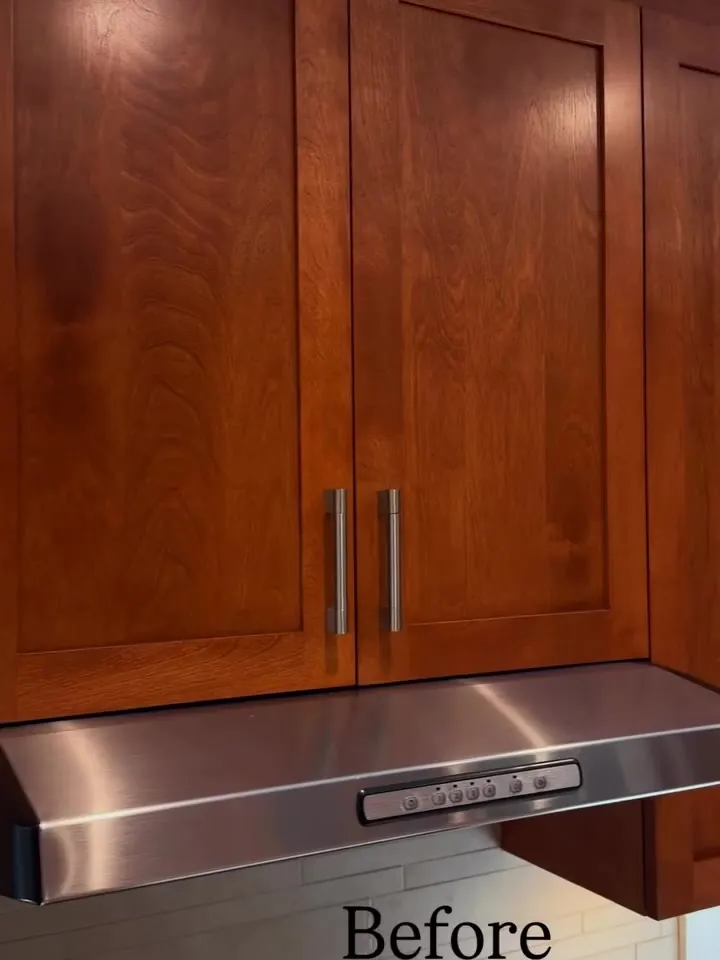
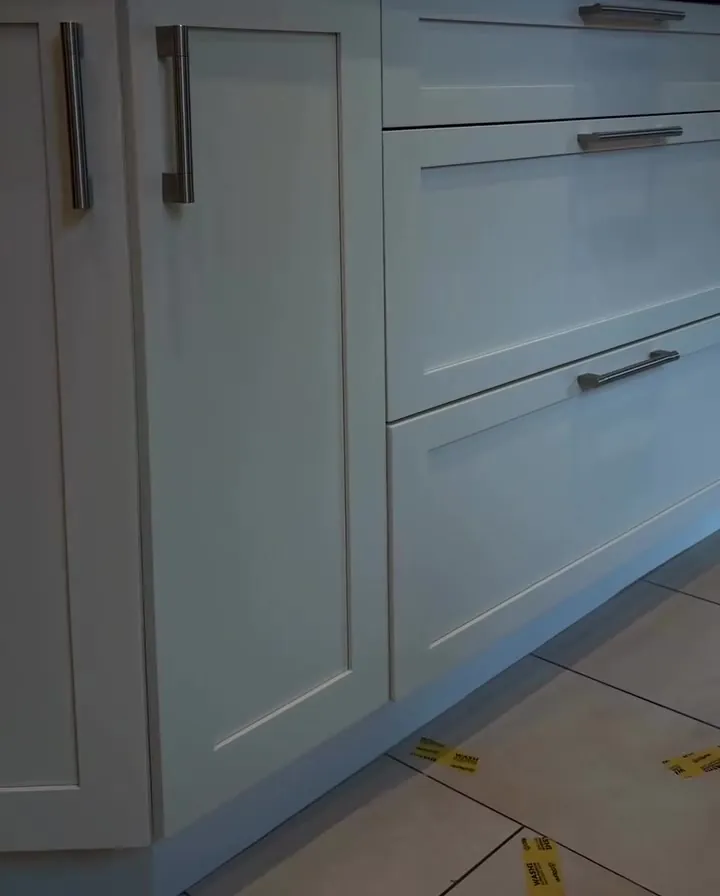
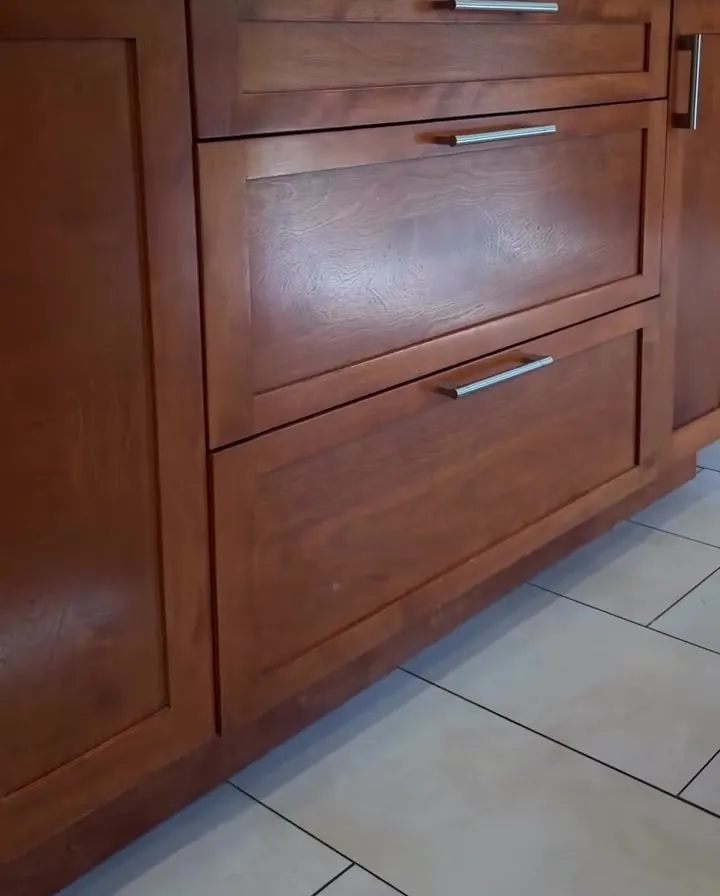
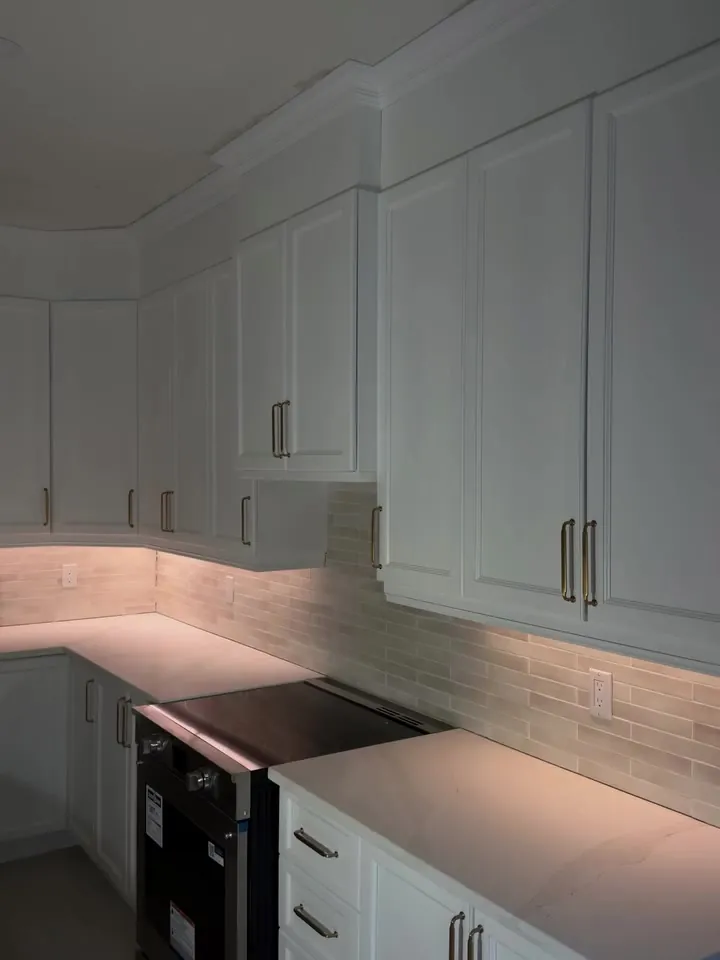
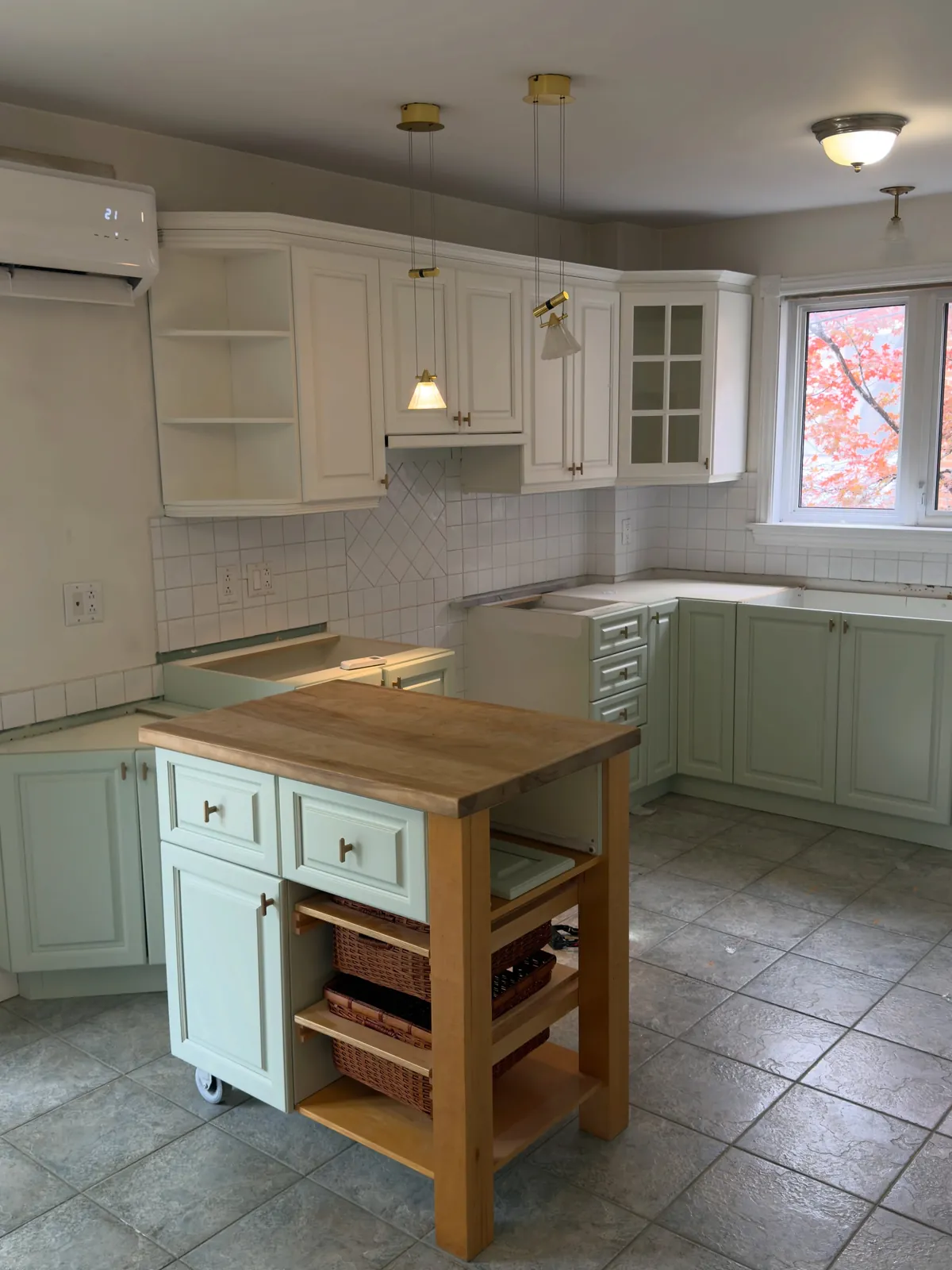
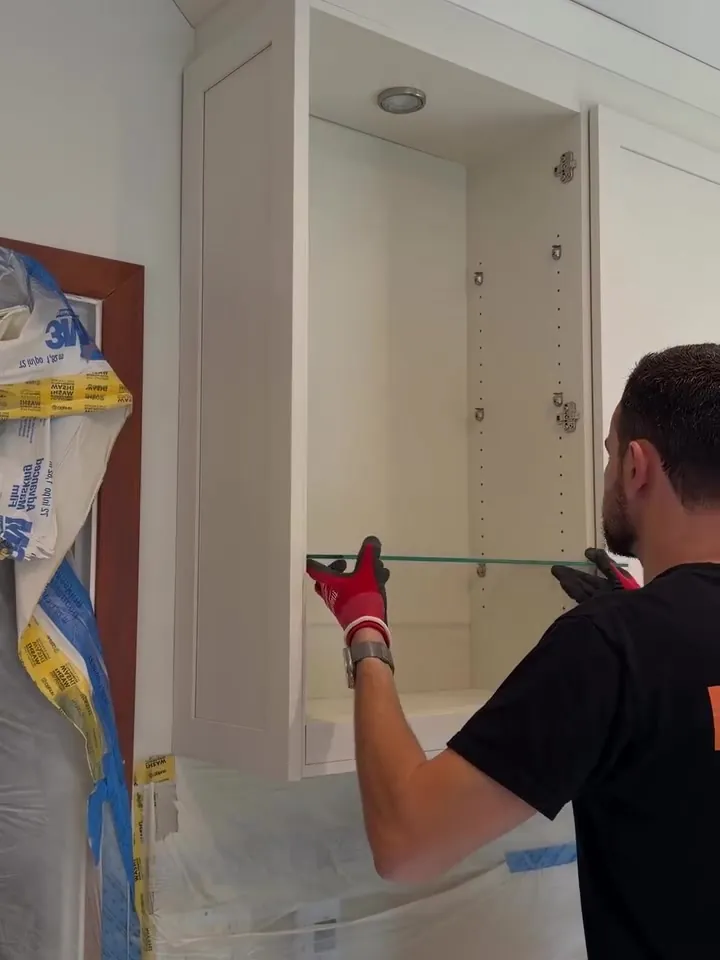
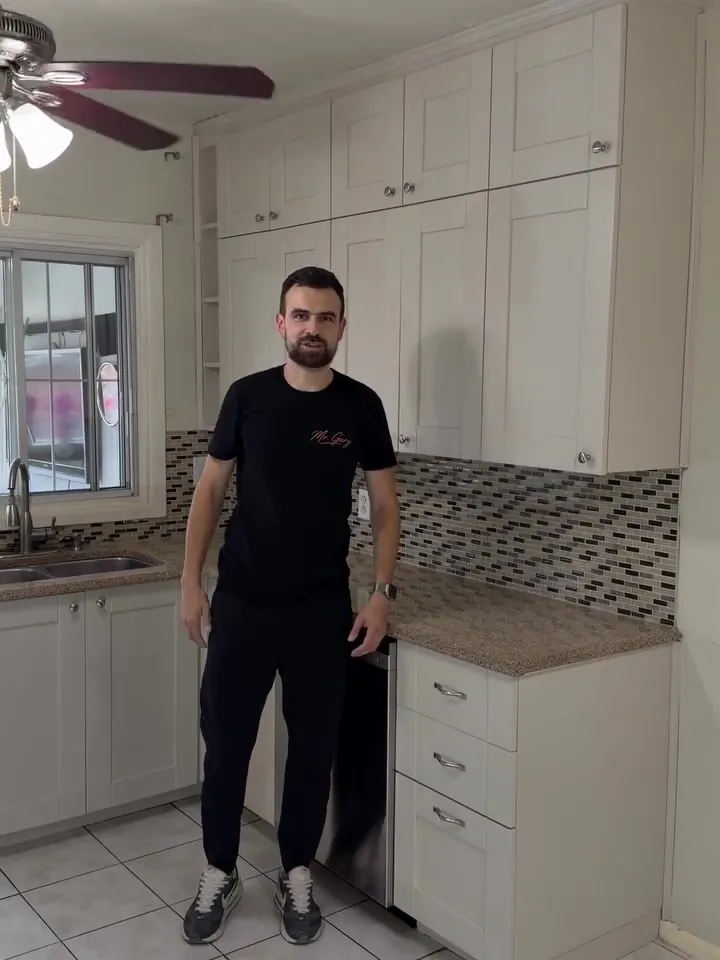
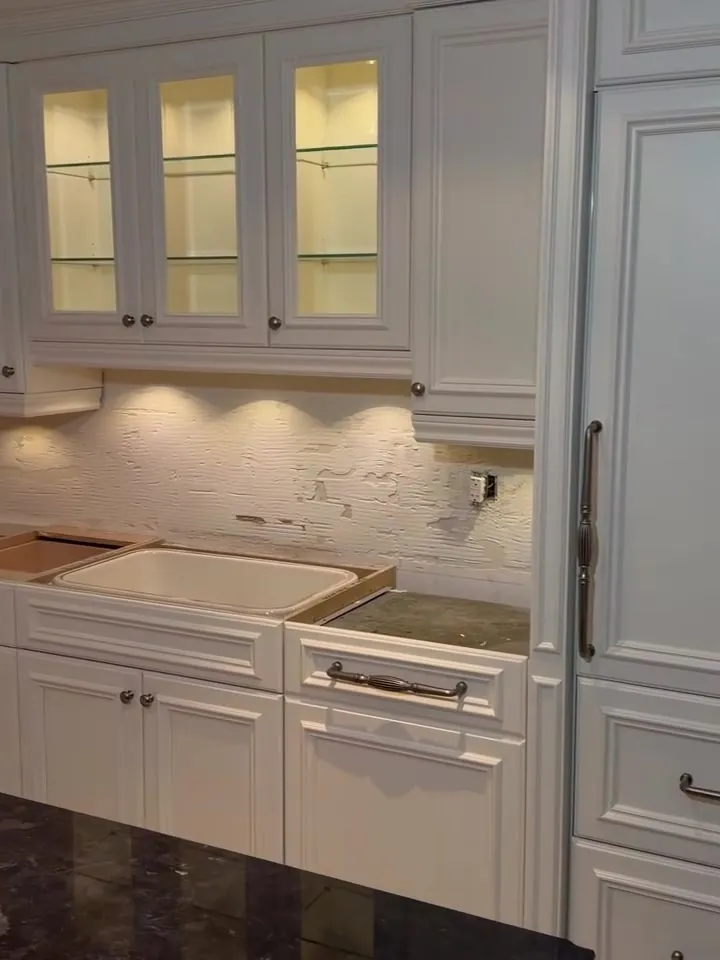
On August 30 the glass shelf went back into its cabinet and I posted: “Same kitchen - completely new look.” The comparisons below are from the video I posted on August 31.
More photos and the whole timeline are on the project page. Why I spray rather than brush is in the spray vs brush guide.